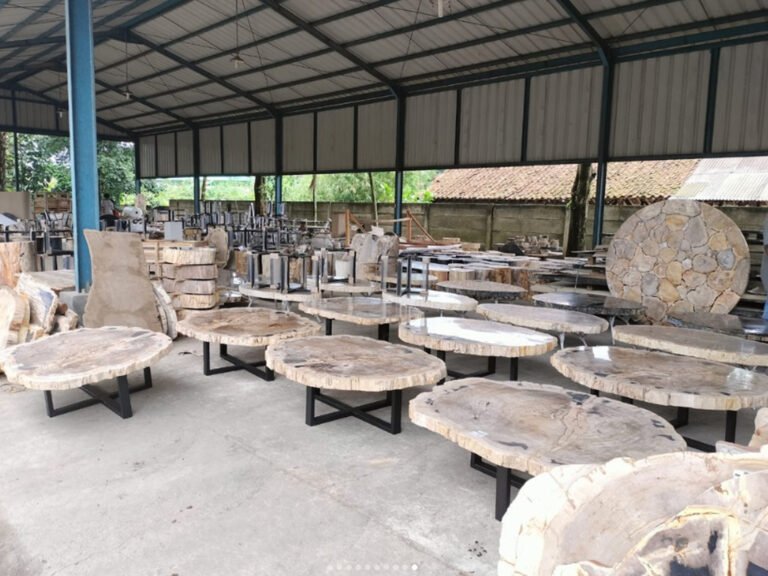
How Is Petrified Wood Priced in Indonesia?
Understanding the Pricing Structure of Indonesian Petrified Wood
For international buyers and interior designers, understanding how petrified wood is priced in Indonesia is essential for making informed purchasing decisions. Because petrified wood is a natural, one-of-a-kind material, there is no standardized “per-gram” or “per-inch” price list that applies to every specimen. Instead, pricing is a composite of rarity, geological quality, size, and the extensive labor required to transform raw stone into a functional masterpiece.
When you source from Indonesian petrified wood suppliers, you are paying for both the raw geological history preserved within the piece and the high-level artistry involved in the refinement process.
Primary Factors Influencing the Cost
1. Geological Quality and Mineralization
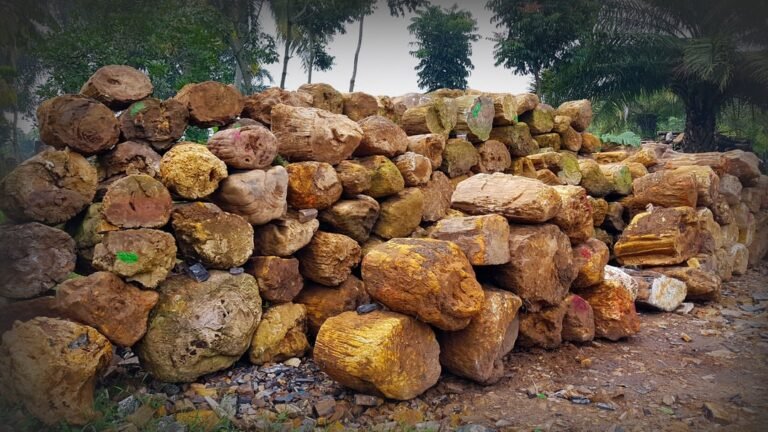
Not all petrified wood is created equal. The degree of mineralization, the vibrancy of the colors, and the clarity of the cellular structure play a massive role in valuation. Specimens that exhibit rare, intense color palettes—such as those featuring deep blues, reds, or crystalline quartz inclusions—are naturally priced higher than common, muted-tone wood. You can learn more about these characteristics by exploring our guide on petrified wood quality grades.
2. Size and Structural Integrity
In the world of fossilized materials, size significantly impacts the price due to the scarcity of large, intact specimens. A massive log section that remains solid without major fractures is extremely rare. While nature inherently creates variations, larger pieces that allow for the creation of expansive dining tables or grand sculptures command a premium because of their rarity and the logistical challenges of handling them.
3. Processing and Finishing Labor
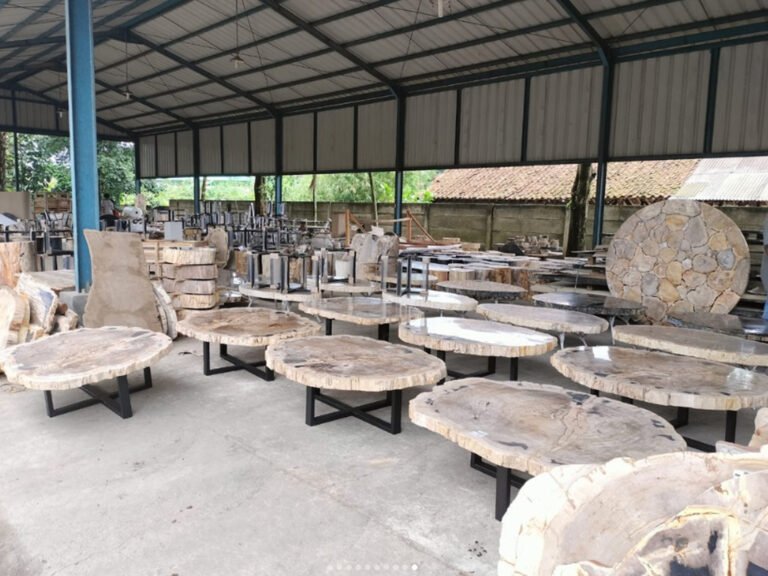
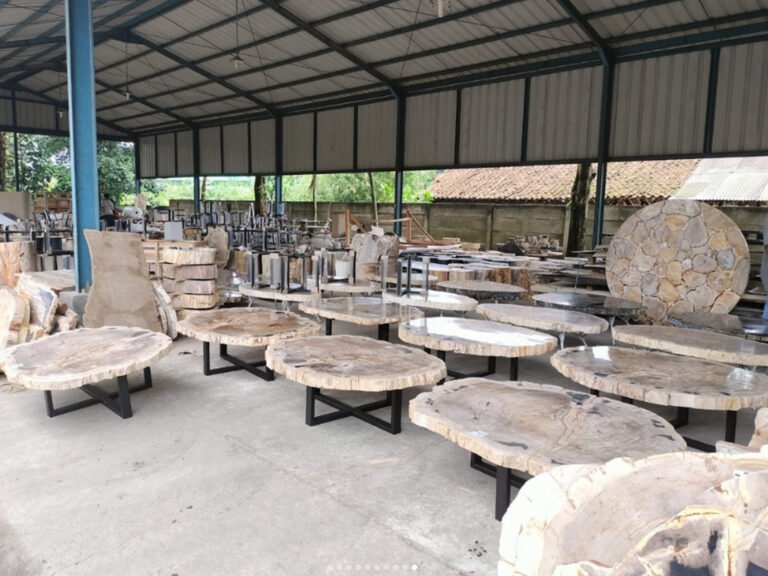
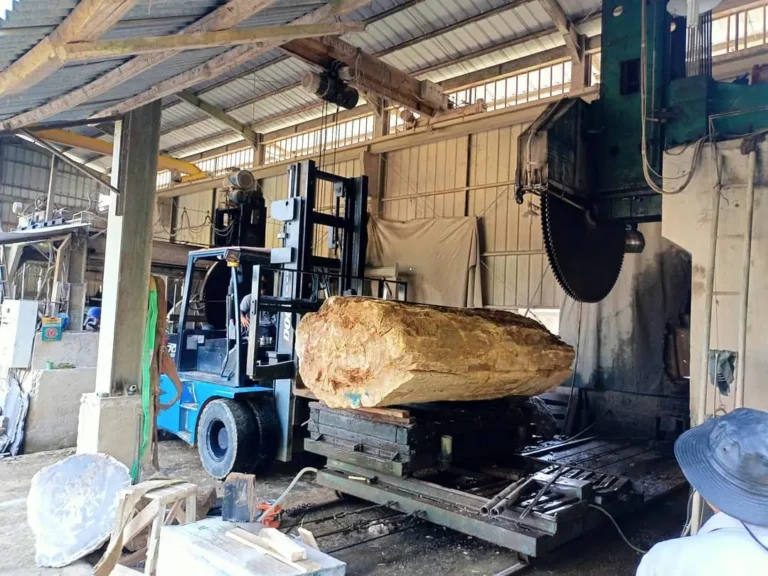
The price you pay includes the intensive labor of cutting, grinding, and polishing. High-end pieces require thousands of hours of skilled craftsmanship. An expert artisan must carefully cut the stone to reveal the most aesthetic grain patterns while respecting the structural limitations of the material. A piece that is finished to a mirror-like polish requires much more time and abrasive material than a rough-cut display piece, which directly influences the final cost.
The Value of Craftsmanship
It is important to recognize that the “value” of petrified wood is not just in the rock itself. It is in the curation and transformation. Indonesian artisans have developed specialized techniques to stabilize, slice, and polish these ancient materials. When you compare two pieces, consider the finish quality—a superior polish that highlights the natural chatoyancy and depth of the stone will always carry a higher value than a basic, matte-finished surface.
Understanding these intricacies helps buyers avoid common purchasing mistakes, ensuring that you receive a product that aligns with your investment goals and aesthetic requirements.
How to Navigate Quotes and Sourcing
When requesting a quote for your project, transparency is key. Reputable suppliers should be able to provide details on the origin, the degree of restoration (if any), and the dimensions. Always clarify if the quoted price includes:
- Export documentation: Ensuring all legal requirements for shipping natural stone are met.
- Packaging requirements: Professional crating is necessary for heavy, fragile stone items.
- Shipping terms: Whether the price is FOB (Free on Board) or CIF (Cost, Insurance, and Freight).
By focusing on quality and working with established manufacturers, you ensure that the price paid reflects the enduring beauty and durability of the piece. If you are ready to invest in a unique, timeless piece, we invite you to contact the Java Petrifiedwood team for expert guidance on selecting the right specimen for your space.
FAQ
- Is there a standard price per square meter for petrified wood?
No. Because every piece of petrified wood is unique in shape, thickness, and mineral quality, pricing is determined on a piece-by-piece basis rather than by flat square meterage.
- Why is shipping usually separate from the product price?
Petrified wood is extremely heavy and dense. Shipping costs are calculated based on weight, volume, and destination port. Suppliers typically quote these separately to provide you with the most accurate logistics pricing.
- Does the color of the wood change the price?
Yes. Colors that are harder to find—such as vibrant blues or rare combinations of minerals—are more sought after by collectors, which often drives up the price compared to common brown or grey specimens.
- How does the quality of the polish affect the cost?
High-quality, mirror-polished surfaces require significantly more labor, specialized machinery, and time. This craftsmanship adds value to the finished piece compared to a piece left in a rough or semi-polished state.