How Petrified Wood Factories Operate in Indonesia
The Anatomy of Indonesian Petrified Wood Production
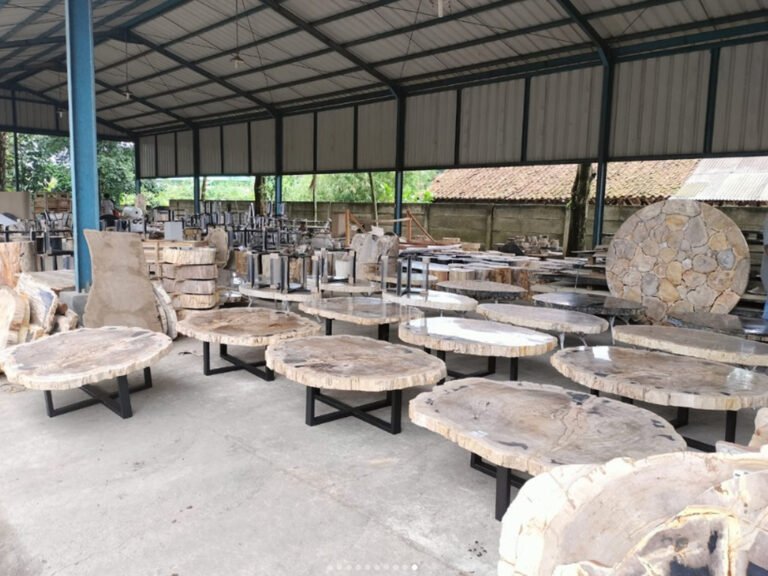
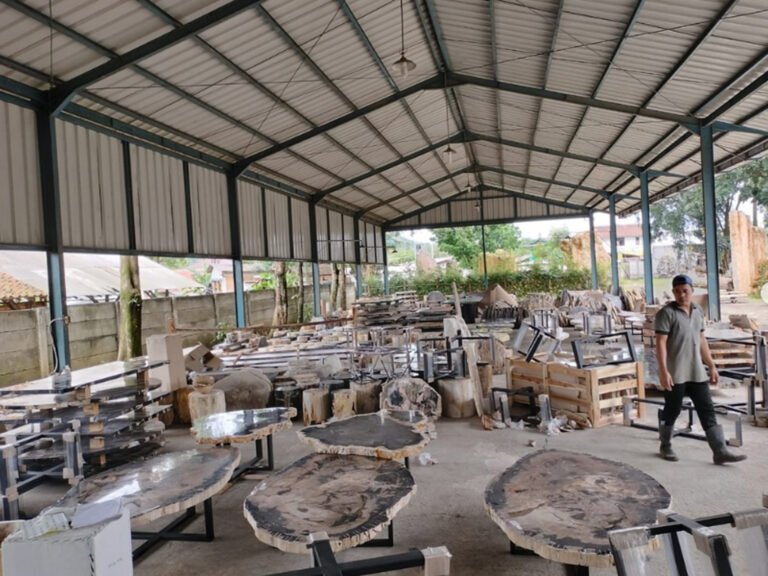
For international buyers, architects, and interior designers, understanding how petrified wood factories operate in Indonesia is essential for ensuring quality and supply chain transparency. Indonesia has established itself as a global hub for high-quality fossilized wood, thanks to its unique geological history. However, the transformation from a raw geological discovery to a refined interior design piece is a complex industrial process that requires specialized skills, heavy machinery, and artistic precision.
Most reputable Indonesian petrified wood manufacturers operate through a structured workflow that prioritizes both the preservation of the material’s natural beauty and the structural integrity required for international use.
Sourcing and Material Selection
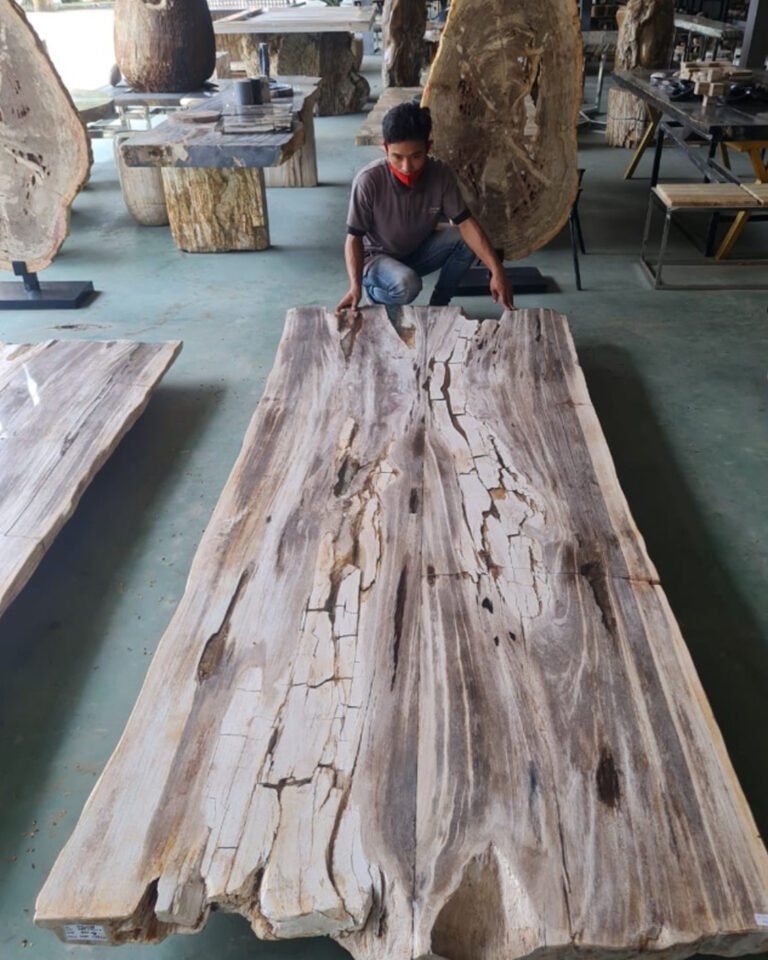
The journey of a piece of petrified wood begins in the field. Factories work closely with local collectors who identify potential raw specimens. Once sourced, these materials are brought to the factory floor, where they are meticulously inspected. Not every piece is suitable for high-end furniture; experts evaluate the density, mineral composition, and aesthetic appeal to decide whether a specimen should be used for smaller decor items, large slabs, or bespoke sculptures.
Processing: From Raw Stone to Refined Product
Once the material is selected, the processing phase begins. This is where the true craftsmanship comes into play. Because petrified wood is essentially stone, standard woodworking tools are useless. Factories must utilize diamond-tipped saws and industrial-grade water-cooling systems to cut through the hardened silica.
- Cutting and Slicing: Large blocks are cut into slabs using heavy-duty gang saws or wire saws. This stage requires precision to ensure the slab thickness is consistent, which is crucial for petrified wood furniture construction.
- Refining and Grinding: After cutting, the rough edges are smoothed out. Workers use progressively finer abrasive pads to remove saw marks and imperfections.
- Polishing: This is the final and most labor-intensive step. Achieving a mirror-like finish requires patience and multiple stages of polishing, which brings out the rich colors and unique grain patterns of the fossilized wood.
Quality Control and Finishing
A professional factory does not just manufacture; it vets. Quality control involves checking for structural integrity. Since petrified wood is a natural material, it may contain internal voids or minor fissures. Factories often use specialized resins to fill these gaps, ensuring the final piece is stable and safe for residential or commercial use. Buyers should always inquire about how their supplier handles these natural inclusions to ensure they meet the standards for their specific projects.
Export Preparation and Documentation
Operating a factory in Indonesia also involves a deep understanding of export logistics. Once a product is polished and quality-checked, it must be carefully packed. Because these items are heavy and fragile, custom-built wooden crates are standard. Furthermore, professional suppliers manage the necessary export documentation to ensure a smooth transition from the factory floor to the international shipping container.
Why Choosing a Direct Factory Matters
By bypassing intermediaries and dealing directly with the manufacturing source, international buyers gain significant advantages. You obtain clearer insights into the production timeline, better control over customization requests, and a more transparent pricing structure. Understanding these processes ensures you are working with an authentic partner rather than a simple trading entity.
If you are looking to source high-quality, ethically processed petrified wood for your next project, Java Petrifiedwood provides a bridge to these specialized Indonesian production capabilities. We ensure that every piece meets the highest standards of beauty and durability.
FAQ
How long does it take for a factory to process a large petrified wood slab?
The timeline varies based on the size and complexity of the piece, but generally, selecting, cutting, polishing, and quality-checking a large slab can take several weeks to ensure a premium finish.
Are the chemicals used in finishing safe?
Reputable factories use professional-grade, stable resins that are safe for home use once fully cured. We recommend confirming the specific materials used with your supplier if you have concerns.
Can I request custom dimensions for my furniture?
Yes. Because you are dealing with a manufacturing process, many Indonesian factories, including ours, can accommodate custom cutting and shaping requests to fit your specific design requirements.
Do factories provide inspection reports?
Professional suppliers will often provide photos or videos of the selection and production stages, allowing international buyers to verify the status of their order remotely.