How Skilled Craftsmen Work with Fossilized Wood
The Art of Transforming Fossilized Wood
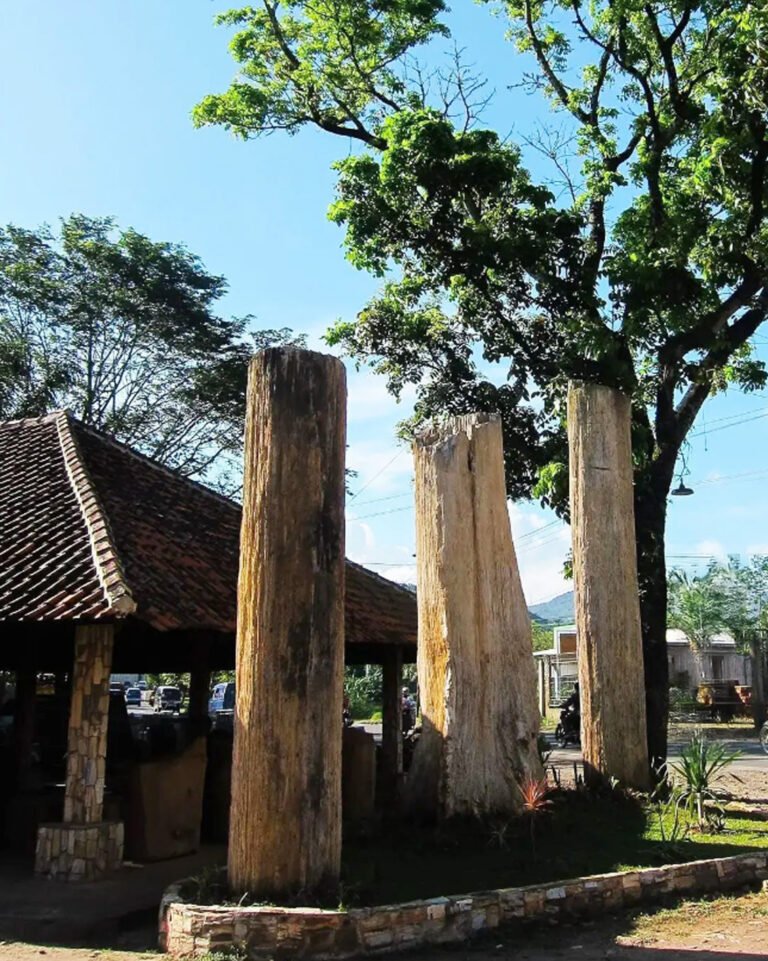
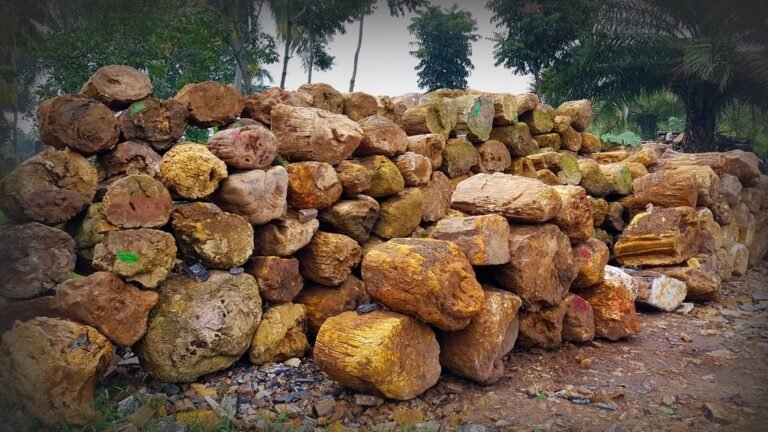
The transformation of fossilized wood from raw, earth-bound material into a refined piece of luxury furniture is a labor-intensive process that requires immense skill and patience. Because petrified wood is essentially stone—having undergone a permineralization process over millions of years—it possesses extreme hardness, often ranking high on the Mohs scale. This characteristic makes the work of Indonesian artisans particularly challenging and unique, as they must employ specialized techniques to reveal the hidden beauty within each log.
The Preliminary Assessment and Design
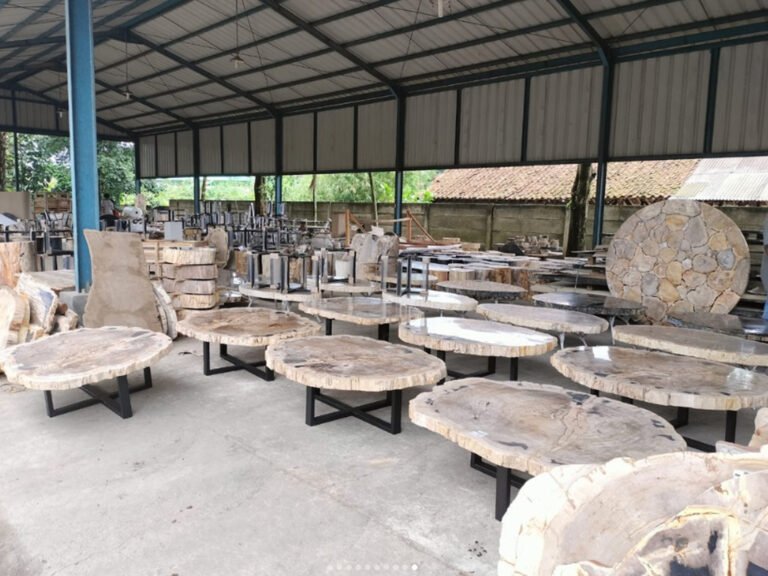
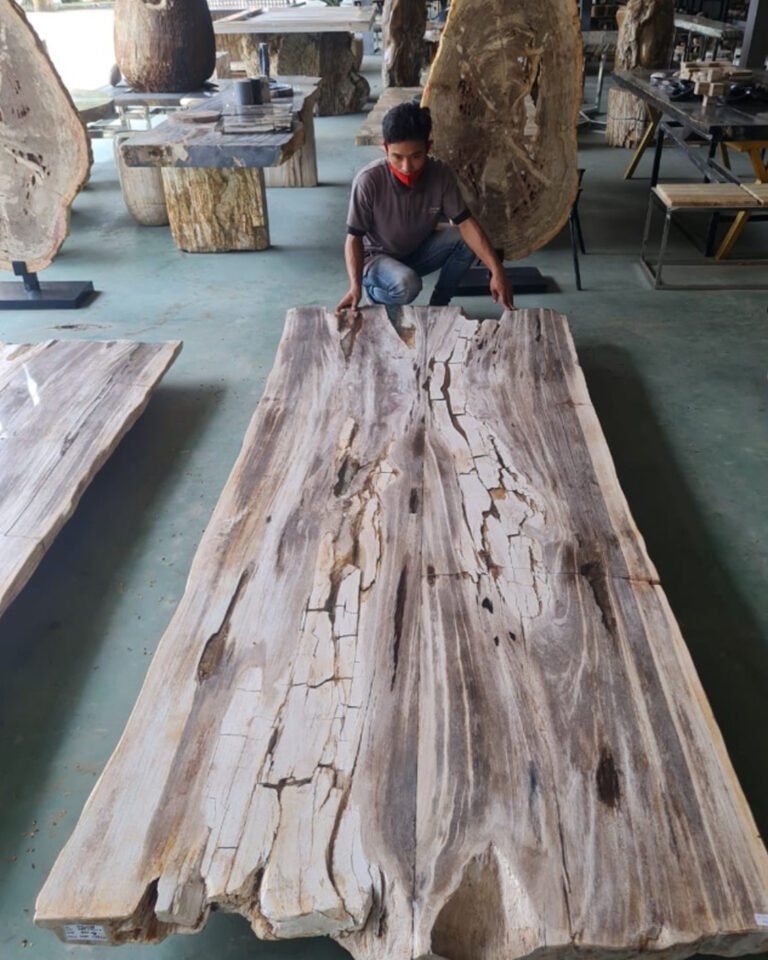
Before any heavy machinery is introduced, the process begins with a careful study of the specimen. Craftsmen evaluate the size, shape, and internal patterns of the raw fossil. Understanding the natural structure is critical, as it dictates how the piece will be utilized, whether as a center-table slab, a decorative sculpture, or a bespoke decor item. For those interested in the foundational knowledge of this industry, how the Indonesian petrified wood industry works is an essential starting point to appreciate the scale and precision involved.
Precision Cutting and Shaping
Once a design is finalized, the first technical step is cutting. Due to the high mineral density, standard woodworking tools are ineffective. Artisans use diamond-tipped blades and heavy-duty industrial saws to slice through the stone. This requires a steady hand and constant water cooling to prevent the stone from cracking due to friction heat. The precision during this stage determines the flatness and stability of the final product, which is a hallmark of petrified wood cutting specialists in Indonesia.
Grinding and Polishing for Perfection
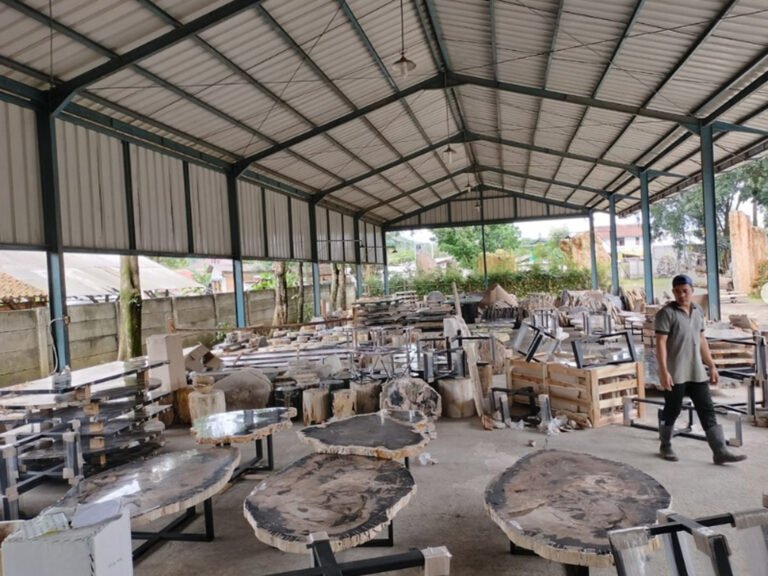
After the slab or object is cut to size, the surface remains rough and matte. The polishing phase is where the true character, color, and crystalline patterns are unveiled. This step involves multiple stages of sanding with progressively finer abrasives. It is a time-consuming craft that removes every scratch and imperfection, ultimately resulting in a glass-like finish that highlights the ancient grain. Achieving this level of quality is why many international buyers prioritize working with experienced manufacturers who understand the nuances of petrified wood polishing specialists in Indonesia.
Quality Control and Finishing Touches
The final stage is rigorous inspection. Skilled craftsmen examine the piece for any structural weaknesses or natural fissures that may require filling with specialized resins to ensure long-term durability. The goal is to preserve the natural aesthetic while creating a functional piece of art that can withstand daily use in modern homes or commercial spaces.
Key Technical Requirements for Craftsmen
| Process Step | Required Skill/Tool |
|---|---|
| Cutting | Diamond wire or circular saw with coolant |
| Shaping | Angle grinders and precision carving tools |
| Polishing | Sequential diamond pads and buffing compounds |
| Sealing | High-grade epoxy or resin stabilization |
Conclusion
The craftsmanship involved in working with fossilized wood is a bridge between geological history and modern interior design. By combining ancestral knowledge with modern machinery, Indonesian artisans ensure that each piece of petrified wood is not only beautiful but also durable enough to serve as a lifelong heirloom. If you are looking to source high-quality, expertly crafted fossilized wood for your next project, Java Petrifiedwood is here to provide you with pieces that embody this superior level of artistry.