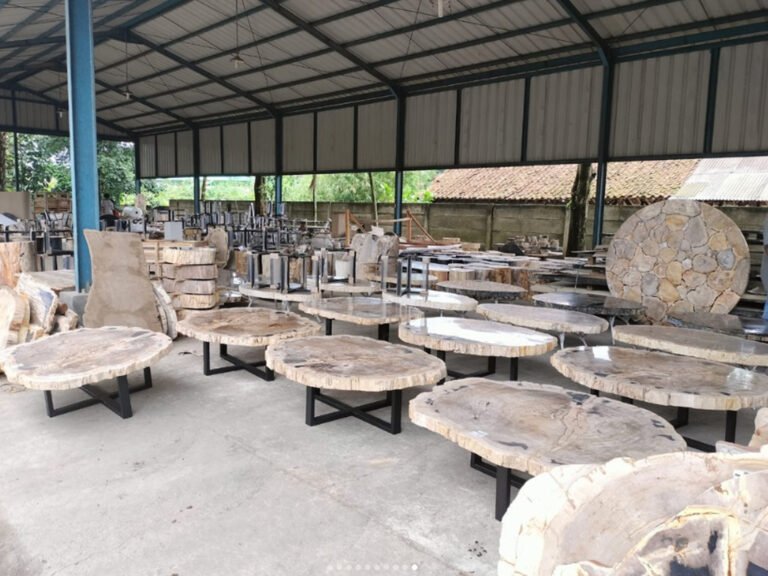
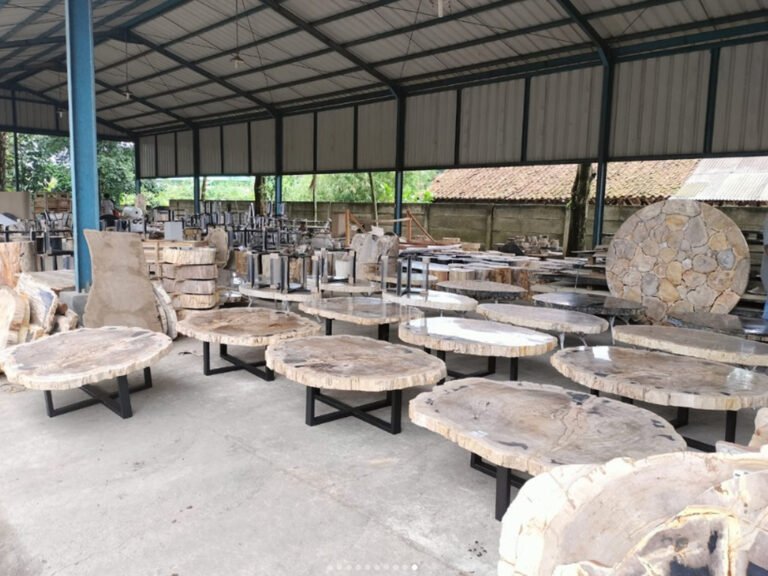
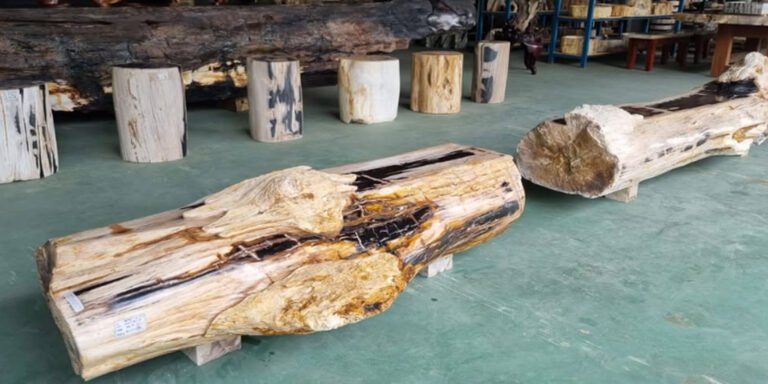
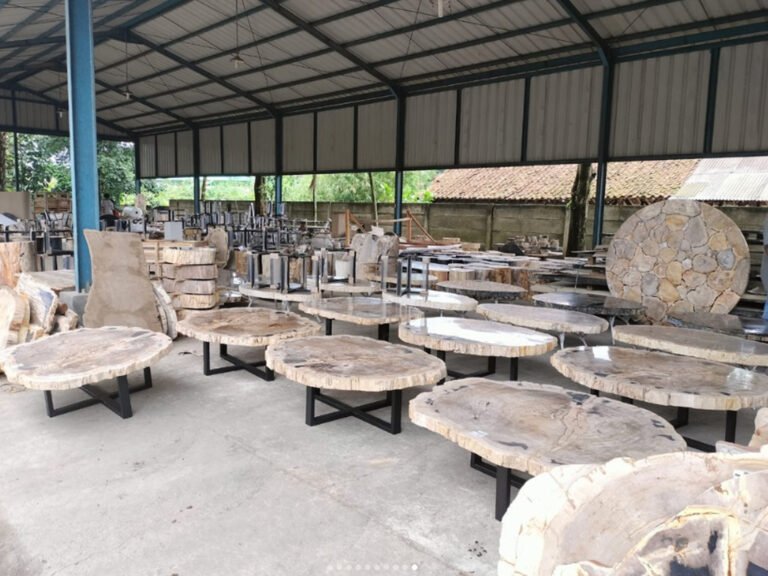
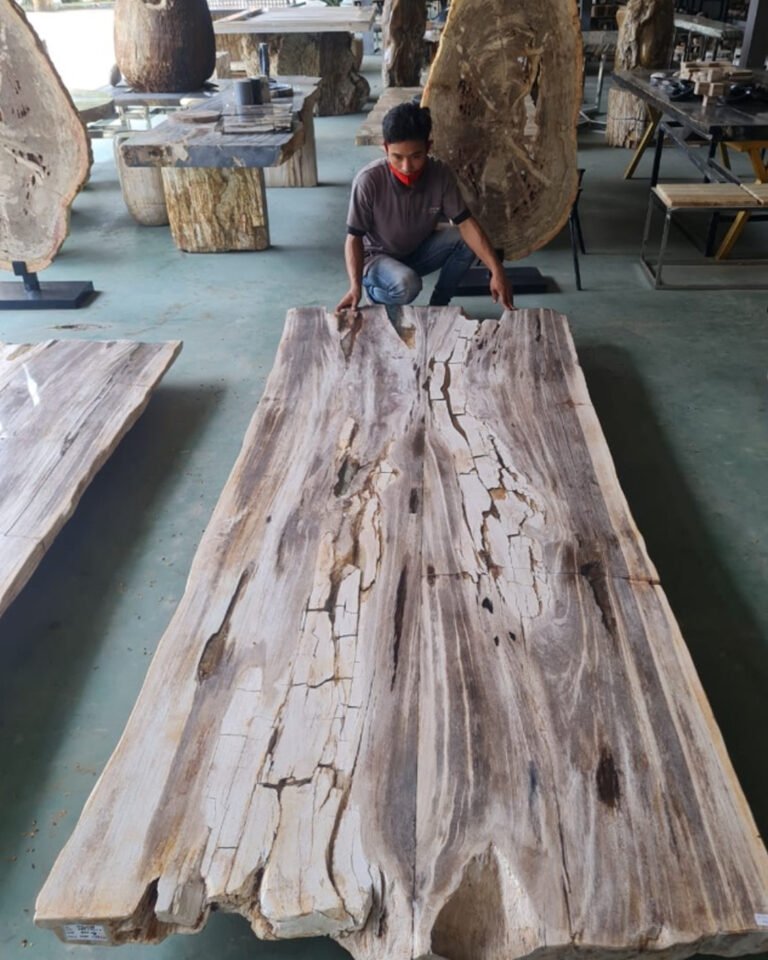
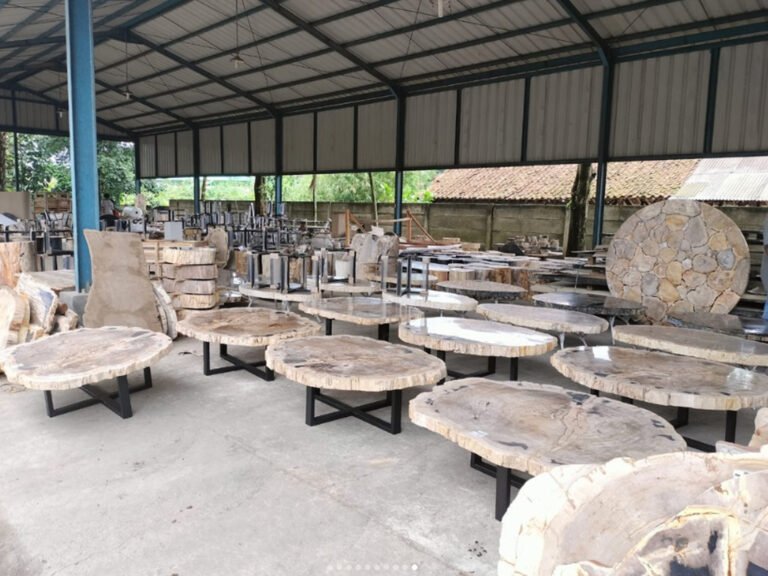
Inside a Petrified Wood Processing Workshop in Indonesia
The Art of Transformation: Inside an Indonesian Petrified Wood Workshop
The journey of a piece of petrified wood—from a millions-year-old fossil buried deep underground to a sophisticated centerpiece in a modern home—is a testament to human craftsmanship. When you visit a petrified wood processing workshop in Indonesia, you are stepping into a space where geological history meets contemporary design. These facilities are the beating heart of an industry that values patience, precision, and respect for natural materials.
Transforming raw, jagged fossilized wood into smooth, polished furniture is no small feat. It requires a deep understanding of the material’s structural integrity, which is why how petrified wood factories operate in Indonesia involves a delicate balance of traditional stone-carving techniques and modern industrial machinery.
The Processing Workflow
The processing of petrified wood is a multi-stage endeavor. Because this material is essentially stone, the process is far more similar to lapidary work than traditional woodworking. Here is how artisans approach the material in a typical workshop:
- Selection and Cleaning: Every piece is inspected for quality, density, and natural patterns. Raw logs are cleaned to remove debris and expose the potential beauty within.
- Slicing: Using large-scale diamond-tipped saws, artisans carefully cut the logs into slabs. This is a critical stage where the internal grain and mineral colors are revealed.
- Shaping and Carving: Depending on the end product, the slab may be shaped into a round table, a rectangular console, or a piece of art. For more complex projects, Indonesian petrified wood for custom furniture projects allows for unique designs that highlight the wood’s original shape.
- Grinding and Polishing: This is the most time-consuming phase. The stone passes through several grades of abrasive pads to achieve a glass-like finish, which enhances the vibrant colors caused by ancient mineral deposits.
Equipment and Skill
Quality results rely heavily on the combination of the right tools and skilled labor. Workshops utilize industrial-grade water-fed saws to keep the temperature stable and prevent the stone from cracking during the high-friction cutting process. Master artisans in these workshops have spent years learning to identify the “flow” of the stone, ensuring that the final cut maximizes the aesthetic value of the piece.
For those interested in sourcing, understanding how to source petrified wood directly from Indonesia is easier when you recognize the investment a workshop makes in this specialized equipment and their commitment to training local craftsmen.
Quality Control in the Workshop
A reputable processing facility incorporates strict quality control protocols at every step. Because petrified wood is a natural product, it may contain internal voids or natural fissures. A professional workshop will address these areas during the filling and reinforcement stages, ensuring the surface is food-safe and structurally sound for daily use. This dedication to excellence is what differentiates a high-end manufacturer from a basic producer.
Why Visit or Partner with a Professional Workshop?
Partnering with a workshop that prioritizes both sustainability and high-quality production ensures that your inventory meets international standards. By working directly with producers, you gain transparency into the origin of your items and the ethical standards maintained during the production process. Whether you are looking for rare slabs or standard decor pieces, the craftsmanship in these workshops remains unmatched globally.
If you are looking for authentic, high-quality fossilized wood pieces for your commercial or residential projects, feel free to contact Java Petrifiedwood today to discuss our current collections and custom production capabilities.
FAQ
- How long does it take to process a single piece of petrified wood? The duration depends on the size and complexity. A large, high-quality table can take several weeks of labor, involving multiple stages of cutting, grinding, and polishing.
- Is the polishing process chemical-based? Most professional workshops use mechanical polishing techniques with abrasive pads and water, rather than synthetic resins, to maintain the natural integrity of the stone.
- Can I request custom shapes from a workshop? Yes, skilled workshops are equipped to handle custom requests, including specific dimensions for tables, sculptures, and architectural features.
- How is the quality of the finishing ensured? Quality is verified through consistent inspection, testing the hardness of the surface, and ensuring the polish is uniform across the entire slab.