What Happens Inside a Petrified Wood Manufacturing Facility?
The Journey of Stone Wood: Inside the Manufacturing Process
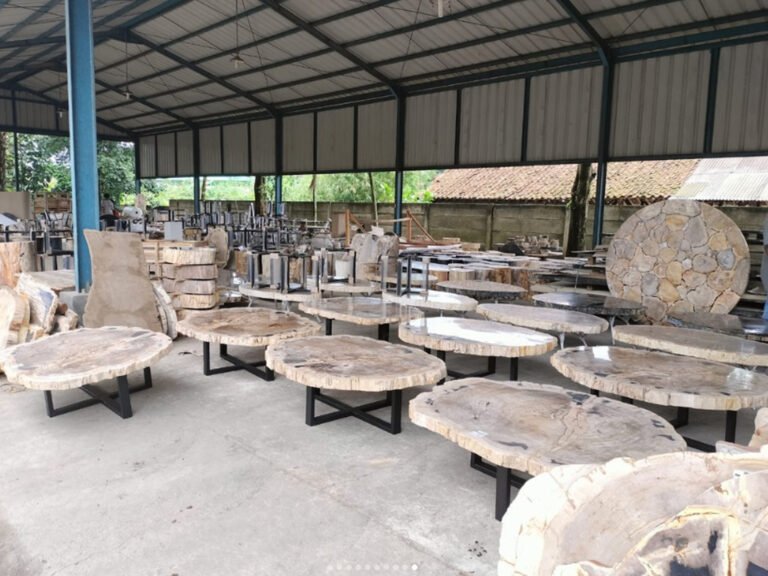
For international buyers and interior designers, understanding the production lifecycle is key to appreciating the value of petrified wood. A petrified wood manufacturing facility in Indonesia is not merely a factory; it is a specialized workshop where ancient geological history meets modern craftsmanship. The transformation from a raw, unearthed log into a polished, luxury centerpiece involves precision, patience, and a deep respect for the material’s structural integrity.
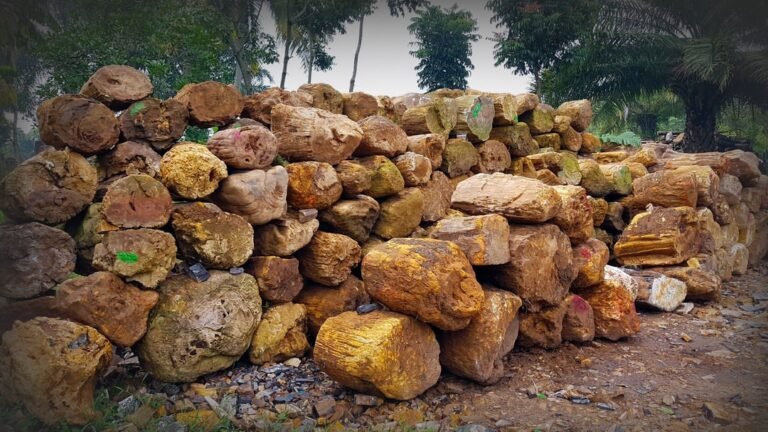
Receiving and Grading Raw Material
The process begins when raw fossilized logs arrive from various regions. At this stage, experts must assess the material. Not all fossilized wood is suitable for high-end furniture. The team evaluates the specimen based on its mineral content, color saturation, and structural soundness. This method of grading Indonesian petrified wood ensures that only the most stable and visually striking pieces proceed to the cutting stage.
Precision Cutting and Shaping
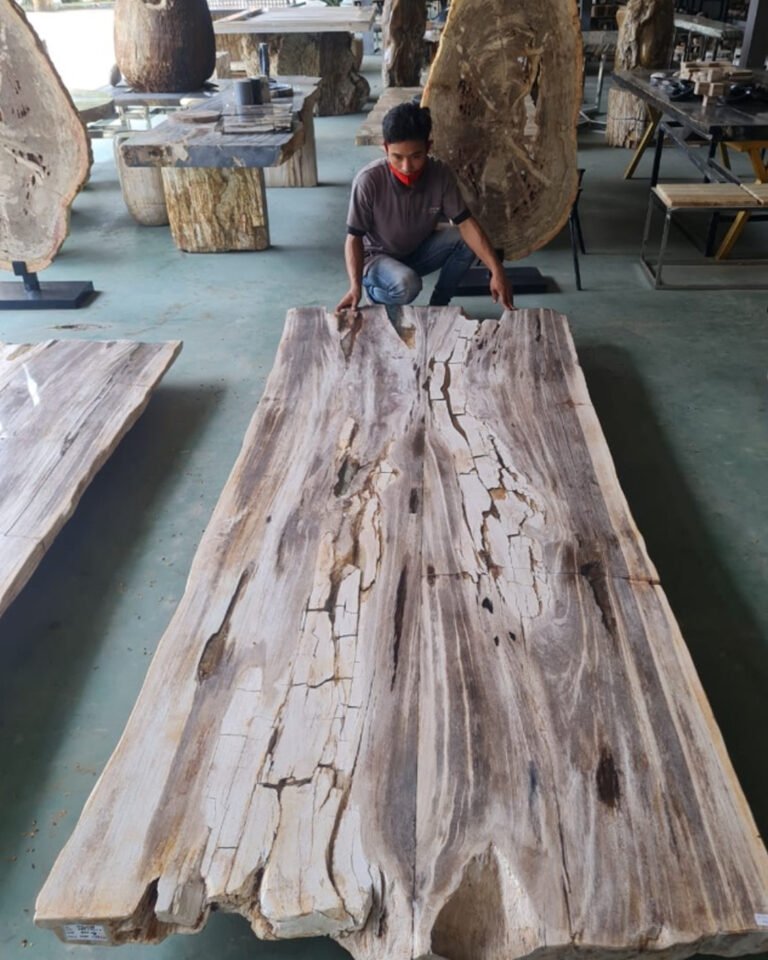
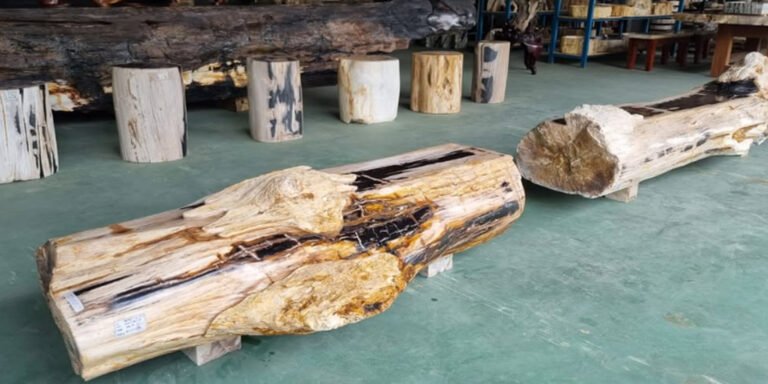
Once the material is selected, it undergoes primary cutting using large-scale industrial diamond saws. Because petrified wood is essentially quartz-rich stone, standard woodworking tools are ineffective. The facility uses water-cooled diamond-blade saws to prevent overheating, which could cause the material to crack or shatter. If you are curious about the technical aspects, learning how petrified wood factories operate in Indonesia reveals the level of expertise required to slice these massive, ancient structures into slabs or blocks for table tops and sculptures.
The Art of Grinding and Polishing
After the rough cuts are made, the surface is still uneven. The grinding process involves several stages of abrasive refinement. Technicians use progressively finer diamond pads to remove surface imperfections. This is a labor-intensive phase that can take several days for a single large slab. The goal is to reach a surface that is not only smooth to the touch but also capable of reflecting light to showcase the internal “growth rings” and mineral inclusions that define the stone’s beauty.
Final Finishing and Quality Assurance
In the final stages of production, the focus shifts to aesthetic enhancement and structural reinforcement. High-quality resins are sometimes used to fill natural cavities or stabilize micro-cracks, ensuring the longevity of the finished piece. When choosing your source, it is important to understand what makes a reliable petrified wood export supplier, especially concerning their finishing techniques and commitment to preserving the natural character of the stone.
Table: The Production Workflow
| Process Stage | Action Involved |
|---|---|
| Sourcing & Grading | Inspection of geological stability and color. |
| Primary Cutting | Industrial diamond sawing with water cooling. |
| Grinding | Smoothing surfaces with abrasive diamond pads. |
| Polishing | Final buffing to achieve high-gloss finish. |
| QC Inspection | Verifying dimensions and structural integrity. |
By maintaining rigorous standards throughout these phases, manufacturers ensure that the end product—whether it be a dining table, an art piece, or an interior accent—is both a durable investment and a timeless work of art. If you are ready to incorporate these natural masterpieces into your collection, contact the experts at Java Petrifiedwood to discuss custom sourcing and procurement options for your project.