
How to Measure the Density of Petrified Wood
Understanding Petrified Wood Density
Petrified wood is more than just a decorative element; it is a geological marvel. For collectors, interior designers, and professionals in the stone industry, understanding the physical properties of this material is essential. One of the most significant indicators of quality and authenticity is density. When you learn how to measure the density of petrified wood, you gain deeper insight into the composition and the mineralization process that occurred over millions of years.
Because petrified wood is essentially organic matter replaced by silica and other minerals, its weight is significantly higher than that of regular wood. Understanding what is the density of Indonesian petrified wood can help you distinguish between high-quality specimens and inferior materials, ensuring you make an informed decision for your collection or interior project.
The Scientific Approach: Density vs. Specific Gravity
In technical terms, density is defined as mass per unit volume (g/cm³). When evaluating geological specimens, experts often refer to specific gravity, which is the ratio of the density of the specimen to the density of water. Since most petrified wood has been heavily silicified, it typically exhibits a density range higher than standard wood and closer to common minerals like quartz or agate.
Required Tools for Accurate Measurement
To measure the density of your specimen, you do not need a laboratory, but you do need precision tools. Ensure you have the following:
- A high-precision digital scale (capable of measuring in grams).
- A container large enough to hold the specimen.
- Water (or a fluid of known density).
- A thin string or wire to suspend the specimen.
Step-by-Step Measurement Process
The most effective way to calculate the density of an irregularly shaped object like a piece of petrified wood is through the Archimedes’ principle, also known as water displacement.
- Weigh the Specimen in Air: Place your dry piece of petrified wood on the digital scale and record the weight (Mass_air).
- Weigh in Water: Fill your container with water and place it on the scale. Tare (zero) the scale. Suspend the specimen using the wire and fully submerge it in the water without letting it touch the bottom or sides of the container. Record the weight shown (Mass_water). This reading represents the volume of water displaced.
- Calculate Density: Use the formula: Density = Mass_air / Mass_water.
This simple process provides a reliable estimate. Keep in mind that porous or cracked pieces might absorb water, which can slightly alter the result. To learn more about the intrinsic factors that influence these measurements, you may want to review what makes Indonesian petrified wood so dense.
Why Does Density Matter?
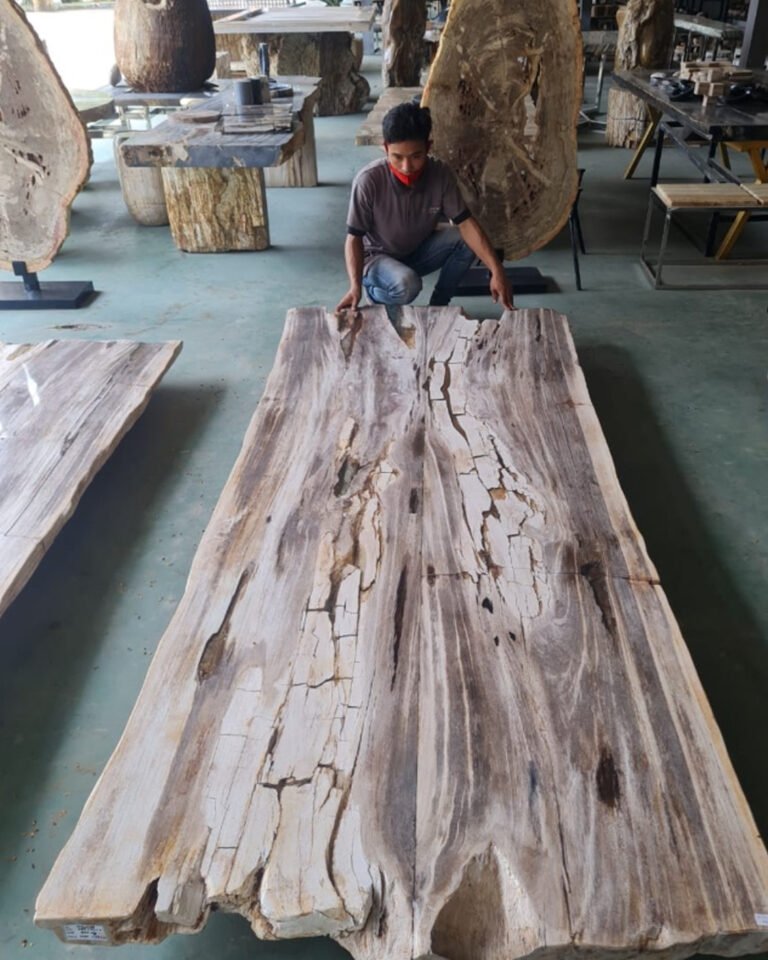
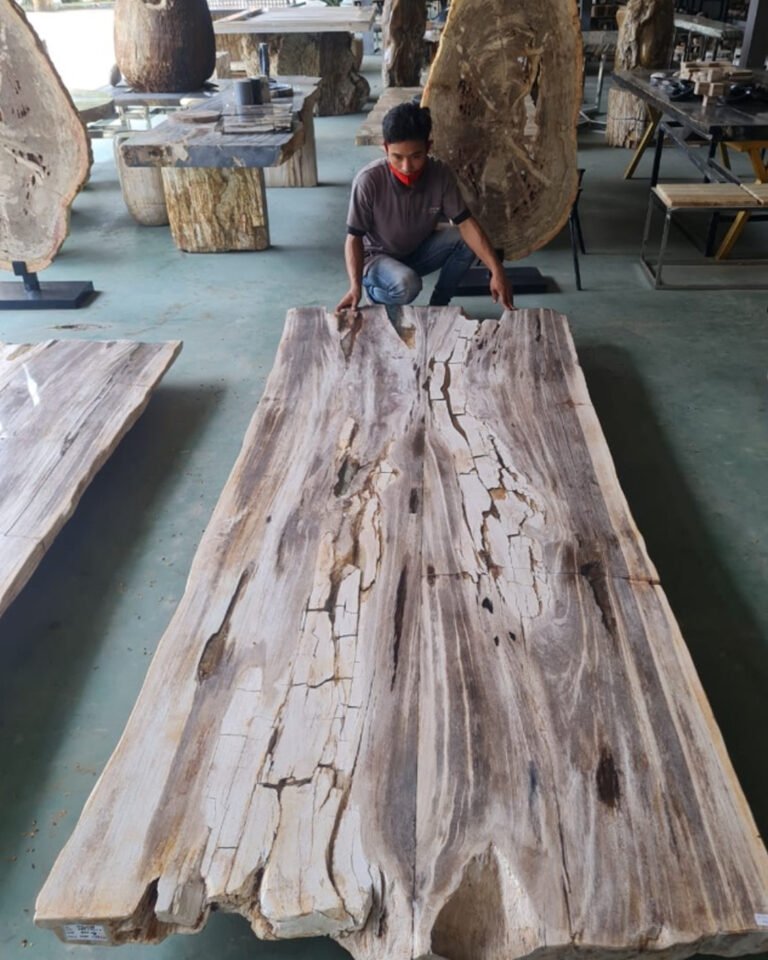
Density is a key indicator of the mineralization quality. Highly dense specimens typically indicate that the wood was saturated with mineral-rich solutions (like silica) under high pressure, preventing decay and ensuring a solid, durable structure. This is why many professionals prioritize density when selecting pieces for petrified wood slab tables or large-scale sculptures.
A specimen that feels unexpectedly light for its size may contain internal voids or have undergone incomplete mineralization, which could affect its long-term durability in high-traffic interior applications. Understanding these physical traits helps in assessing the value and structural integrity of the stone.
Conclusion
Measuring the density of petrified wood is a practical skill that connects you to the geological history of the stone. Whether you are a dealer, a designer, or a private collector, these measurements provide a layer of verification that ensures the authenticity and quality of your investment. By applying basic physics, you can better appreciate the geological transformation that turned ancient forests into the enduring, beautiful material we admire today.
Frequently Asked Questions (FAQ)
Does the density of petrified wood vary by region?
Yes, density can vary based on the types of minerals that replaced the organic matter, such as quartz, opal, or other volcanic minerals. Environmental factors during fossilization lead to different densities across various deposits.
Can I measure density without a digital scale?
While you can estimate weight by feel, an accurate density calculation is impossible without precise measurement tools. A scale is necessary for any professional or enthusiast-level assessment.
Does a high density mean the stone is harder?
Generally, yes. Higher density often correlates with a higher degree of silicification, which typically results in greater hardness on the Mohs scale, making the material more resistant to scratches and weathering.
Ready to find the perfect, high-quality piece for your next project? Browse our exclusive collection at Java Petrifiedwood. Our team provides expert guidance to ensure you select the best materials for your luxury interior or landscaping needs. Contact us today to explore our premium inventory.