
Is Petrified Wood Actually Wood or Stone?
The Enigma of Petrified Wood: Nature’s Masterpiece
For those who encounter it for the first time, petrified wood often presents a beautiful paradox. At first glance, it looks like a piece of ancient timber, yet when you touch it, the cold, heavy, and solid surface reveals that it is, in fact, rock. This brings up the most common question for enthusiasts and interior designers: is petrified wood actually wood or stone?
The short answer is that petrified wood is both and neither. It was once living organic matter that, through a miraculous geological process, has been entirely replaced by minerals. To understand this, one must look at the fascinating transition described in our guide on how millions of years turn wood into stone. It is not merely wood that has hardened, nor is it a simple rock formation; it is a fossil.
The Scientific Classification
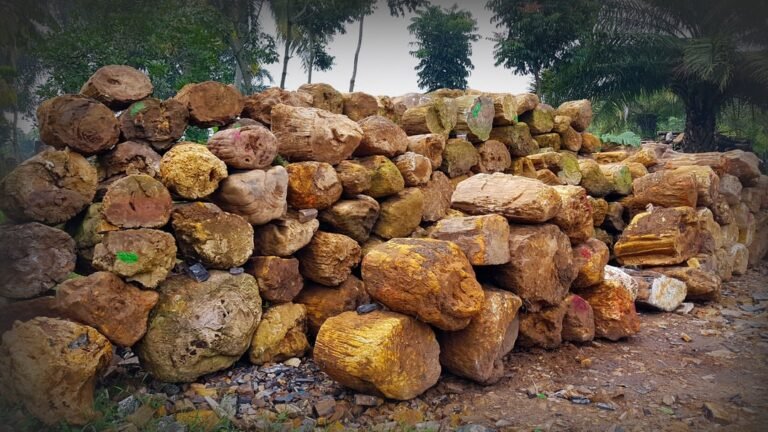
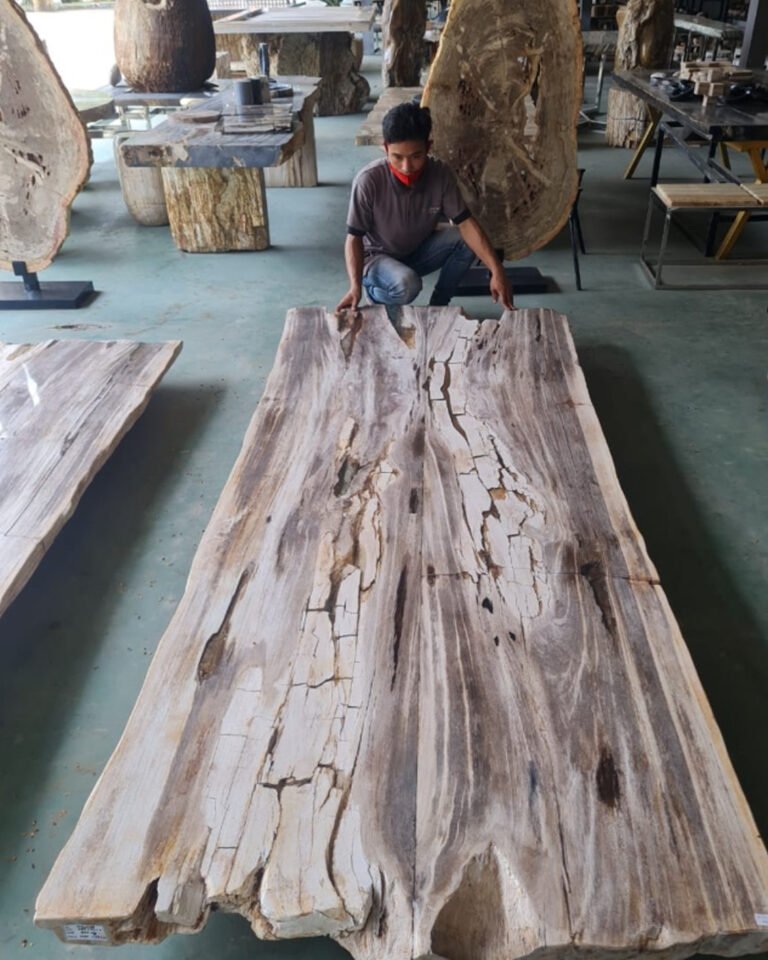
Geologically speaking, petrified wood is a fossil. The term “petrified” comes from the Greek word “petro,” meaning rock or stone, literally translating to “turned into stone.” While it retains the physical structure of the original tree—often showing visible tree rings, bark texture, and even cellular structure under a microscope—the original organic cellulose and lignin have been completely replaced by mineral deposits, most commonly silica (quartz).
This process, known as permineralization, occurs when plant material is buried in sediment, usually due to volcanic activity or flooding. You can learn more about the specific conditions required for this transformation in our article on how petrified wood forms: the science behind fossilized wood.
Is It Still Wood?
If you look at the definition of wood as a fibrous, cellular substance found in the stems of trees, then petrified wood is technically no longer wood. It is a mineral replica. However, in the world of art, geology, and interior design, it is categorized as “fossilized wood” because it preserves the exact morphology of the original specimen.
Because the organic material has been swapped for minerals, the physical properties change dramatically:
- Hardness: Unlike original timber, which has a Janka hardness rating, petrified wood measures around 7 on the Mohs scale, making it as hard as quartz.
- Weight: It is significantly heavier and denser than the wood it replaced.
- Durability: It is virtually immune to decay, termites, and fire, which makes it an exceptional material for luxury furniture.
Why Indonesia is a Global Hub for Petrified Wood
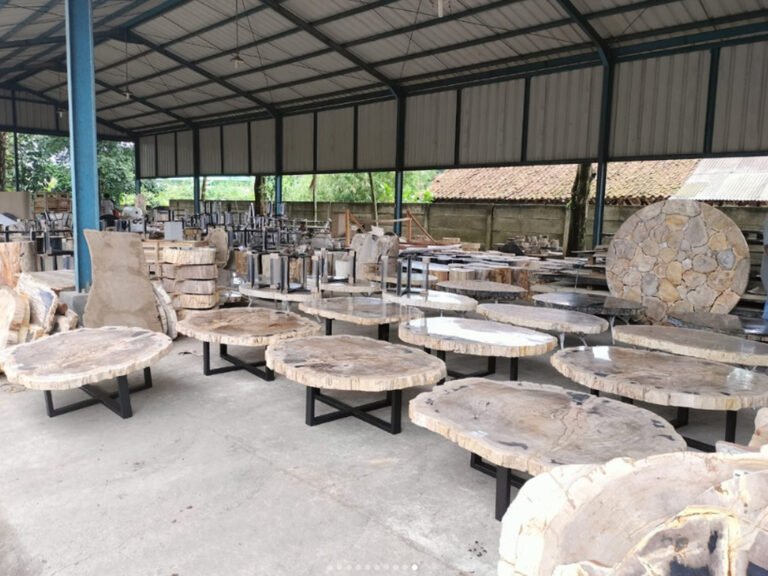
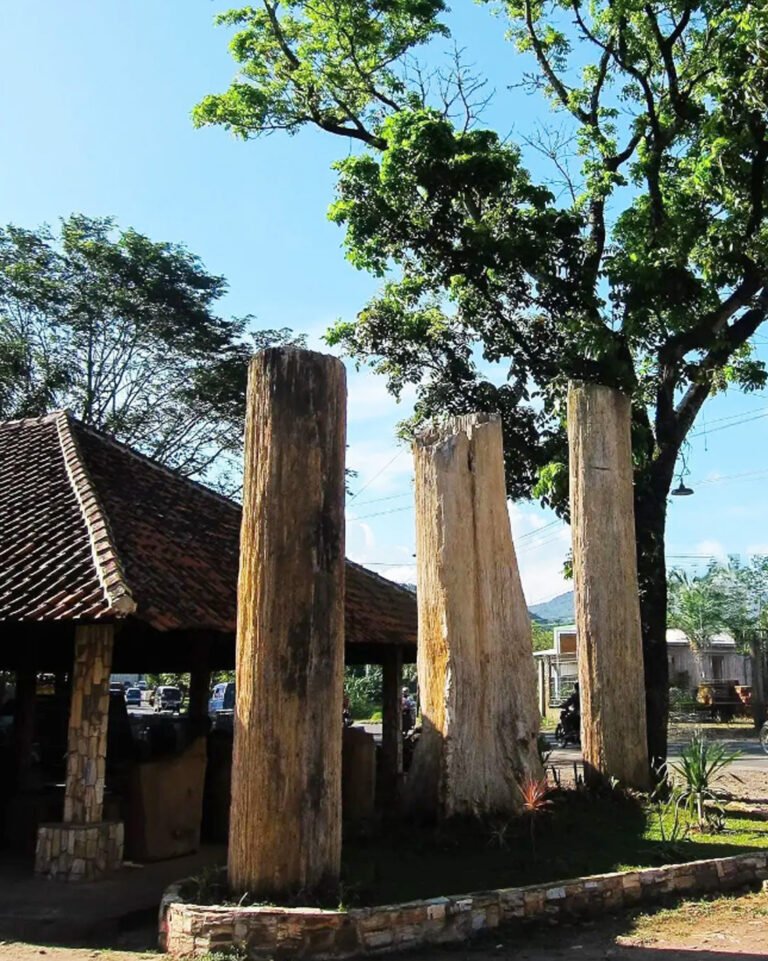
Indonesia is home to some of the world’s most breathtaking deposits of this material. The country’s unique volcanic history has provided the perfect environment for trees to be buried under ash and mineral-rich waters for millions of years. This allows for the creation of exceptionally large and colorful specimens that are highly sought after by collectors and luxury brands globally.
When you choose Indonesian petrified wood, you are acquiring a piece of history that has survived eons. For those interested in the artistic side of this material, discovering how Indonesian artisans carve petrified wood by hand reveals the incredible skill required to transform these geological wonders into functional art.
How to Use This Material in Modern Spaces
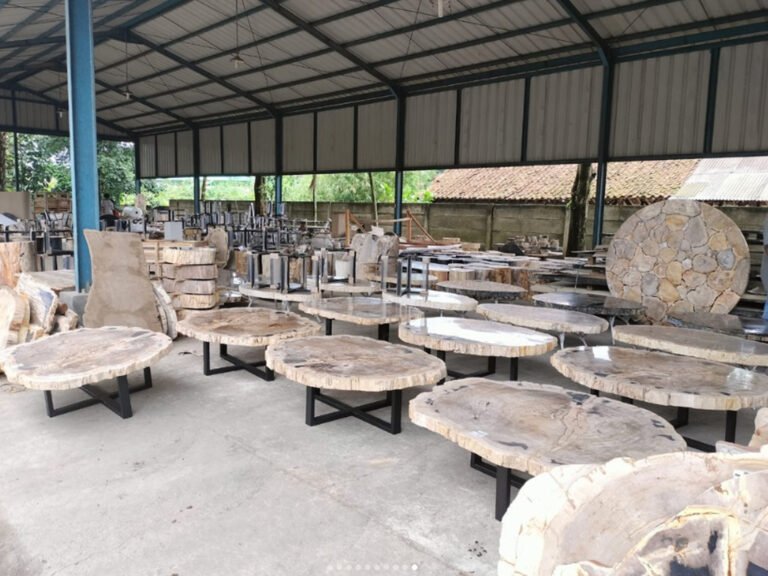
Understanding that it is essentially a stone allows designers to treat it with the same respect as marble or granite, but with the added aesthetic of natural wood grains. Whether you are considering a statement coffee table or an artistic sculpture, its durability ensures that it will remain a centerpiece for generations.
If you are looking to incorporate this natural wonder into your own space, explore our wide range of professional-grade pieces. From slabs to unique home decor, Java Petrifiedwood specializes in sourcing and finishing the finest specimens for international clients. Visit our curated selection of top petrified wood products to find the perfect piece for your project.
FAQ
Does petrified wood still feel like wood?
No, it feels like cold, hard stone to the touch. Because it is essentially composed of minerals like quartz, it lacks the warmth and porous texture of organic wood.
Can you burn petrified wood?
No. Since it is now composed of minerals and not carbon-based fibers, it will not burn. It is entirely fire-resistant.
Is it expensive compared to regular wood?
Yes, generally speaking. Because the process of finding, extracting, and processing authentic petrified wood is labor-intensive and it is a rare, non-renewable natural resource, it is valued much higher than standard timber.
How do I know if I have real petrified wood?
Authentic pieces will show detailed cellular structures or tree rings. It should be very heavy, cold to the touch, and should pass the Mohs hardness test (it will scratch glass).