

Indonesian Petrified Wood and Its Connection to Volcanoes
The Geological Origins of Indonesian Petrified Wood
Indonesia is globally recognized as one of the most prolific sources of high-quality petrified wood. While collectors and interior designers often admire these pieces for their aesthetic beauty and durability, the true story behind them lies in the country’s intense geological history. The connection between Indonesian petrified wood and volcanoes is not merely coincidental; it is the fundamental reason why these ancient forests have been preserved as stone for millions of years.
To understand the transformation from organic timber to mineral-rich stone, one must look at the Pacific Ring of Fire. Indonesia’s position along this tectonic boundary has resulted in a long history of volcanic activity, which played a decisive role in the fossilization process of prehistoric vegetation.
The Role of Volcanic Ash in Mineralization
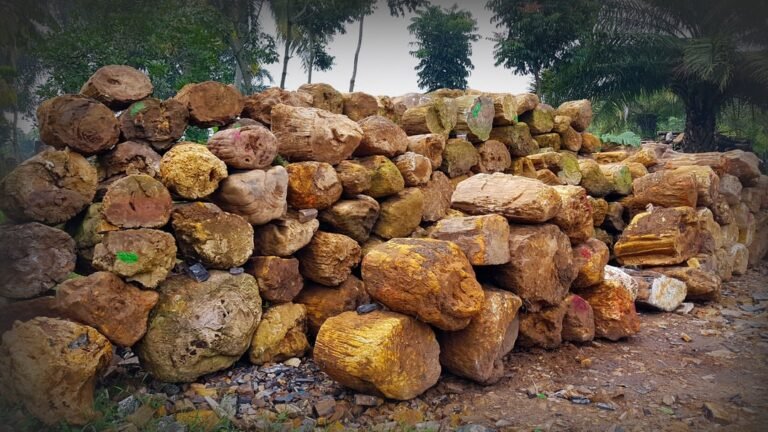
The process begins when ancient forests are suddenly buried by massive amounts of volcanic debris, such as ash, mud, and lava. This rapid burial is crucial because it protects the wood from decay, oxygen, and biological organisms that would otherwise break down the organic material.
As the volcanic material settles over the forest, it acts as a filter. Over time, silica-rich groundwater—permeated by minerals dissolved from the volcanic ash—seeps into the wood’s cellular structure. This mineral-rich environment is essential for the science behind the beauty of fossil wood. The minerals, which often include quartz, chalcedony, and opal, slowly replace the organic tissues, molecule by molecule, until the original wood structure is entirely replicated in stone.
Why Indonesian Petrified Wood is Unique
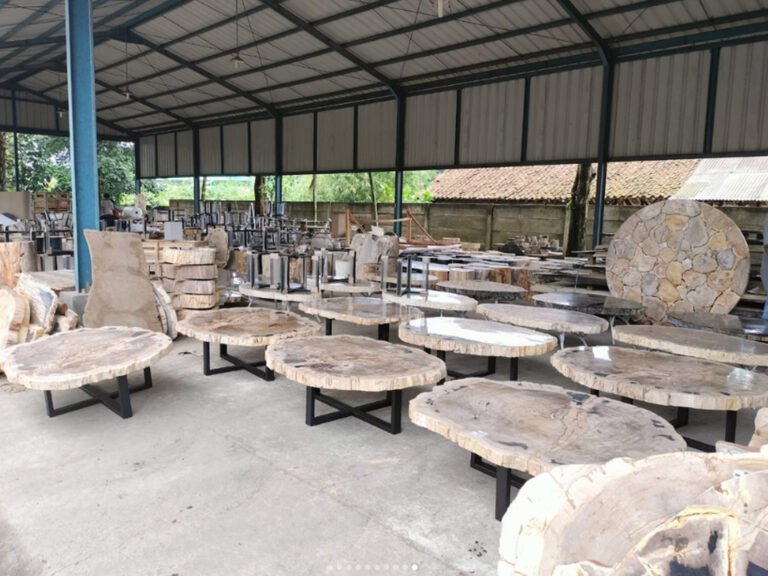
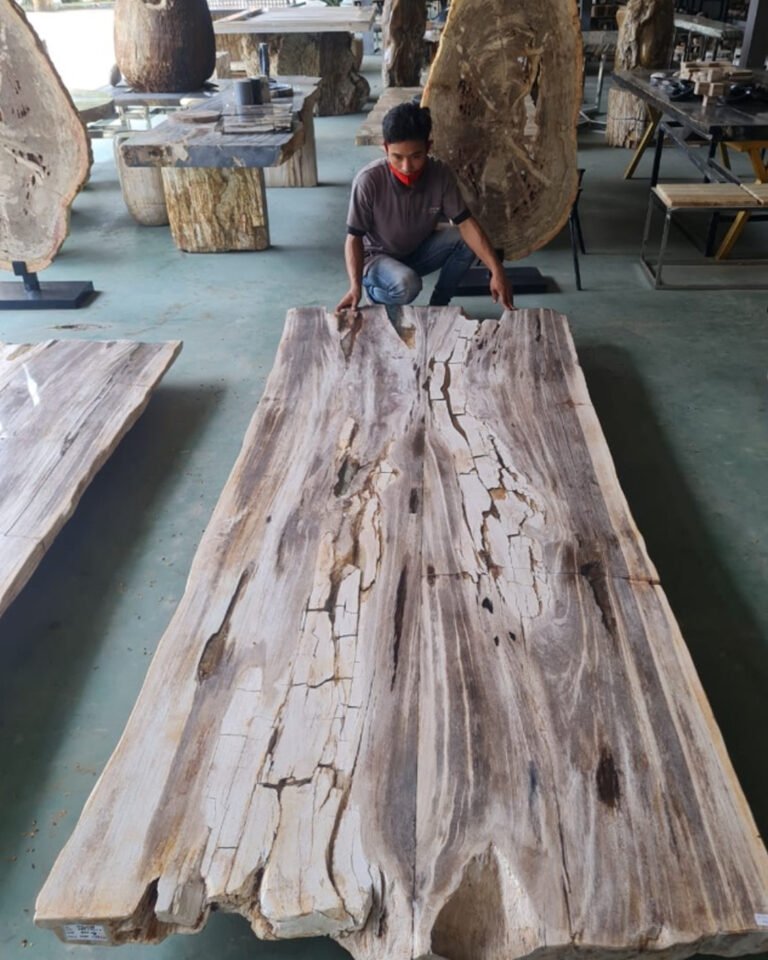
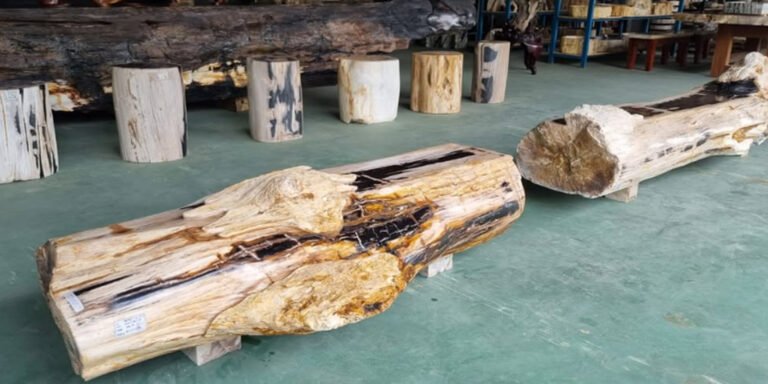
The specific mineral composition of Indonesian volcanic soil contributes to the distinct colors and patterns found in the fossilized logs. The proximity to various volcanic vents means that different minerals—such as iron oxides, manganese, and magnesium—are often present during the petrification process. These minerals create the stunning spectrum of colors, ranging from deep blacks and earthy browns to vibrant reds and creamy whites that are highly sought after by designers for interior design projects.
Furthermore, because Indonesia’s volcanic activity has been continuous over millions of years, the variety of petrified wood specimens found here is unparalleled in terms of size, texture, and density. You can learn more about why Indonesia is the world’s best source of petrified wood by examining the unique geological conditions that allowed these forests to thrive and eventually fossilize.
Natural Preservation and Geological Time
The preservation of these trees is a slow, methodical process that spans hundreds of thousands to millions of years. Once the wood is fully mineralized, it becomes as hard as stone while maintaining the intricate details of the original tree bark, knots, and growth rings. This natural process ensures that each piece is a unique historical record of the ancient environments that existed in Indonesia long before human habitation.
The resilience of this material is why many industries now favor petrified wood for high-end applications. Because it has been transformed by heat and pressure from volcanic activity, the material is incredibly durable, making it an excellent choice for both functional furniture and artistic installations.
Conclusion
The fascinating link between volcanic activity and petrified wood is what gives these pieces their enduring value and structural integrity. At Java Petrifiedwood, we specialize in sourcing and preparing these geological treasures, ensuring that the natural history of the Indonesian landscape is preserved for your home or commercial space. Whether you are looking for a centerpiece table or a decorative sculpture, we provide authentic pieces that tell a million-year-old story.
Are you looking to add a piece of geological history to your collection? Contact the team at Java Petrifiedwood today to explore our premium inventory and learn more about our sourcing process.
3 Comments