

The Science Behind the Beauty: How Fossil Wood is Formed and Mineralized
The Wonders of Fossil Wood: Nature’s Geological Masterpiece
Petrified wood, also known as fossil wood, is among the most fascinating natural wonders—offering a remarkable glimpse back into prehistoric times. Highly prized by collectors, designers, and geologists alike, petrified wood combines the organic beauty of ancient trees with the enduring qualities of stone. But what scientific processes turn living wood into petrified marvels? In this article, we delve deep into how fossil wood is formed and the mineralization journey that takes centuries or even millions of years.
What is Fossil Wood?
Fossil wood is created when tree material is buried by sediment and protected from decay due to oxygen and organisms. Over millions of years, mineral-rich water flows through these sediments, gradually replacing the organic material with minerals such as silica, calcite, pyrite, or opal. This process preserves the wood’s original structure down to a microscopic level, resulting in a breathtaking natural replica in stone.
The Difference Between Fossil Wood and Petrified Wood
Although the terms are often used interchangeably, “fossil wood” is a broader term referring to any fossilized remnants of wood. “Petrified wood,” on the other hand, specifically describes wood that has undergone complete mineralization, becoming stone. Not all fossil wood is fully petrified, but all petrified wood is fossil wood.
The Process: How Fossil Wood is Formed
Understanding how fossil wood is formed involves examining a series of intricate geological, chemical, and environmental steps:
1. Burial and Isolation
It all begins when a tree falls and is rapidly buried by sediment—such as volcanic ash, mud, or flood deposits. The buried wood is quickly cut off from decay forces like fungi, bacteria, and oxygen. This isolation is critical for fossilization.
2. Infiltration of Mineral-Rich Water
Over time, groundwater rich in dissolved minerals (primarily silica from volcanic ash or other mineral sources) seeps into the buried wood. Each time water enters the wood’s cellular structure, it brings with it minerals that slowly begin to accumulate.
3. Cellular Replacement and Mineralization
This is the heart of petrification. As the organic material in the wood decays, it is replaced molecule by molecule with minerals. Silica (in the form of quartz) is the most common mineral, but opal, calcite, pyrite, and others can also participate. Importantly, this replacement process can preserve intricate details of the wood’s anatomy—including annual rings and even cellular structure—resulting in spectacular patterns and colors.
4. The Role of Time and Stability
Mineralization is a slow process that can take millions of years. Stable conditions of burial and a steady supply of mineral-rich water ensure that the transformation can occur with little disturbance, locking in features of the original wood in exquisite detail.
Mineralization: The Beauty Within Fossil Wood
The scientific process of mineralization not only turns wood into stone, but also creates a dazzling range of colors and patterns. These are determined by the type of minerals involved and the local geochemistry. Here are some key players:
- Silica (Quartz): Typically results in transparent to white, grey, or yellowish coloring.
- Iron Oxides: Responsible for red, orange, and yellow hues.
- Manganese Oxides: Create black or deep blue colors.
- Copper, Chromium, and Cobalt: Can impart green, blue, or purple tones.
- Calcite and Others: Add a range of creamy to clear colorations.
Each piece of petrified wood is uniquely beautiful, echoing both its biological past and geological journey.
Microscopic Preservation: A Window to the Past
One of the most impressive features of fossil wood is its ability to preserve the internal structure of the original tree. When examined under a microscope, even cellular structures, vessels, and growth rings are visible. This allows scientists to classify ancient flora, learn about prehistoric environments, and better understand Earth’s botanical history.
Global Sources of Petrified Wood
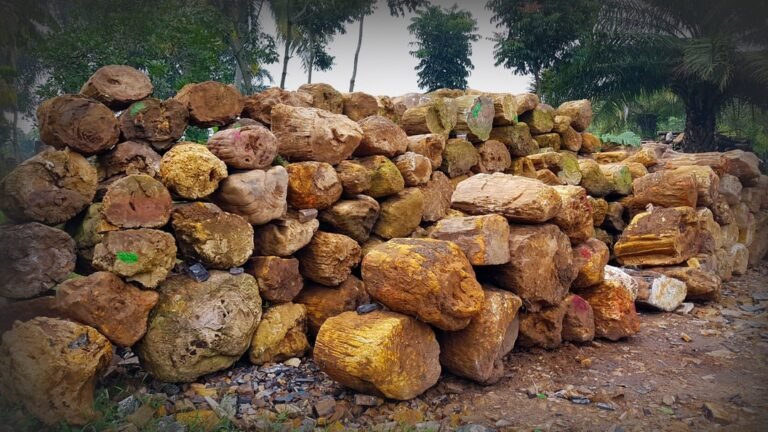
Petrified wood can be found on every continent, but each location offers unique variations. The age, color, and mineral content depend on local geology. Some of the most significant deposits are found in:
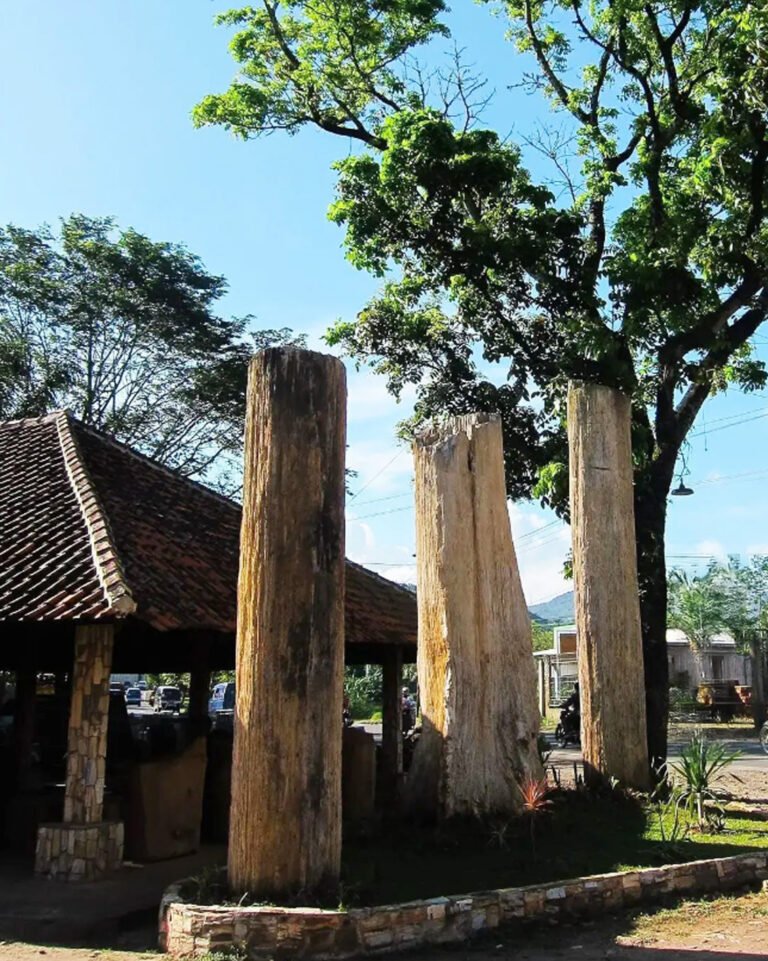
- Indonesia: Famous for exceptionally large and vividly colored pieces—highly prized for décor and collectibles.
- United States: Notably in Arizona’s Petrified Forest National Park.
- Madagascar: Known for intricate and colorful fossil woods.
- Argentina, Brazil, and Australia: Important for their ancient forests now fossilized in stone.
Why Indonesian Petrified Wood Stands Out
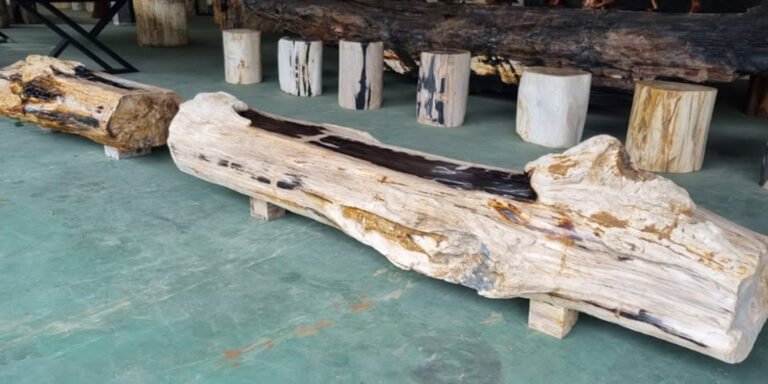
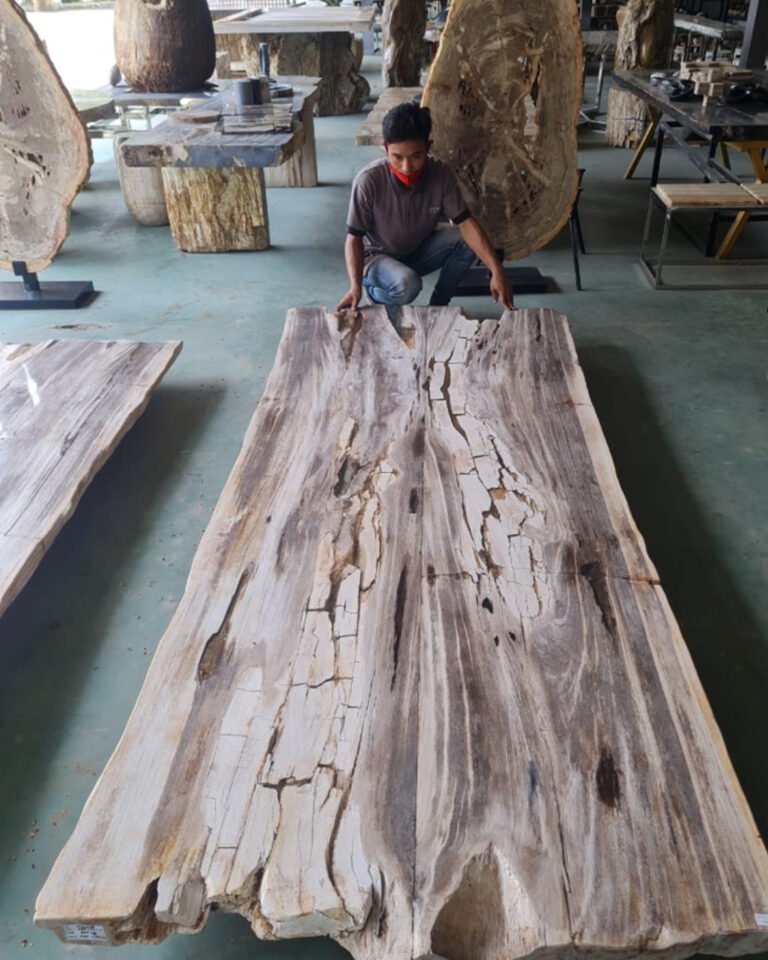
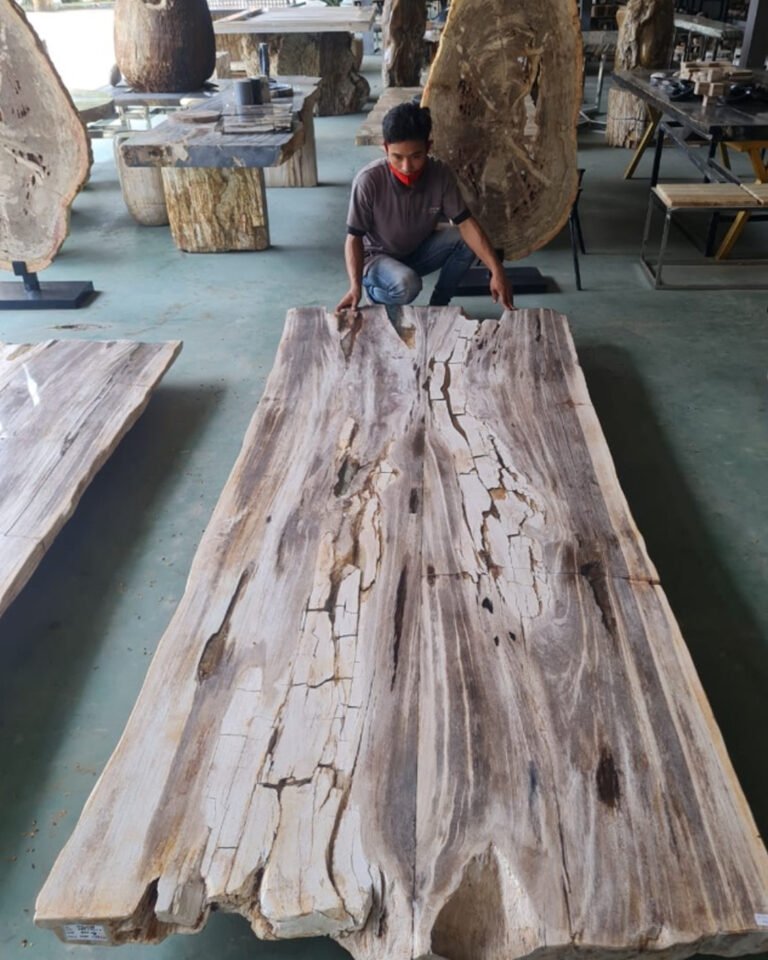
Indonesian petrified wood is particularly notable due to its size, clarity, and vibrant colors. The region’s rich volcanic soils and consistent geological activity over millions of years created perfect fossilization conditions. As a result, Indonesian fossil wood boasts extraordinary detail and aesthetic value, making it a sought-after material for luxury décor and functional art worldwide.
Petrified Wood for Collectors and Designers
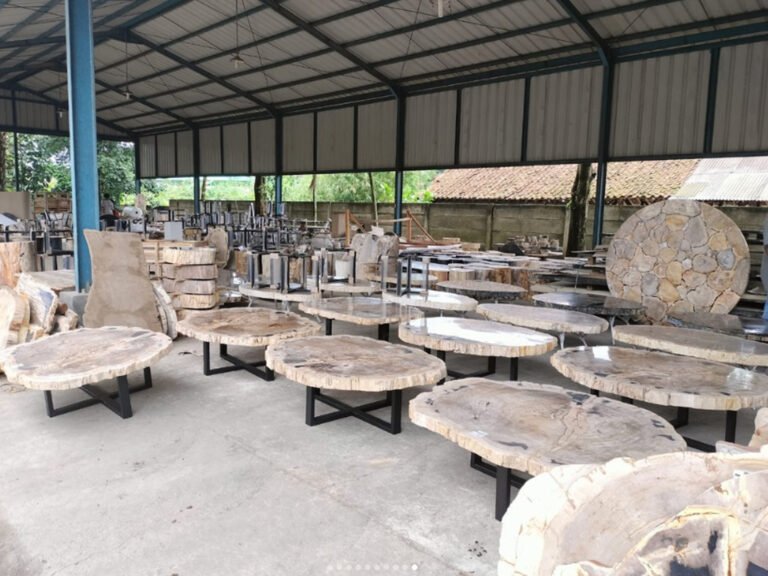
For international buyers, Indonesian petrified wood offers enduring beauty and sustainable luxury. Whether it’s custom tabletops, sculptures, or jewelry, each piece is a rare blend of natural history and artisan craftsmanship. Understanding how fossil wood is formed deepens appreciation for each unique specimen and the ancient story it tells.
Conclusion: The Art and Science in Every Specimen
The formation and mineralization of fossil wood are processes that span eons—intertwining biology, chemistry, and geology. The result is a captivating synergy of art and science, preserved in every spectacular piece of petrified wood. For collectors, enthusiasts, and designers, Indonesian petrified wood represents not just a material, but a tangible connection to Earth’s deep past.
One Comment