Understanding Knots and Inclusions in Petrified Wood
What Are Knots and Inclusions in Petrified Wood?
For collectors and interior designers, the appeal of petrified wood lies in its unique, one-of-a-kind appearance. When examining pieces of fossilized wood, you will often notice distinct features such as knots and inclusions. Understanding these elements is essential, as they are not defects, but rather historical signatures that tell the story of the ancient tree’s life and the subsequent fossilization process.
A knot in petrified wood typically marks the spot where a branch once grew from the trunk. As the tree lived and grew, the wood fibers surrounding the branch were distorted, creating the circular, swirling grain patterns we see today. When petrified, these dense, complex areas remain preserved in stone, often resulting in highly decorative swirls that are prized by artisans.
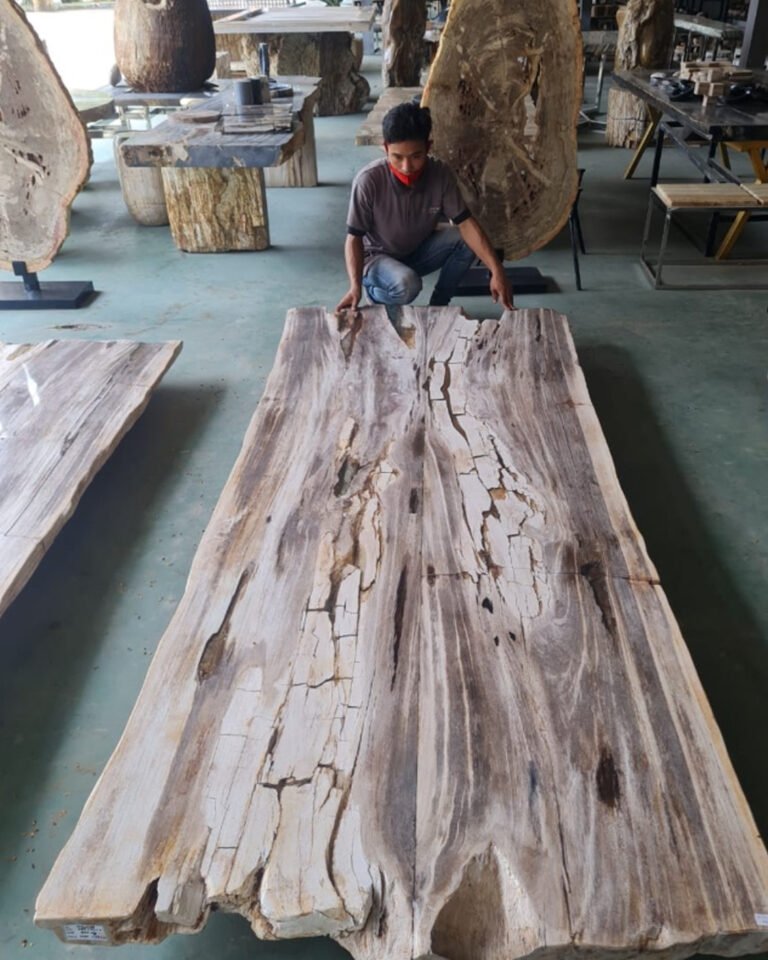
Inclusions, on the other hand, refer to foreign materials trapped within the wood during the replacement process. As silica-rich groundwater permeated the organic structure, it occasionally brought along minerals, sediment, or even small voids that were filled over millions of years. Much like natural cracks in petrified wood, these inclusions are part of the authentic transformation from organic matter into stone.
The Role of Inclusions in Aesthetic Value
While some buyers look for completely uniform patterns, many high-end collectors specifically seek out pieces with unique inclusions. These features often introduce contrasting colors or textures that make a piece stand out. For instance, mineral inclusions might contain iron or manganese, which can lead to striking streaks of red, yellow, or black that cut across the more consistent grain patterns.
Because every piece of petrified wood is different, these inclusions act as a fingerprint. They prove that the object is a genuine fossil rather than a synthetic reproduction. In the world of luxury furniture, such as table slabs or pedestals, these natural inclusions provide a conversation piece that elevates the interior design, adding a sense of geological history to a modern space.
Are Knots and Inclusions Considered Structural Defects?
One of the most common questions from international buyers involves the structural integrity of petrified wood that features significant knots or inclusions. Generally, these features do not compromise the durability of the stone. During the fossilization process, the organic material is replaced by minerals—most commonly quartz or chalcedony—which are exceptionally hard and stable.
If you are concerned about the stability of a piece, it is helpful to understand the difference between a natural inclusion and a structural weakness:
- Knots: These are simply dense, swirled grain patterns. They are usually among the hardest parts of the wood fossil.
- Inclusions: These are mineral deposits. As long as they are fully silicified (turned to stone), they will be just as durable as the surrounding wood.
- Voids: Occasionally, a pocket may remain in an inclusion. If the void is too large, it may be filled with resin during the professional finishing process to ensure a smooth, usable surface.
For those interested in how these pieces hold up over time, it is worth noting the long-term durability of petrified wood furniture, which remains one of its greatest assets for both indoor and outdoor applications.
How Artisans Work with These Features
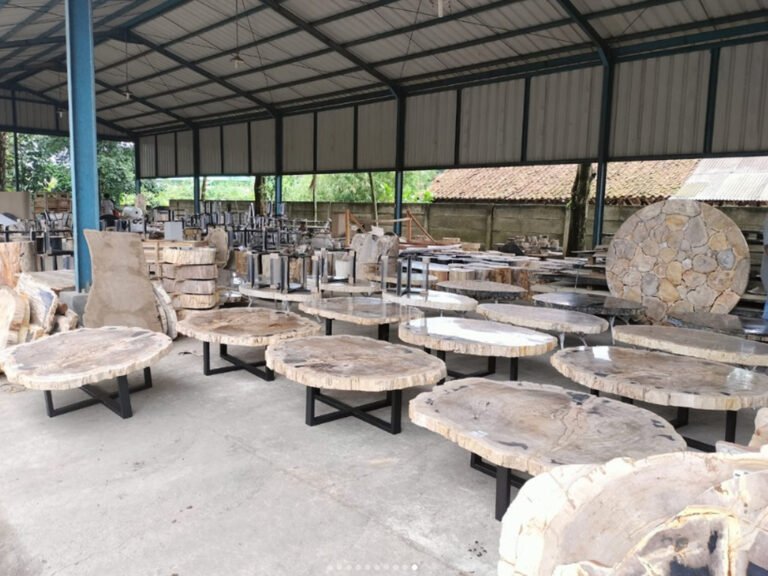
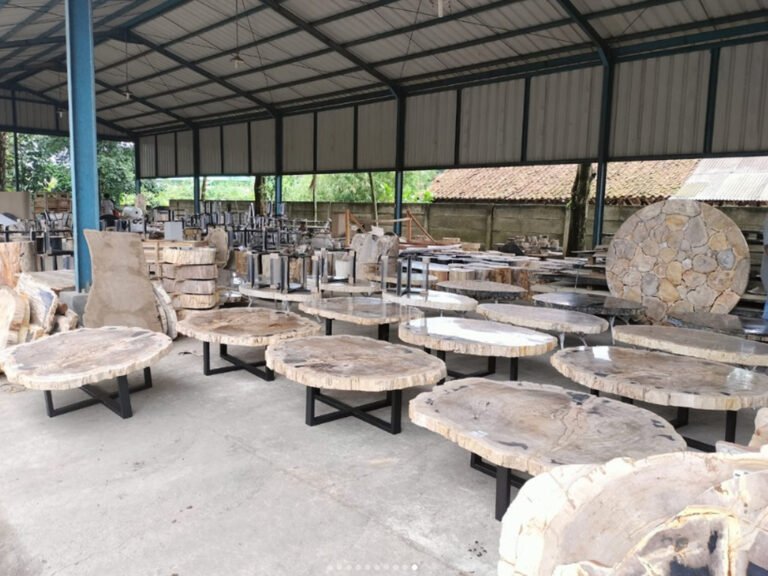
At Java Petrifiedwood, our skilled artisans treat every log with an understanding of its specific composition. When working with pieces containing complex knots or inclusions, the cutting and polishing process is adjusted to highlight these unique features rather than hide them. By carefully cutting across a knot, the artisan reveals a spectacular “eye” pattern that creates a beautiful focal point for a coffee table or a sculpture.
We believe that these features should be celebrated. Whether you are a designer looking for a statement piece for a luxury villa or a collector seeking a rare specimen, knowing how to interpret these natural markings will help you appreciate the depth and beauty of Indonesian petrified wood.
FAQ
- Do knots in petrified wood make it more fragile?
No, knots are typically denser than the surrounding wood and do not weaken the integrity of the fossilized piece.
- Can I request pieces without any inclusions?
While we can select pieces based on your aesthetic preferences, please remember that natural variations, including minor inclusions, are inherent to real petrified wood.
- Are inclusions just holes in the wood?
No, inclusions are solid mineral deposits trapped within the wood. If there is a void, we ensure it is expertly filled or stabilized to provide a smooth, high-quality finish.
- Do knots affect the price of the piece?
Often, larger, well-defined, or uniquely colored knots increase the aesthetic value of the wood, making the piece more desirable for decorative purposes.
Ready to find the perfect piece of petrified wood for your project? Explore our curated collection at Java Petrifiedwood. Whether you are looking for rare patterns or specific slab sizes, our team is here to help you source the highest quality Indonesian petrified wood. Contact us today for catalog inquiries and custom orders.