Natural Holes in Petrified Wood: Are They a Problem?
Understanding the Occurrence of Natural Holes in Petrified Wood
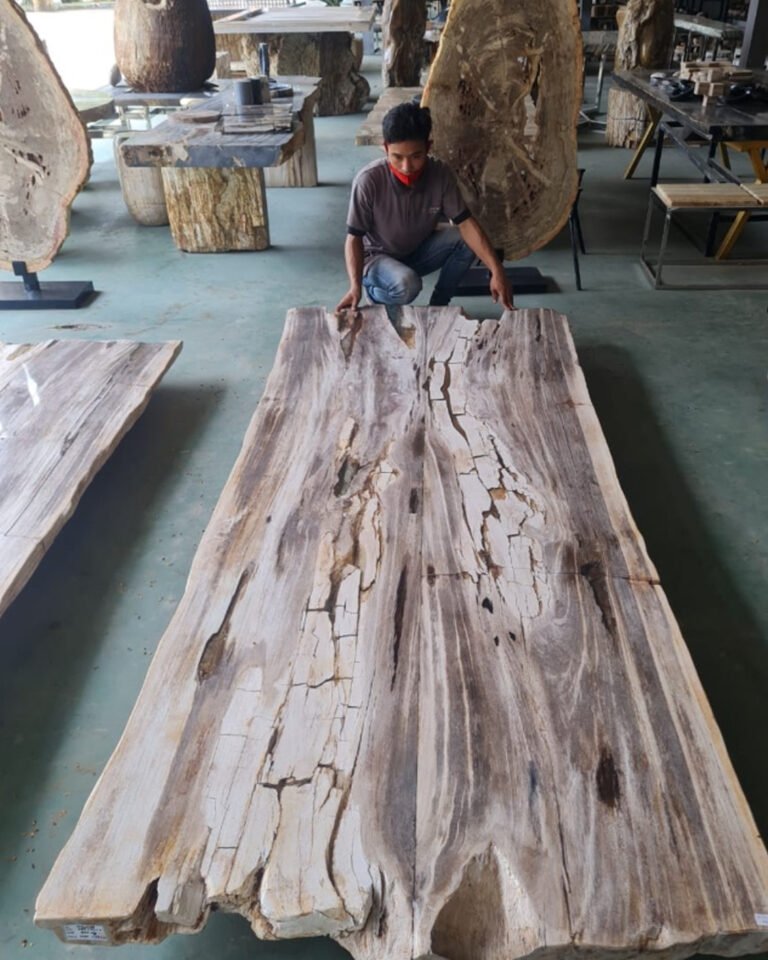
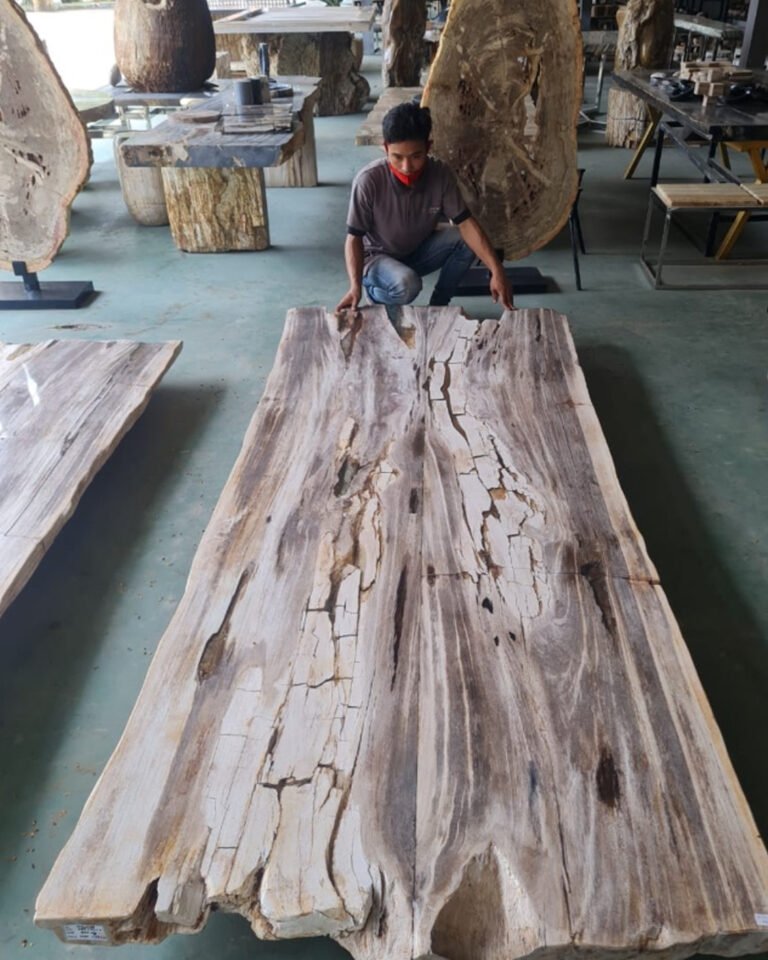
When you explore the world of Indonesian petrified wood, you are essentially looking at a historical record captured in stone. Over millions of years, the organic cellular structure of ancient trees is gradually replaced by minerals. During this long and complex process, it is not uncommon for certain parts of the original wood to decay faster than the petrification can complete, or for gases to escape, leaving behind voids or natural holes.
For many first-time buyers, these holes might appear to be a sign of damage or poor quality. However, in the context of fossilized wood, these features are rarely considered “defects.” Instead, they are often seen as unique geological signatures that tell the story of the wood’s transformation from organic matter to a resilient mineral artifact.
Why Do These Voids Form?
The formation process of petrified wood is inherently irregular. The wood must be buried under volcanic ash or sediment, protected from oxygen, to undergo the mineralization process. Factors that contribute to the presence of holes include:
- Biological Decay: Some parts of the original log may have suffered from fungal or insect damage before the fossilization process began.
- Mineral Seepage: Uneven distribution of mineral-rich groundwater can result in hollow spaces where crystallization was incomplete.
- Gas Pockets: During the rapid burial and subsequent chemical reactions, trapped gases can sometimes create small, irregular cavities within the wood grain.
Much like natural cracks in petrified wood, these holes are simply part of the raw, untouched beauty of the material. Because every specimen has experienced a different environment, the presence of voids is one of the many reasons why no two pieces are ever identical.
Are Natural Holes a Structural Problem?
A common concern is whether these holes compromise the structural integrity of furniture pieces like tables or sculptures. Generally, the answer is no. Because petrified wood is incredibly dense—often ranking high on the Mohs scale of hardness—the material surrounding these voids remains as strong as rock.
In high-end furniture manufacturing, craftsmen often employ professional techniques to handle these natural features:
- Stabilization: Depending on the design preference, larger holes may be filled with high-quality resin to create a smooth surface while still showcasing the depth of the wood.
- Natural Aesthetic: Many designers prefer to keep the holes open, as they add texture and character that cannot be replicated by artificial means.
- Structural Reinforcement: If a hole is located in a critical load-bearing area, artisans will reinforce the surrounding stone to ensure long-term durability.
Should You Avoid Pieces with Holes?
Choosing between a solid, uniform piece and one with natural voids often comes down to your personal aesthetic preference. Collectors who value the “raw” and “authentic” look often seek out pieces with natural holes, as these features prove that the item is genuine fossilized material rather than a synthetic replica. On the other hand, if you are looking for a perfectly smooth surface for a sleek, modern table, you might opt for pieces that have been carefully finished or filled.
When selecting a piece, it is helpful to understand the grain patterns and how they interact with these natural voids. The interplay between the mineralized rings and the hollow pockets often creates a visual depth that enhances the luxury appeal of the item.
Conclusion
Natural holes in petrified wood are not a sign of poor quality; they are a hallmark of the earth’s natural history. Whether they are filled for a polished finish or left open to celebrate the wood’s rugged origins, they are an integral part of what makes petrified wood such a sought-after luxury material. At Java Petrifiedwood, we specialize in selecting and preparing high-quality specimens that highlight the best natural features of Indonesian fossils. If you are looking for a unique centerpiece for your next project, explore our collection to find a piece that speaks to your design vision.