

Why Indonesian Petrified Wood Has Different Colors and Patterns
The Natural Palette of Petrified Wood
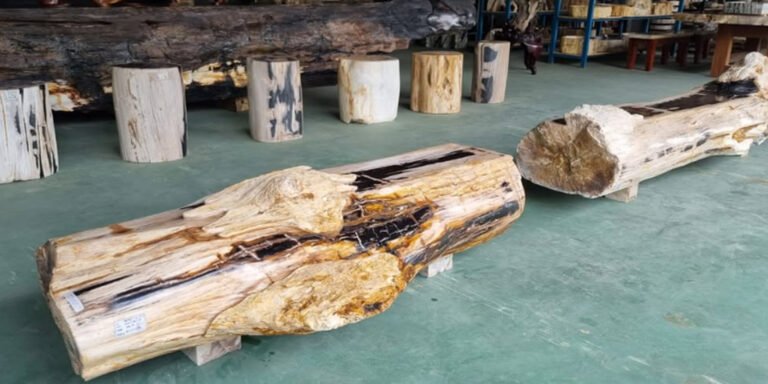
For collectors, designers, and geologists alike, Indonesian petrified wood is celebrated for its breathtaking aesthetic diversity. Unlike ordinary stone, each piece tells a unique story of ancient forests transformed over millions of years. When you look at a polished slab, you are often struck by the vivid reds, deep blacks, earthy browns, and sometimes even rare blues or yellows that characterize these specimens. Understanding why Indonesian petrified wood has different colors and patterns requires a look into the complex chemistry and environmental conditions that occurred during the fossilization process.
The Role of Mineralization in Coloration
The transition from organic wood to stone is a slow process known as permineralization. As the wood is buried beneath layers of volcanic ash and sediment, mineral-rich groundwater begins to seep into the cellular structure of the organic material. The specific minerals present in this water are the primary architects of the wood’s final color palette. As discussed in our guide on how minerals replace organic wood during fossilization, this replacement is not uniform, leading to the dramatic color variations we see today.
| Mineral | Associated Colors |
|---|---|
| Iron Oxides | Reds, browns, yellows, and oranges |
| Manganese Oxides | Black, dark brown, or dendritic patterns |
| Copper and Chromium | Greens and sometimes bluish tints |
| Pure Silica/Quartz | Clear, white, or milky translucent shades |
How Environmental Factors Influence Patterns
Beyond color, the intricate patterns visible in petrified wood—such as growth rings, knots, and bark textures—are preserved from the original tree. Indonesia’s unique geography, heavily influenced by its active volcanic history, plays a significant role in preserving these details. The rapid burial by volcanic ash, as explored in how volcanic activity helped create Indonesian petrified wood, ensures that the structure remains intact while the internal cell walls are being slowly replaced by minerals.
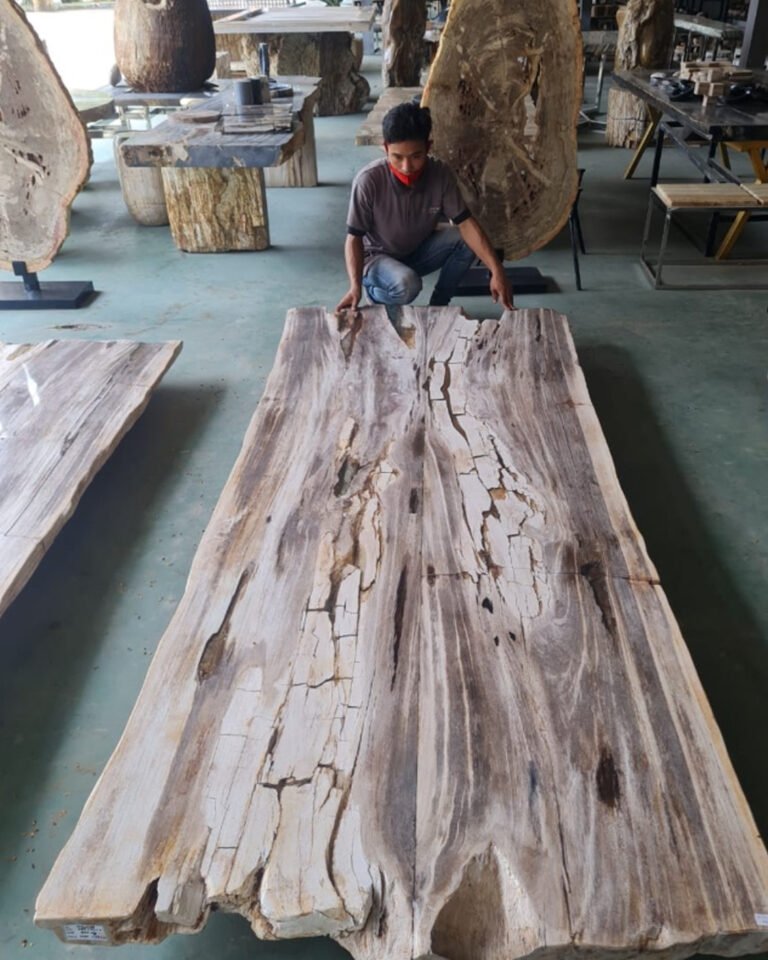
The speed and chemistry of the water flow through the wood also dictate the patterns. If the mineral replacement occurs slowly, it may produce fine, crisp grain lines. If there are fluctuations in the mineral content of the groundwater, you might see bold color banding or “swirls” that suggest a more turbulent geological history.
The Uniqueness of Each Specimen
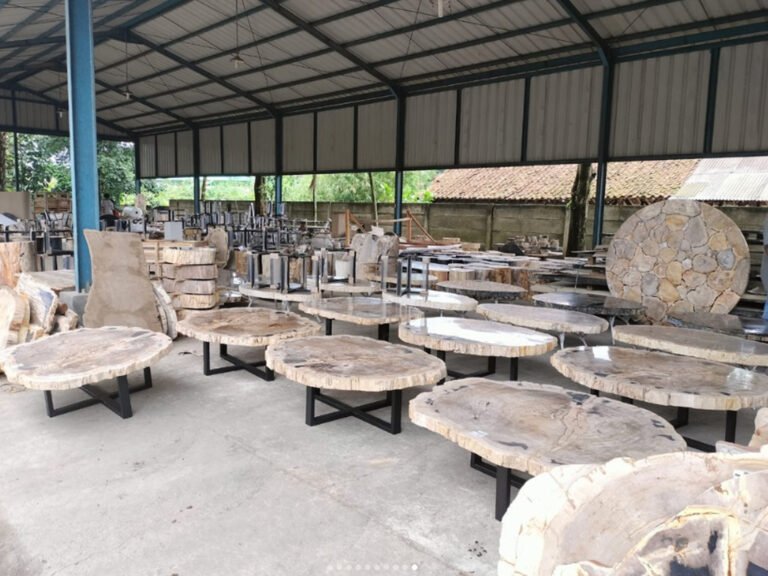
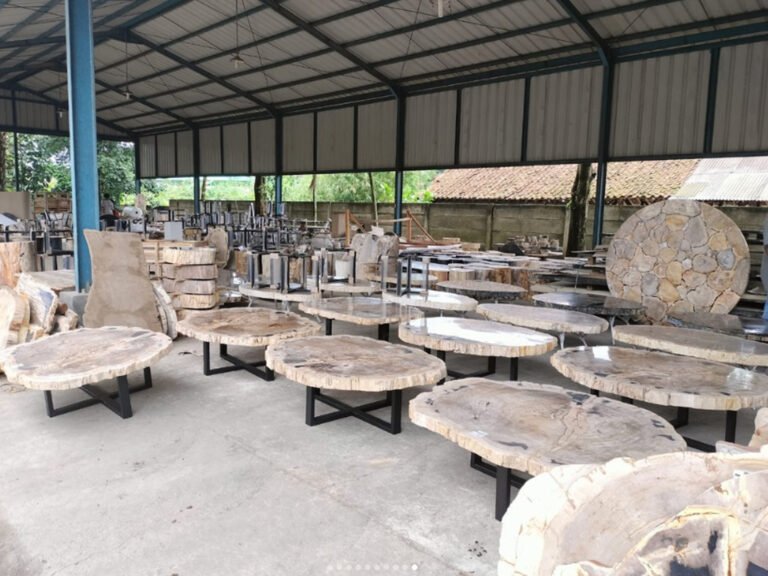
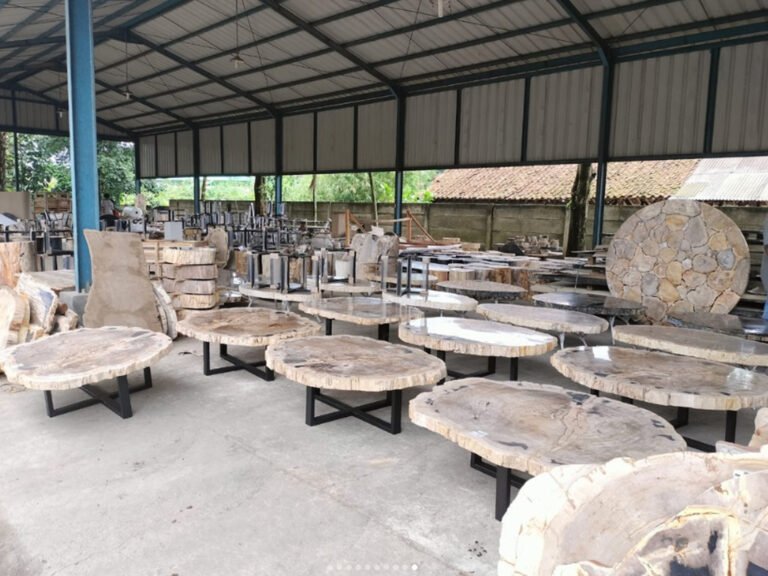
Because no two trees grew under the exact same conditions, and no two burial sites received the exact same mineral-rich water flow, every piece of Indonesian petrified wood is a singular masterpiece. This variety is precisely what makes it a favorite for interior designers looking for unique statement pieces. To understand more about the specific features that collectors look for, you can read more about Indonesian petrified wood features you should know. Whether you are seeking a monochromatic, subtle grey piece or a vibrant, multi-colored slab, the natural variety of the Indonesian archipelago offers endless possibilities.
Practical Tips for Selecting Your Piece
When sourcing petrified wood, consider how these colors and patterns will integrate into your space:
- For Minimalism: Look for specimens with consistent grey, white, or black tones, which offer a sophisticated and modern appearance.
- For Feature Pieces: Choose slabs with high-contrast, multi-colored mineral deposits that serve as the focal point of a room.
- For Texture: Opt for pieces that retain significant bark texture on the outer edges to emphasize the natural origin of the specimen.
Conclusion
The diverse colors and patterns of Indonesian petrified wood are a testament to the complex, millions-of-years-long journey these ancient trees have endured. By appreciating the mineral composition and the geological environment, you gain a deeper understanding of the beauty inherent in every stone. If you are looking to acquire a piece of this natural history for your home or project, Java Petrifiedwood provides a curated selection of premium specimens to meet your design needs.
Are you ready to find the perfect piece of petrified wood for your collection? Contact the team at Java Petrifiedwood today for expert advice on sourcing and selecting the right specimen for your requirements.
One Comment