

How Minerals Replace Organic Wood During Fossilization
The Fascinating Transformation: From Timber to Stone
Have you ever looked at a polished slab of petrified wood and wondered how a once-living tree became a permanent geological specimen? The process of petrification is a marvel of nature, a slow-motion transformation that takes millions of years to complete. At the heart of this phenomenon is the way minerals replace organic wood during fossilization, effectively capturing a moment in ancient history within a stone matrix.
Understanding the science behind fossilized wood reveals that this is not simply a decay process, but a precise chemical substitution. While traditional wood eventually rots, these specific specimens were preserved under unique environmental conditions that allowed minerals to take the place of cellular structures before they could disintegrate.
The Role of Sedimentary Burial
The journey toward fossilization typically begins when a tree falls and is quickly buried by sediment—often volcanic ash, mud, or silt. This burial is critical because it protects the wood from oxygen and decay-causing bacteria. Once shielded from the elements, the wood becomes saturated with mineral-rich groundwater.
In regions with intense geological activity, such as those responsible for creating Indonesian petrified wood, this groundwater is often infused with silica, iron, manganese, and other mineral elements released from volcanic ash. These minerals act as the primary building blocks for the future stone.
The Mechanics of Permineralization and Replacement
The transformation involves two primary, often overlapping, chemical processes:
- Permineralization: Mineral-rich water flows into the empty spaces within the wood cells, such as the cell walls and lumens. As the water evaporates or the pH changes, the minerals crystallize, essentially filling the voids and creating a rigid interior structure.
- Replacement: Over incredibly long periods, the original organic material—the cellulose and lignin—is slowly broken down and dissolved at a molecular level. Simultaneously, minerals like silica (quartz) precipitate into the exact spaces formerly occupied by the wood fibers. This maintains the structural integrity of the wood grain, often down to the microscopic cellular detail.
If you are interested in how these colors manifest, it is helpful to look at petrified wood colors and what they mean, as different mineral elements result in the vibrant hues collectors love. For example, iron oxides often produce deep reds and browns, while manganese can result in blacks or purples.
Why Every Specimen is Unique
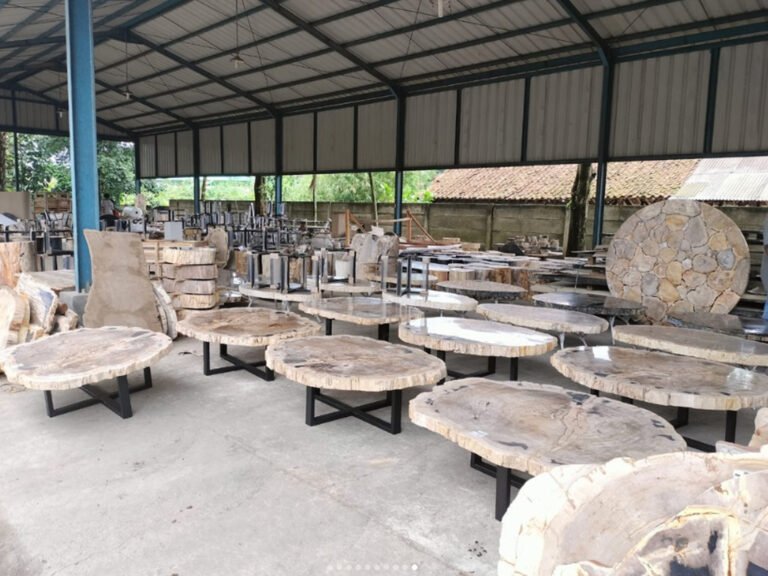
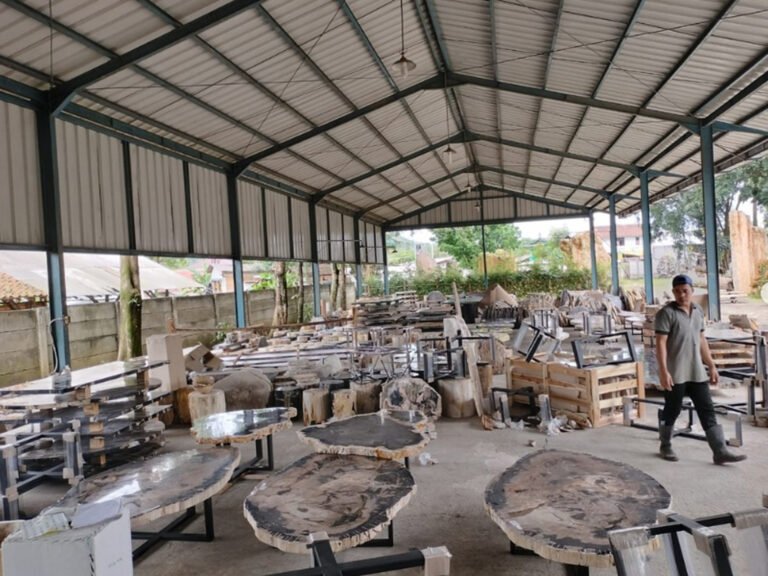
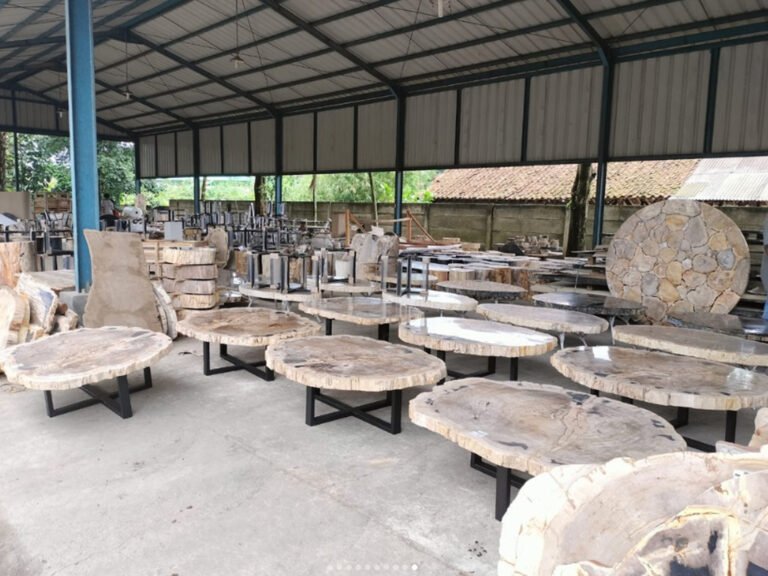
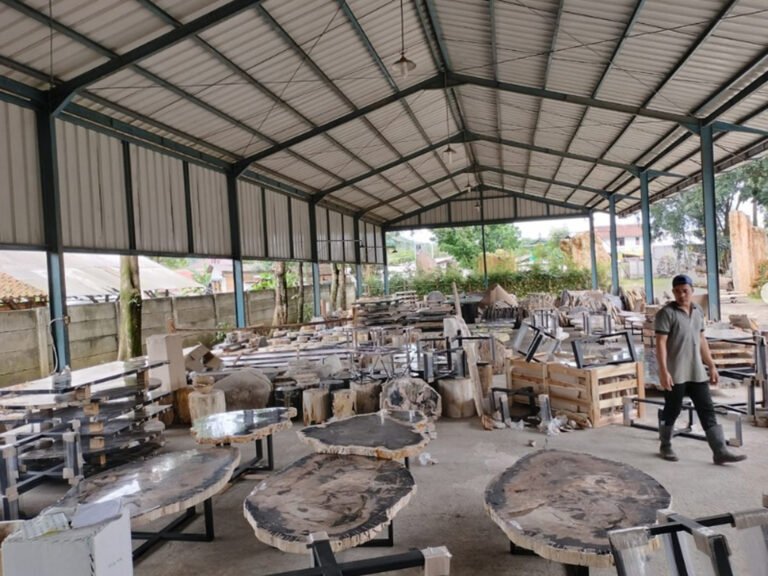
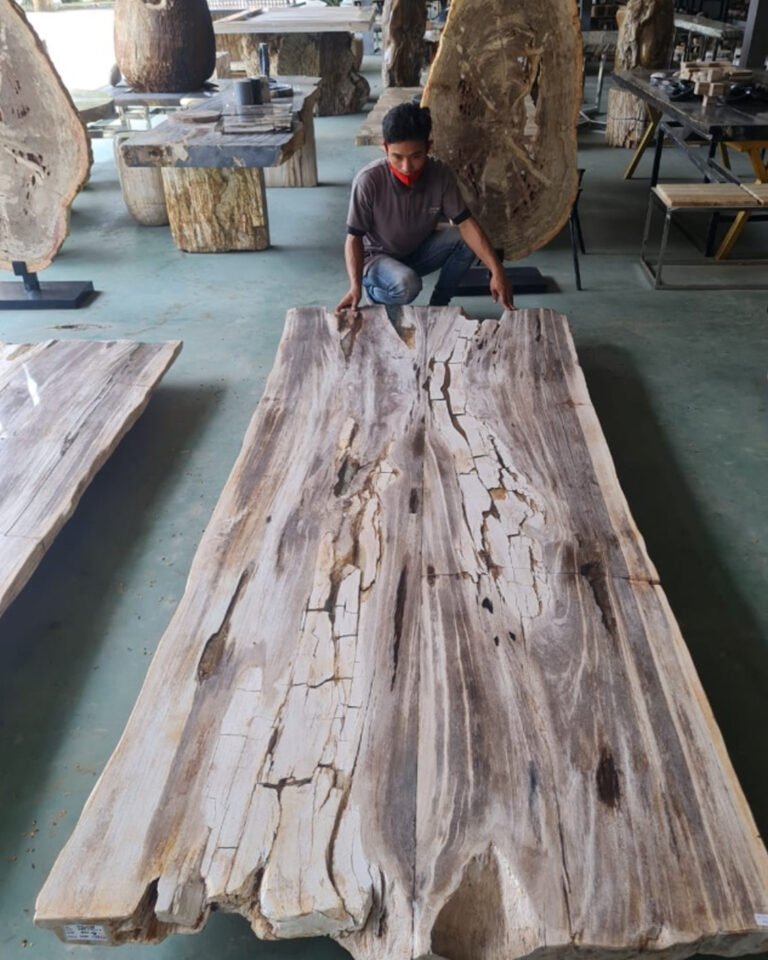
Because the replacement process is dependent on the specific chemical composition of the surrounding sediment and the rate of fluid flow, no two pieces of petrified wood are ever the same. The mineral density and the quality of the replacement determine whether a piece is suitable for fine polishing and luxury furniture applications. At Java Petrifiedwood, we appreciate these geological variations, as they define the aesthetic value of our slabs and sculptures.
Final Product and Applications
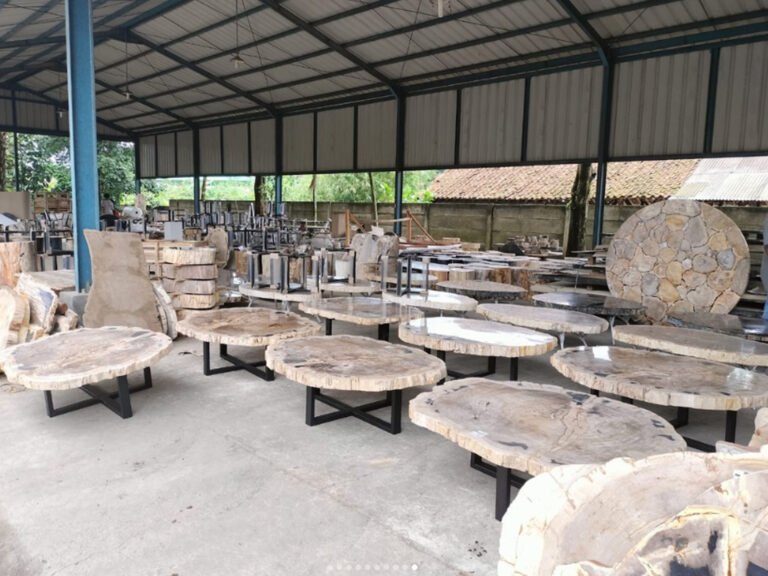
Once the organic material has been fully replaced by mineral deposits, the resulting stone is incredibly durable. It can be cut and polished to a high luster, making it a sought-after material for high-end interior design. Whether it is used as a statement coffee table or a decorative pedestal, the piece serves as a permanent, solid reminder of the prehistoric forest from which it came.
If you are looking to incorporate these natural masterpieces into your next project, explore our collection of authentic, expertly finished specimens that celebrate the beauty of this geological process.
2 Comments