

What Minerals Are Found in Indonesian Petrified Wood?
The Chemistry of Nature: Understanding Mineralization
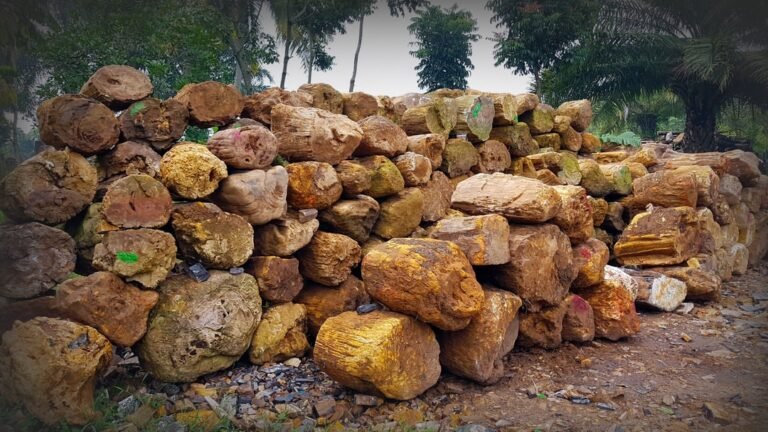
Indonesian petrified wood is world-renowned not just for its structural integrity, but for the breathtaking spectrum of colors trapped within its petrified cells. To understand why these pieces look like works of art, we must look at the specific minerals found in Indonesian petrified wood that take the place of organic material over millions of years.
The process of permineralization—a type of fossilization—occurs when groundwater rich in dissolved minerals seeps through the buried wood. As the organic cellular structure slowly decays, these minerals precipitate out of the water, filling the voids and ultimately replacing the cellulose and lignin of the wood with stone. For a deeper look at this scientific process, you can explore how minerals replace organic wood during fossilization.
The Role of Silica and Quartz
The primary mineral responsible for petrification is silica (silicon dioxide). In the volcanic regions of Indonesia, ancient forests were often buried under thick layers of volcanic ash, which provided an abundant supply of soluble silica. This silica crystallizes into various forms of quartz within the wood’s structure, acting as the main “hardening” agent.
- Chalcedony: A microcrystalline form of silica that often fills the pores of the wood, creating a smooth, waxy finish.
- Agate: Often found in distinct bands, adding beautiful, translucent patterns to the fossilized wood.
- Jasper: An opaque variety of silica that frequently contributes to the rich, earthy red and yellow tones.
Secondary Minerals and Color Variations
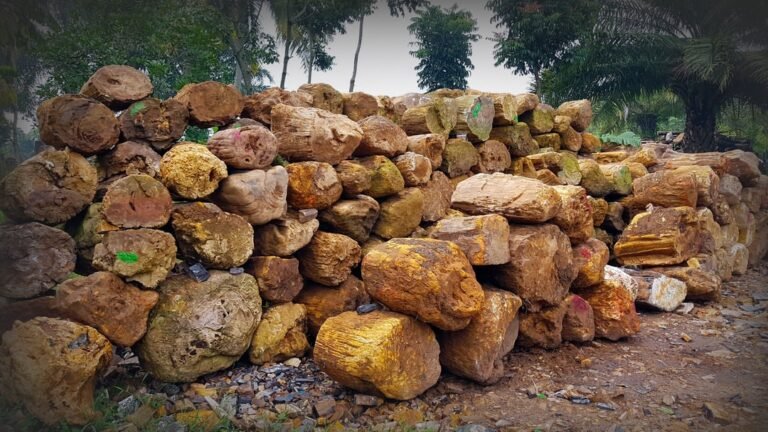
While silica provides the structure, it is the trace elements and secondary minerals that give Indonesian petrified wood its vibrant palette. Because of Indonesia’s active geological history, many different minerals were present in the groundwater during the fossilization process. To learn more about this environment, read our guide on how volcanic activity helped create Indonesian petrified wood.
| Mineral / Trace Element | Typical Color Produced |
|---|---|
| Iron Oxides (Hematite) | Red, brown, or pink |
| Manganese Oxides | Black, purple, or deep brown |
| Copper or Chromium | Green or blue tints |
| Limonite | Yellow or tan |
Why Mineral Composition Matters for Interior Design
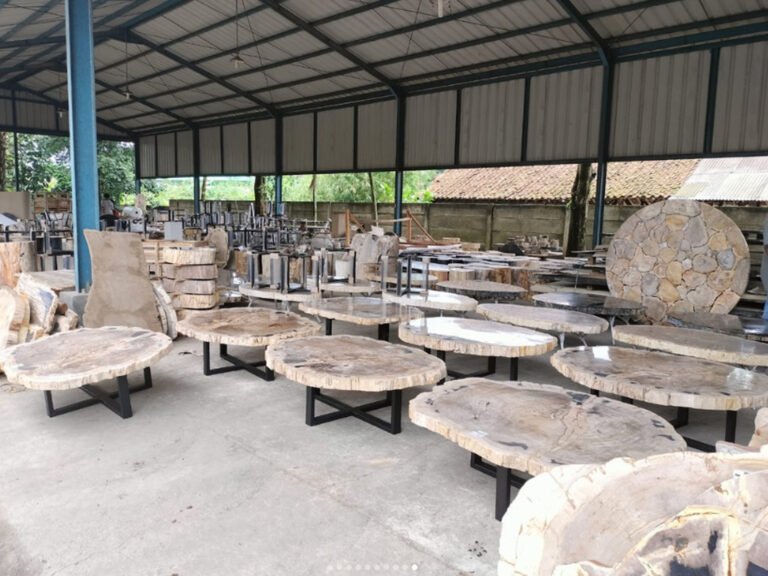
For collectors and interior designers, the specific mineral composition isn’t just a matter of geology; it determines the aesthetic value of the piece. A high concentration of iron-based minerals might yield a deep, fiery red, while pieces with high quartz content may offer a glassy, crystalline finish that catches the light beautifully. Understanding these variations helps buyers appreciate why no two pieces of Indonesian petrified wood are ever exactly alike, making them perfect for luxury, one-of-a-kind installations. You can learn more about identifying these unique characteristics in petrified wood colors and what they mean.
Sourcing Authentic Petrified Wood
When selecting pieces for your project, it is important to work with suppliers who understand the provenance and geological context of their inventory. At Java Petrifiedwood, we take pride in sourcing authentic pieces that showcase the natural mineral beauty preserved from Indonesia’s ancient forests. If you are looking for premium-grade fossilized wood for your next luxury furniture or design project, our team is ready to assist you. Contact us today to explore our current collection and find the perfect centerpiece for your space.
One Comment