How to Tell Real Petrified Wood from Fake Stone
The Importance of Identifying Authentic Petrified Wood
For collectors, interior designers, and homeowners, the allure of petrified wood lies in its unique history—a natural masterpiece formed over millions of years. However, with its rising popularity, the market has seen an influx of synthetic imitations and resin-based replicas. Knowing how to tell real petrified wood from fake stone is essential for protecting your investment and ensuring you receive the high-quality, authentic material you expect.
Authentic Indonesian petrified wood possesses geological characteristics that are nearly impossible to replicate perfectly with modern manufacturing processes. By understanding the science of fossilization and the visual cues of genuine stone, you can approach the market with confidence.
Visual Inspection: What to Look For
The most reliable way to spot authentic petrified wood is through careful observation of its physical details. Nature rarely creates perfect, uniform patterns, whereas mass-produced fakes often exhibit repetitive, artificial designs.
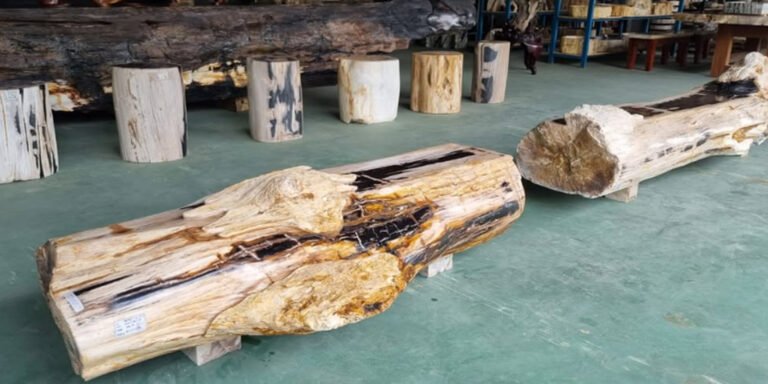
- Grain Patterns: Real petrified wood should exhibit visible, organic tree rings and cellular structures. Even when highly polished, these grain patterns should look natural, flowing, and inconsistent, reflecting the growth of an actual ancient tree.
- Color Variations: Genuine fossils often feature a complex mix of colors caused by mineral replacement during the fossilization process. If a piece looks too uniform or uses “neon” colors that do not occur in nature, it may be a dyed or manufactured item.
- Surface Imperfections: Don’t be afraid of minor flaws. Natural cracks, small inclusions, and variations in texture are hallmarks of authentic specimens that have weathered millions of years of geological pressure.
Testing the Material: Density and Temperature
Authentic petrified wood is essentially stone, which means it behaves quite differently than plastic, resin, or concrete imitations.
| Test Method | Real Petrified Wood | Fake/Replica |
|---|---|---|
| Weight | Very dense and heavy. | Often lighter (if plastic) or inconsistent. |
| Temperature | Feels cold to the touch. | Feels room temperature or warm. |
| Hardness | Scratches glass, resistant to metal tools. | Easily scratched by steel or knives. |
The density of the material is a significant indicator. Genuine pieces, especially those from Indonesia, have undergone intense silicification. When you hold a piece, it should feel substantial for its size. If it feels suspiciously light or sounds hollow when tapped, it is likely not genuine fossilized wood.
Why Source from Reputable Suppliers
Identifying quality specimens can be difficult for the untrained eye. Many fakes are designed specifically to deceive buyers who are unfamiliar with the raw material. Working with established manufacturers who specialize in hand-carved Indonesian petrified wood is the best way to guarantee authenticity. Reputable suppliers provide transparency regarding the origin of their pieces and the craftsmanship involved in their finishing processes.
Final Thoughts for Buyers
Always ask questions about the source and processing of the piece. Authentic dealers will be proud to share the history of their items and provide guidance on how to care for them. When you purchase, prioritize companies that have a long-standing reputation in the industry rather than those offering prices that seem “too good to be true.”
At Java Petrifiedwood, we specialize in authentic, high-quality specimens sourced directly from Indonesia. Whether you are looking for a statement furniture piece or a decor accent, we ensure that every item reflects the beauty and durability of natural history. Contact our team today to learn more about our collection and how we verify our premium fossilized wood products.
Frequently Asked Questions (FAQ)
- Can I use a magnet to test petrified wood?
While some minerals in petrified wood might react slightly to a very strong magnet due to iron content, this is not a definitive test. Visual inspection of grain and density is far more reliable.
- Are natural holes in petrified wood a sign of a fake?
No. In fact, small natural holes or voids are often a sign of authenticity. They are typical of the original tree structure or mineral deposits and are frequently seen in genuine, untouched specimens.
- Why do some pieces of petrified wood look like plastic?
Sometimes, over-polishing or applying thick, synthetic coatings can give a “plastic” appearance to the surface. It is important to inspect the underlying material beneath the finish to ensure you are seeing real stone.
- Does color indicate whether it is real?
Colors are natural, but they should look earthy and harmonious. Bright, unnatural, or chemically applied stains are common in lower-quality imitations.