How to Identify High-Quality Petrified Wood
The Indicators of Premium Petrified Wood
Investing in petrified wood is more than just a purchase; it is an acquisition of a natural masterpiece formed over millions of years. For collectors, interior designers, and architects, knowing how to identify high-quality petrified wood is essential to ensure authenticity and aesthetic value. While every specimen is unique, certain professional benchmarks define top-tier quality in the industry.
1. Visual Clarity and Color Vibrancy
The most sought-after petrified wood exhibits striking, vibrant colors that occur when minerals—such as iron, manganese, or copper—replace the organic cells of the tree. When evaluating quality, look for sharp color contrast. A high-quality specimen often displays a clear, well-defined spectrum of colors rather than dull or muddy tones. While what gives petrified wood its natural colors is a complex geological process, the result in a premium piece should be vivid and well-preserved.
2. Preserved Cellular Structure
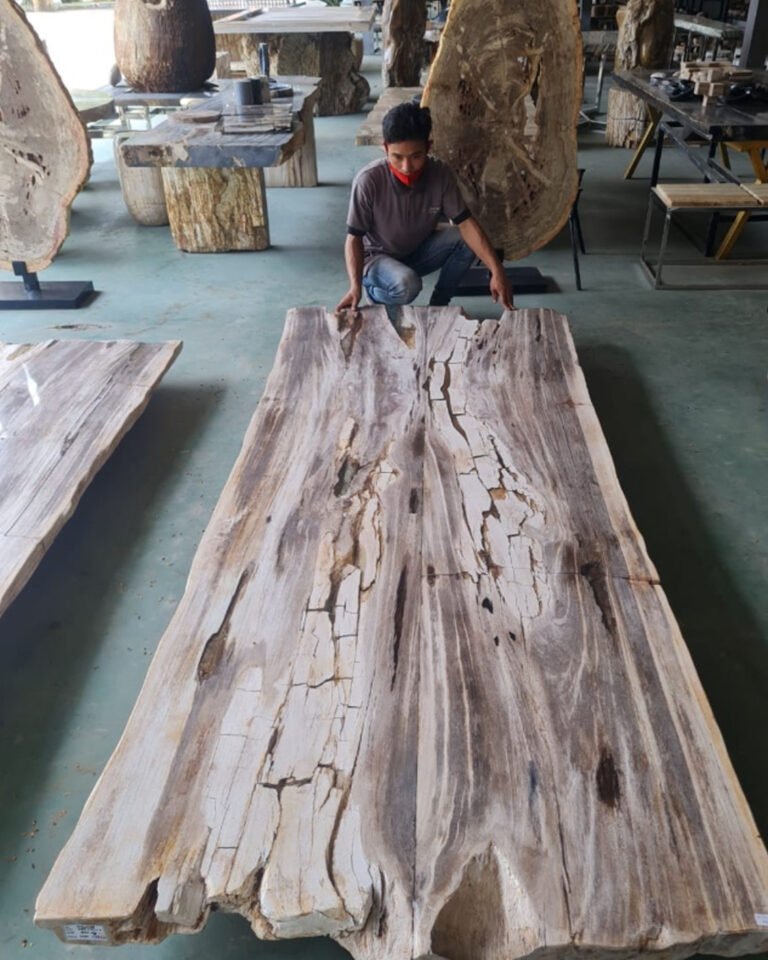
One of the defining features of authentic, high-quality fossilized wood is the visibility of its original biological structure. Even after the permineralization process, a high-quality piece should clearly show growth rings, bark texture, or cellular structures when viewed under magnification. If the patterns look blurry or lack the characteristic flow of wood grain, it may indicate a lower quality grade or, in some cases, a synthetic imitation. Understanding the grain patterns of petrified wood allows buyers to distinguish between common specimens and rare, highly detailed artifacts.
3. Surface Finish and Craftsmanship
Even the most beautiful raw petrified wood requires expert processing to become a finished product. High-quality specimens are cut, polished, and finished to a mirror-like sheen. When inspecting a surface, run your hand across it; it should be exceptionally smooth, free of deep pits or scratches. While some natural cracks in petrified wood are normal due to the immense geological pressure the material has endured, a high-quality piece should be stabilized effectively to ensure structural integrity and a refined appearance.
4. Density and Hardness
Petrified wood that has undergone a complete silicification process is extremely hard and dense. Because it has been turned into quartz or chalcedony, it typically registers high on the Mohs scale of hardness. A high-quality piece will feel heavy, cool to the touch, and will not be easily scratched by a steel blade. This density not only contributes to the durability of the stone but also allows for a much higher quality of polish.
Summary Table: Quality Checklist
| Feature | High-Quality Indicators |
|---|---|
| Color | Vibrant, distinct, and saturated |
| Grain | Sharp, visible, and detailed cellular structure |
| Surface | Mirror-polished, smooth, and professionally finished |
| Weight | High density; feels solid and substantial |
Working with Trusted Suppliers
Identification is easier when you partner with experts who understand the geological history and the specialized processing required for these materials. At Java Petrifiedwood, we prioritize the selection of raw materials that demonstrate exceptional color and structural integrity, ensuring that our finished pieces meet the highest standards of international luxury design.
Are you looking for a specific, high-quality piece to elevate your next interior design project? Contact our team today to explore our curated selection of premium fossilized wood.