From Raw Fossil to Furniture: How Indonesian Petrified Wood Is Made
The Journey of Transformation: From Earth to Elegance
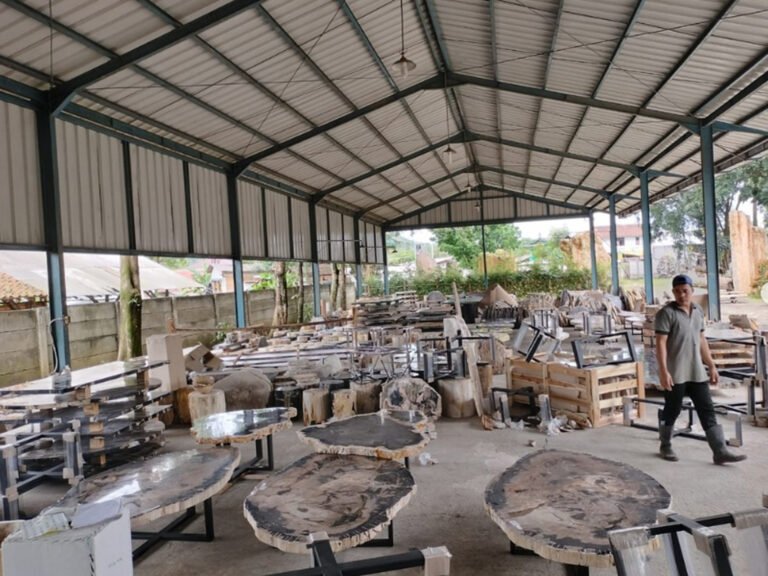
The creation of high-end furniture from Indonesian petrified wood is a meticulous process that bridges millions of years of geological history with contemporary design. Transforming a raw, stone-like fossil into a functional work of art requires immense patience, precision, and a deep understanding of the material’s structural integrity. At Java Petrified Wood, we specialize in this complex journey, turning ancient remnants into timeless statement pieces.
Many international buyers are often fascinated by the physical transformation of these ancient treasures. Understanding the complete Indonesian petrified wood manufacturing process is essential for those looking to source authentic, high-quality furniture that will last for generations.
1. Selection and Raw Material Assessment
The journey begins in the field, where raw fossilized wood is sourced. Not all fossilized logs are suitable for furniture. Artisans carefully assess each piece for density, size, and the presence of natural minerals that provide the characteristic vibrant colors. High-density wood is preferred because it can withstand the cutting and polishing processes required for furniture surfaces.
2. Precision Cutting and Shaping
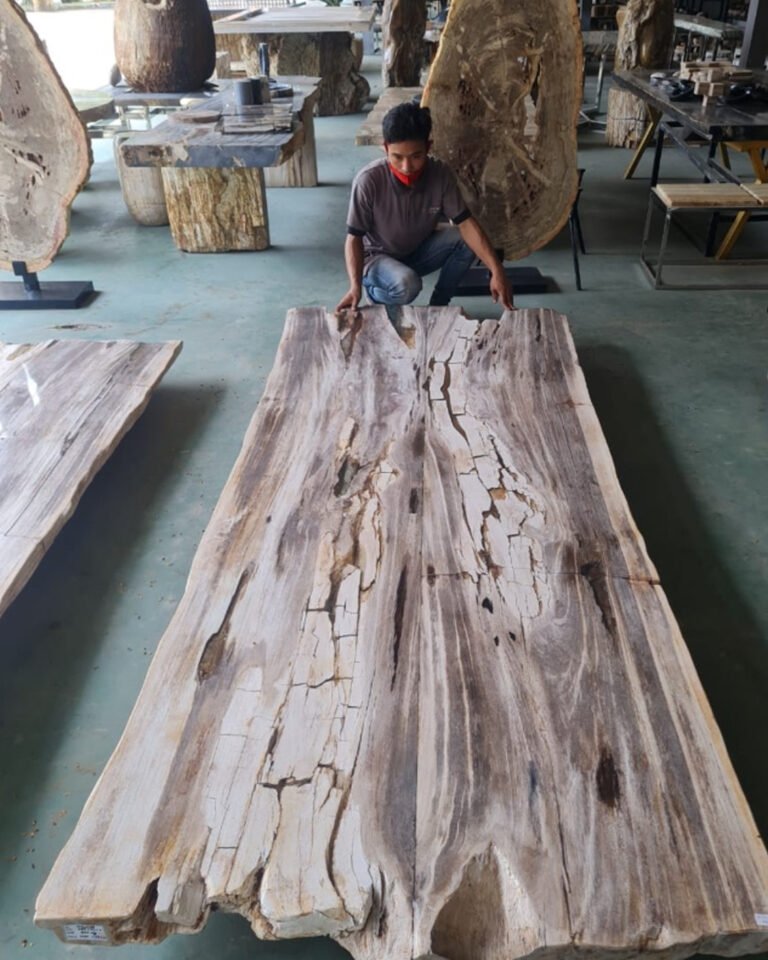
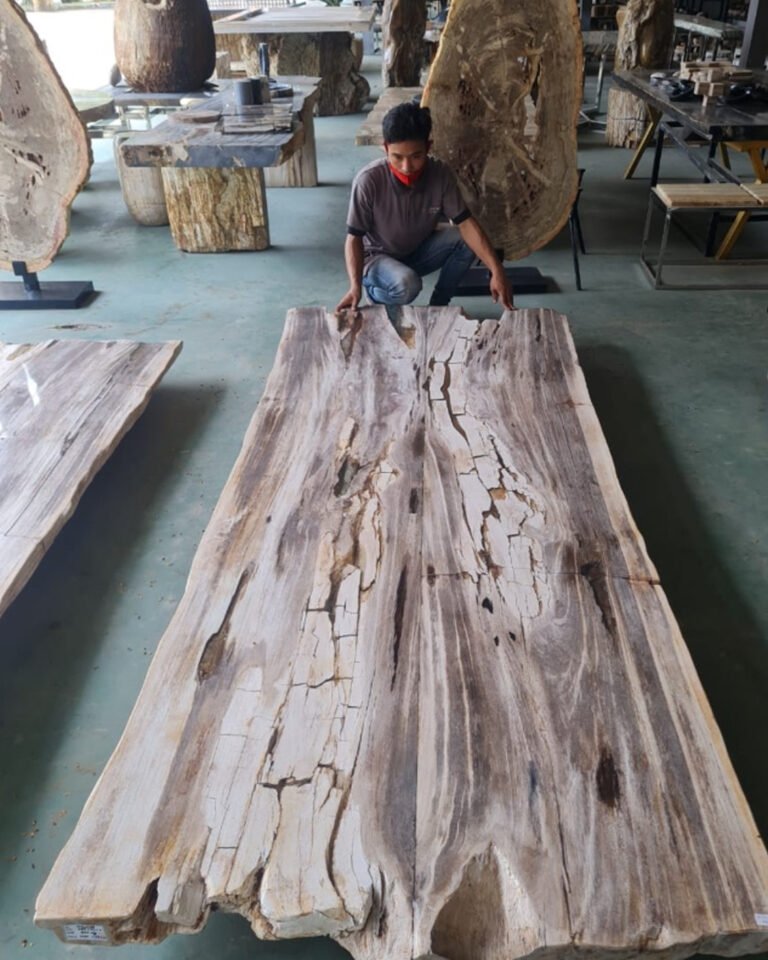
Once selected, the raw logs are transported to the workshop. Because petrified wood is incredibly hard—often ranking high on the Mohs hardness scale—specialized machinery is required. Large circular saws with diamond-tipped blades are used to slice the wood into slabs. This step is critical; it reveals the interior color patterns and determines the potential design of the final furniture piece. The technique used by Indonesian factories to cut petrified wood slabs ensures that the structural integrity remains intact, minimizing the risk of unnecessary fractures.
3. Stabilization and Structural Support
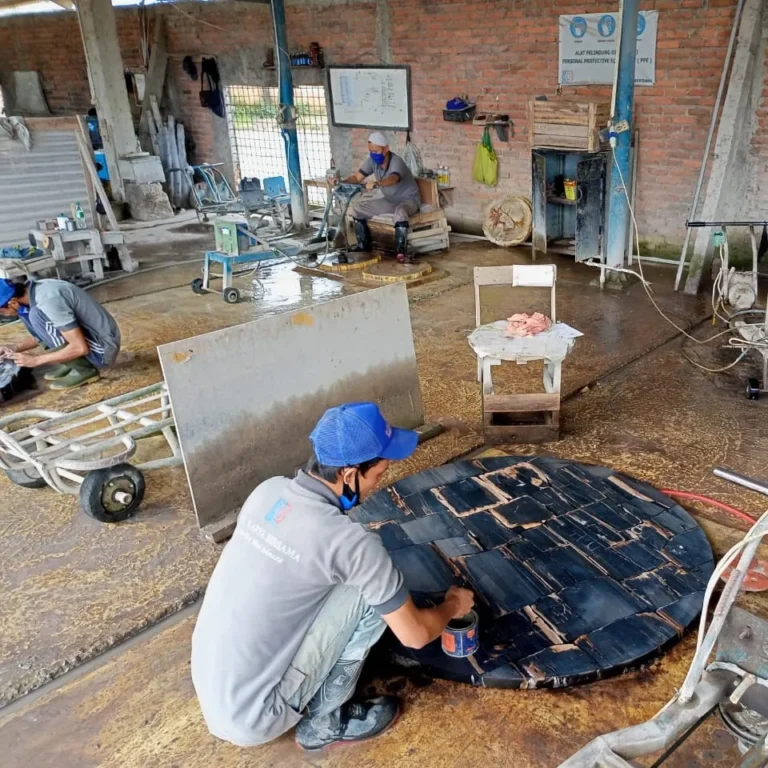
Fossilized wood often contains natural voids or micro-cracks formed over millions of years. Before a piece can become a table or a decorative element, it must be stabilized. Craftsmen use high-quality resins to fill these gaps, which reinforces the stone and ensures a smooth, durable surface. This step is vital not only for aesthetics but for the long-term longevity of the furniture.
4. Grinding and Polishing
The final aesthetic appeal of petrified wood comes from the polishing process. This is where the “stone” truly comes to life. Using a series of abrasive pads, starting from coarse and moving to extremely fine grit, the surface is ground down until it achieves a glass-like finish. This process highlights the intricate cell structures, annual growth rings, and mineral deposits that make each piece entirely unique.
5. Final Assembly and Quality Inspection
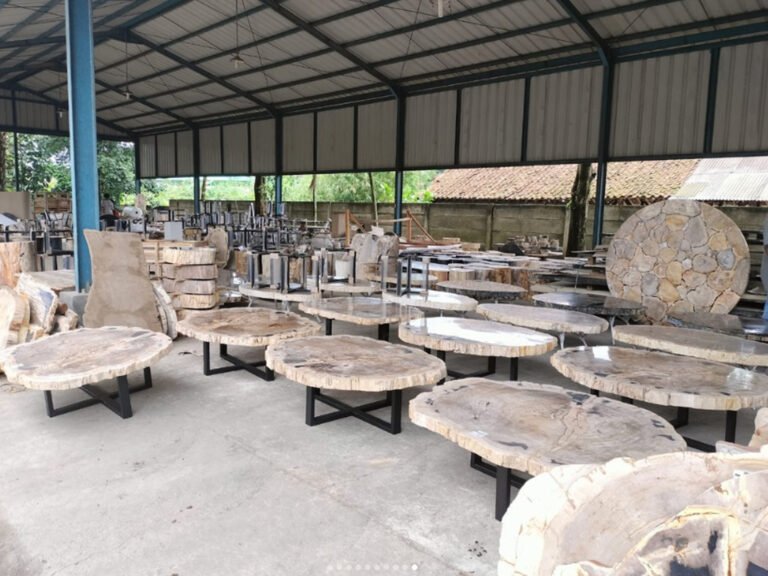
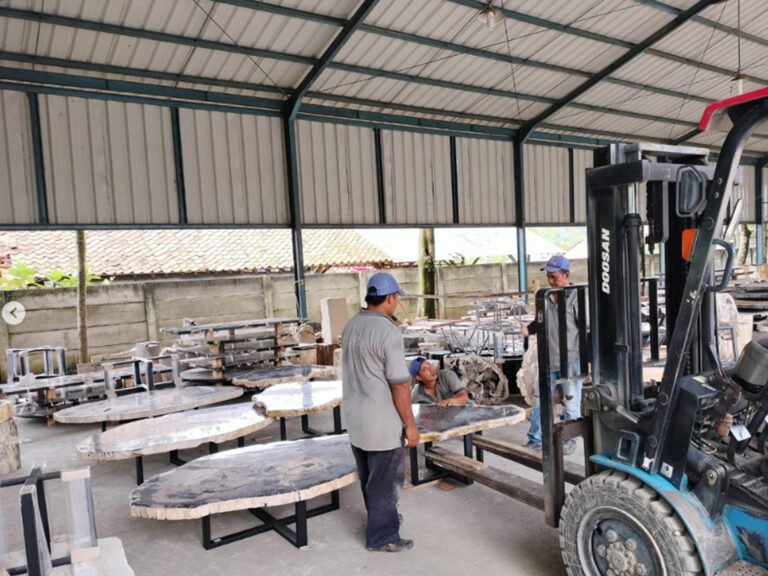
Once the surface is mirror-polished, the petrified wood is integrated into its furniture design, whether as a tabletop, pedestal, or decorative base. Every piece undergoes a final, rigorous quality inspection to ensure the finish is flawless and the structure is stable for transport. This stage is where traditional craftsmanship meets modern furniture standards.
Why Professional Manufacturing Matters
When you choose to work with a reputable manufacturer, you are paying for the expertise required to handle such delicate and heavy materials. Because every fossil is different, there is no “one-size-fits-all” method for processing. An experienced team knows how to adapt their techniques to the unique properties of each piece of wood.
If you are looking to integrate these unique pieces into your collection, we invite you to explore our petrified wood furniture options. At Java Petrified Wood, we take pride in managing the entire production chain—from raw material sourcing to final export—ensuring that you receive a product that is not only beautiful but also ethically and skillfully crafted.
FAQ
- How long does it take to process a single piece of petrified wood furniture?
The timeline varies depending on the size and complexity of the project. A large, high-quality table can take several weeks of labor, involving everything from initial cutting to the multi-stage polishing process.
- Does the manufacturing process hide the natural beauty of the wood?
On the contrary, the goal of professional processing is to reveal the natural beauty. We use techniques that emphasize the natural colors and grain patterns rather than masking them.
- Is all petrified wood processed the same way?
No. Each piece of petrified wood has different mineral compositions and hardness levels, requiring our craftsmen to adjust their speed, pressure, and choice of abrasives accordingly.
- How do you ensure the durability of the furniture during shipping?
We use industry-standard protective packaging and crates, ensuring that heavy items are stabilized and protected against impacts during international transit.