The Complete Indonesian Petrified Wood Manufacturing Process
Introduction to the Journey of Petrified Wood
The transformation of ancient organic matter into breathtaking fossilized art is a marvel of both nature and human ingenuity. For international buyers and design professionals, understanding the Indonesian petrified wood manufacturing process is essential to appreciating the value, quality, and effort required to produce high-end decor and furniture pieces. At Java Petrifiedwood, we bridge the gap between geological discovery and interior design excellence through precise, multi-stage processing.
1. Sourcing and Initial Inspection
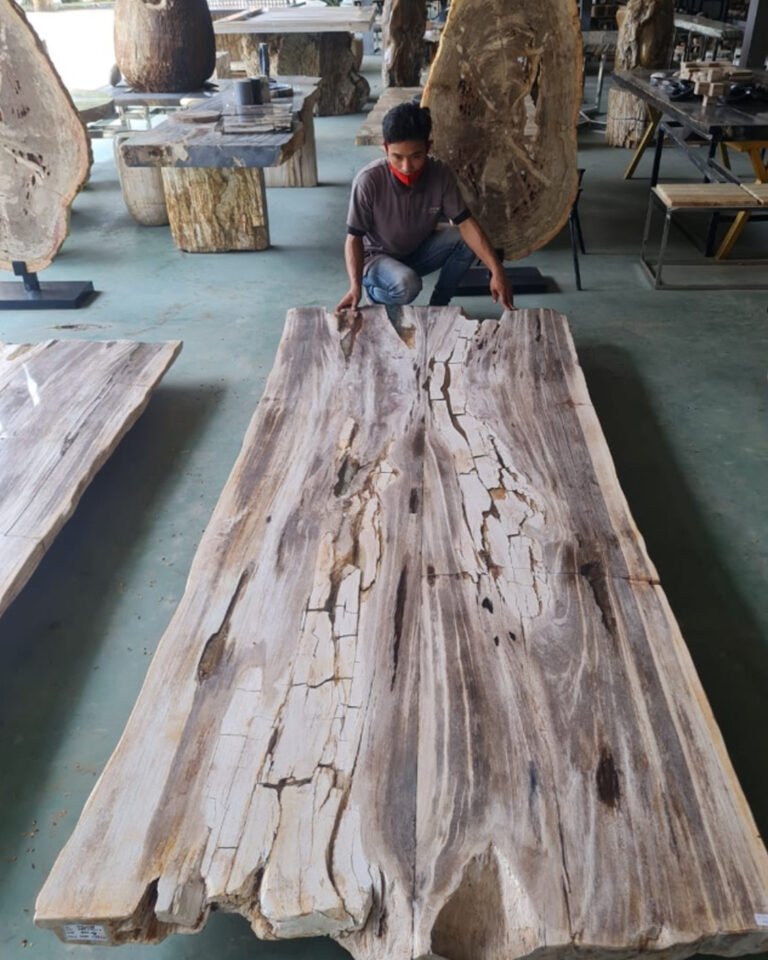
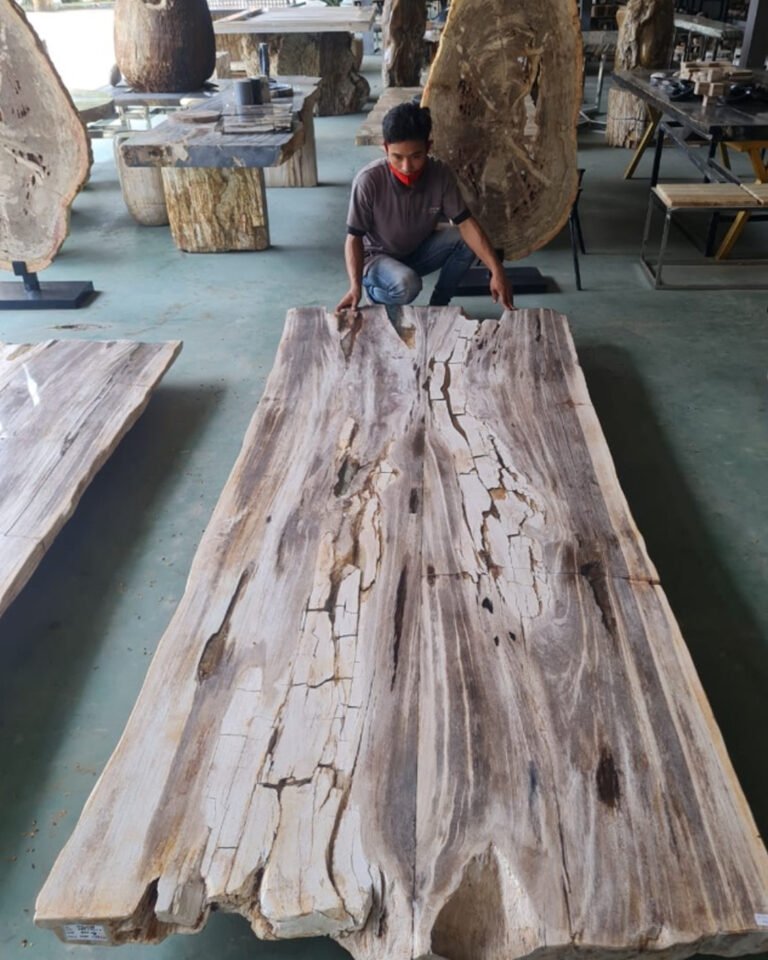
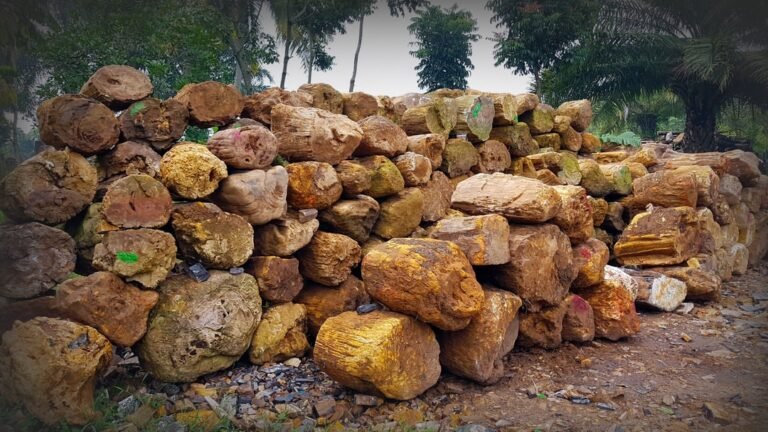
The journey begins with the careful extraction of raw fossilized logs. Because every piece is unique, the selection process is critical. Experienced teams identify specimens based on their structural integrity, color density, and fossilization quality. Once sourced, the raw material undergoes an initial assessment to determine its best application—whether it will become a large statement table, a polished slab for architectural use, or smaller decorative objects.
2. Stabilizing the Material
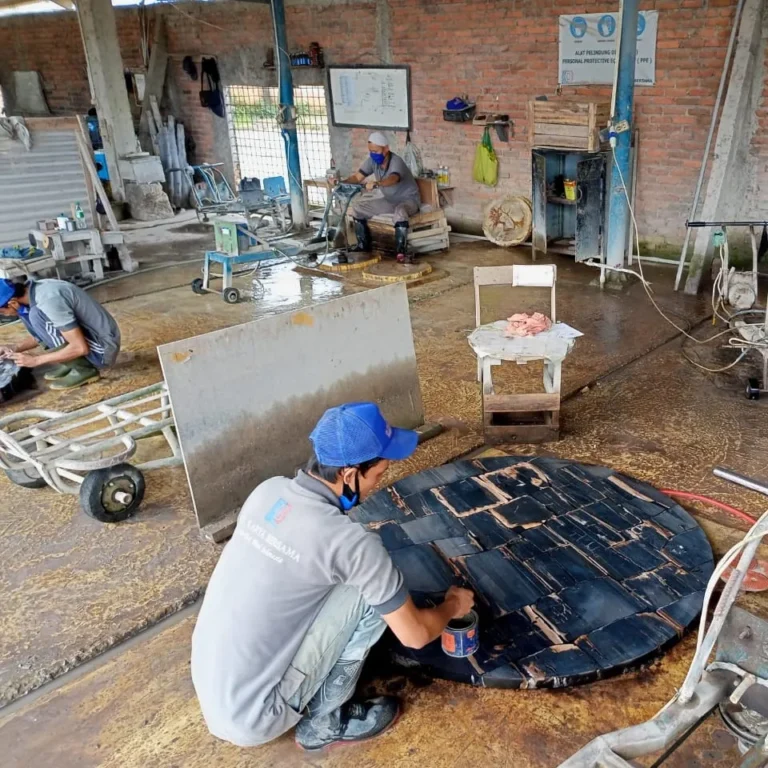
Petrified wood is inherently porous and fragile in its raw, unrefined state. To ensure the durability required for furniture and home decor, the wood must be reinforced. How petrified wood is stabilized before manufacturing is a foundational step that involves treating the stone with specialized resins. This process fills microscopic voids, enhancing the structural strength and preparing the surface for the intense friction of cutting and polishing.
3. Precision Cutting and Shaping
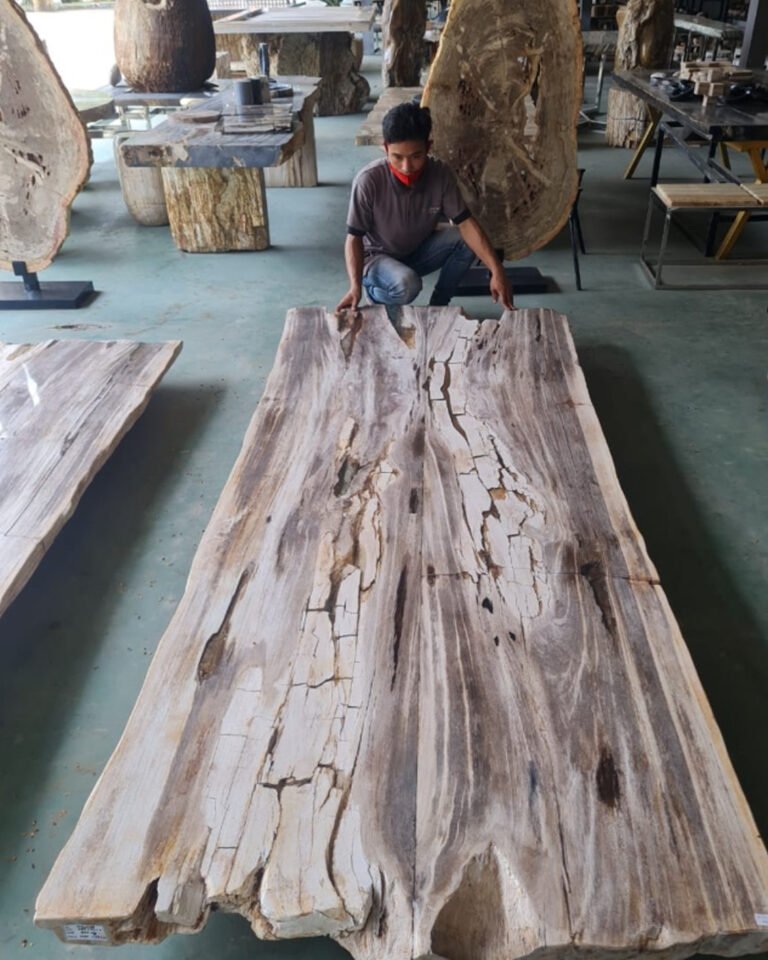
Once the material is stabilized, the manufacturing moves to the workshop floor. Large-scale machinery is utilized to slice these dense fossilized logs into manageable, flat slabs. The cutting process requires immense precision; the goal is to reveal the intricate ring patterns and mineral colors hidden inside without compromising the integrity of the slab. How Indonesian factories cut petrified wood slabs involves sophisticated diamond-tipped saws that operate under constant water cooling to prevent heat cracking and ensure a clean, smooth surface.
4. Grinding and Surface Refinement
After the initial cuts, the surface is often uneven and rough. Craftsmen employ a series of grinding stages, moving from coarse abrasive pads to progressively finer ones. This phase removes imperfections and levels the slab to a perfectly flat plane, which is necessary for furniture applications like dining tables or countertops. During this stage, any remaining natural pits or small fractures are filled with high-grade resin to create a uniform, glass-like finish.
5. The Art of Polishing
Polishing is arguably the most labor-intensive part of the Indonesian petrified wood manufacturing process. It is here that the vibrant colors—the reds, yellows, and deep blacks—truly emerge. Specialists use specialized buffing compounds to achieve a high-gloss finish that highlights the ancient grain patterns. Petrified wood polishing: from raw fossil to finished surface represents the final aesthetic transformation, turning a piece of ancient history into a functional, luxury design element.
6. Quality Control and Export Preparation
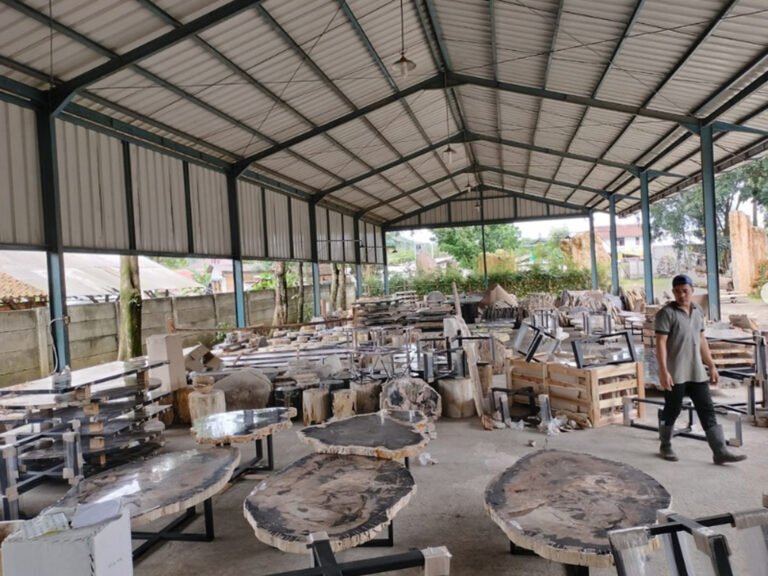
Before any item leaves our facility, it undergoes a final quality audit. This includes checking for structural soundness, surface clarity, and adherence to dimension specifications. Given the heavy nature of petrified wood, packaging is a specialized skill. Every piece is crated using ISPM-15 compliant wood and custom-padded to ensure it arrives at international destinations in pristine condition.
Why Choose Professional Manufacturing?
Manufacturing petrified wood is not merely about shaping stone; it is about respecting the millions of years of history contained within each piece. Professional processing ensures that the natural beauty of the fossil is preserved while making it safe and functional for modern living. By working directly with experienced manufacturers, buyers can ensure their pieces are processed with the highest standards of safety, quality, and craftsmanship.
CTA
Are you looking for premium, high-quality petrified wood for your next project? Contact Java Petrifiedwood today to explore our collection and learn more about our custom manufacturing capabilities for international clients.
Frequently Asked Questions (FAQ)
- How long does the processing of a single large slab take?
Processing time varies based on the size and complexity of the piece, but generally involves several weeks of stabilization, curing, cutting, and hand-polishing to achieve a museum-grade finish. - Is all petrified wood stabilized with resin?
While not all pieces require heavy stabilization, most high-end furniture pieces undergo a resin treatment to fill natural voids and improve surface durability for long-term use. - Does the manufacturing process change the natural color of the wood?
No. The polishing process simply reveals the natural colors and patterns already present in the stone; it does not alter them. - How do you ship these heavy products internationally?
We utilize custom-built, heat-treated wooden crates and provide full documentation for secure international shipping, ensuring that your investment is protected during transit.