From Fossil Log to Petrified Wood Slab: The Complete Process
The Journey of Ancient Wood
The transformation of a raw, ancient fossil log into a refined, high-end petrified wood slab is a marriage of geological wonder and modern craftsmanship. In Indonesia, this process is an art form that honors the history preserved within the stone while catering to the needs of modern interior design. For international buyers and enthusiasts, understanding this journey highlights the immense labor and technical precision required to produce a premium piece of fossilized furniture.
Sourcing and Initial Preparation
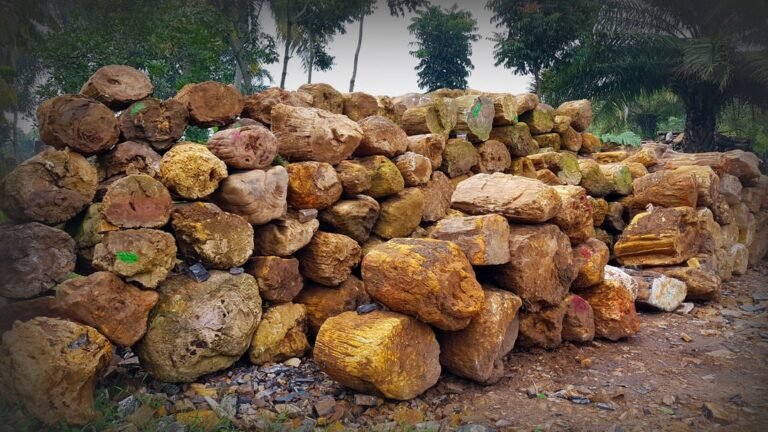
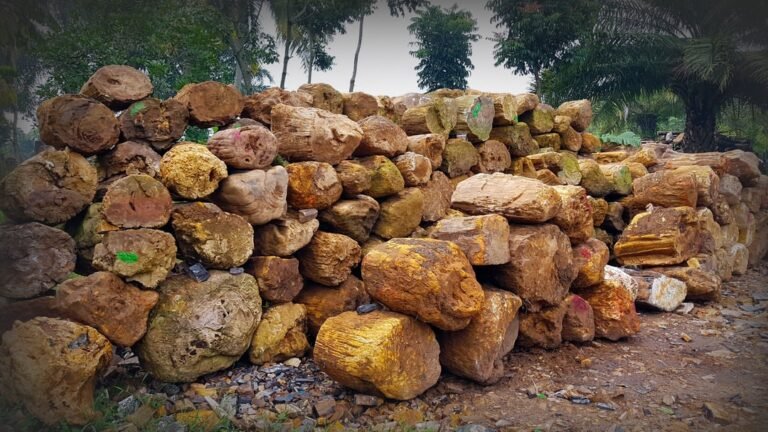
The process begins deep in the Indonesian landscape, where fossil logs are carefully identified and unearthed. Unlike timber, which is harvested from living forests, petrified wood is a geological find. Once a log is sourced, it undergoes an initial cleaning and inspection to determine its structural integrity. Since millions of years of mineralization can lead to internal voids or fractures, assessing the quality of the raw material is critical before any cutting begins. To understand the foundational work that happens before a log ever reaches the workshop, read about the complete Indonesian petrified wood manufacturing process.
Precision Cutting: From Log to Slab
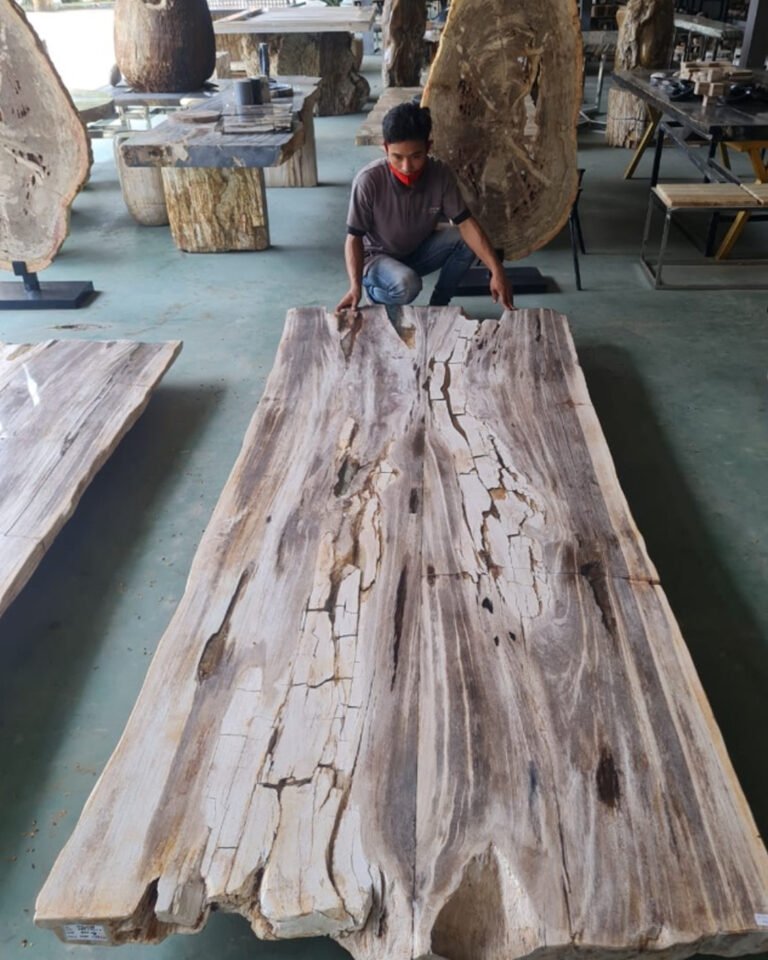
Once a suitable log is prepared, it is transported to the factory to be sliced into slabs. This is perhaps the most critical stage, requiring heavy-duty industrial machinery. Large diamond-tipped saws are typically employed to ensure clean, precise cuts. The thickness of the slab is determined by the intended use—whether it will be a coffee table, a console, or a decorative wall panel. Achieving a perfectly flat surface on a material as hard as silica-rich fossilized wood demands immense patience and skilled machine operators. For a deeper look at the machinery involved, our guide on petrified wood cutting machines explains the technology behind these precise cuts.
Stabilization and Refinement
Because petrified wood is natural, it often features organic imperfections such as small holes, mineral inclusions, or minor surface fissures. After the initial cut, the slab must be stabilized to ensure it is durable enough for daily use. Resin filling is a common technique used to bridge these gaps and secure the stone’s integrity, ensuring that the final surface is smooth and resistant to wear. This stabilization is vital for maintaining the structural value of the slab, particularly for larger pieces intended for heavy-duty furniture.
Polishing and Surface Finishing
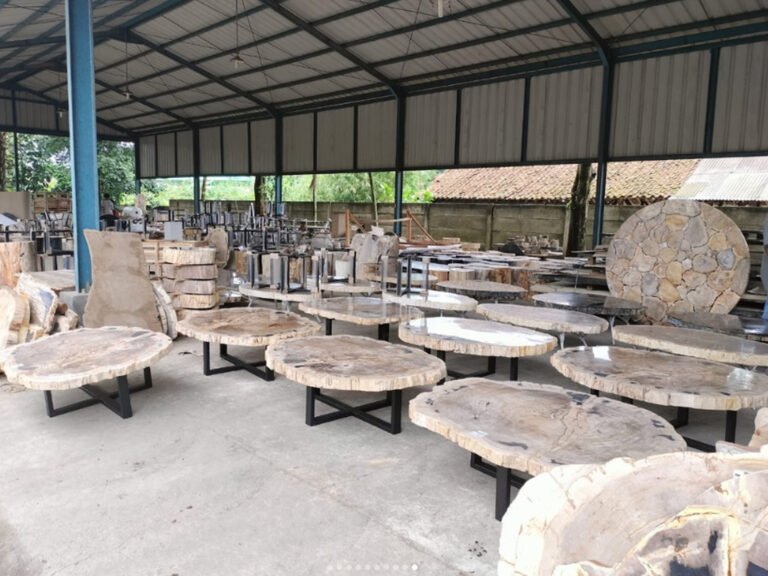
The final aesthetic appeal of a petrified wood slab is defined by its finish. The process involves a long series of sanding stages, starting with coarse grits and moving toward finer, polishing powders. This gradual abrasion reveals the breathtaking colors—ranging from rich earthy browns to vibrant reds and blacks—hidden beneath the rough exterior of the fossil log. The final high-gloss polish brings out the intricate cellular structures of the original wood, creating a mirror-like sheen that highlights the unique character of every individual piece.
Why Choose Professional Indonesian Craftsmanship?
Transforming a heavy, multi-million-year-old fossil log into a functional piece of art is not a task for the faint of heart. It requires specialized knowledge of mineralogy, heavy machinery, and artistic vision. By sourcing directly from reputable Indonesian manufacturers, you ensure that your slabs have been processed with the necessary expertise to handle the natural density and fragility of fossilized wood. If you are looking for high-quality, professionally finished pieces for your next project, explore our collection at Java Petrifiedwood and learn how to source petrified wood directly from Indonesia with confidence.
FAQ
- How long does it take to process a single petrified wood slab?
The timeline varies based on the size and thickness of the slab, but due to the extreme hardness of the material, the multi-stage cutting and hand-polishing process can take several weeks to complete. - Can all fossil logs be made into slabs?
Not necessarily. Some logs have internal fractures that make them unsuitable for large, thin slabs. In such cases, artisans may prefer to turn these pieces into smaller decorative items or sculptures. - How do you ensure the slab won’t crack after purchase?
Professional manufacturers use stabilization techniques, such as resin application and thorough drying, to ensure the stone is solid. Proper care and handling also play a significant role in maintaining the integrity of the slab. - Is the polishing process done by machine or hand?
It is a hybrid process. Large machines handle the initial cutting and coarse grinding, while skilled craftsmen perform the final polishing stages by hand to ensure the highest level of detail and color clarity.