From Petrified Wood Slab to Dining Table: Step by Step
The Journey of a Masterpiece: From Slab to Dining Table
Transforming a raw, ancient fossil into a functional work of art like a petrified wood slab is a testament to the intersection of geological history and modern craftsmanship. A petrified wood dining table is not just a piece of furniture; it is a centerpiece that brings millions of years of history into a contemporary home. Understanding the steps involved in this transformation helps buyers appreciate the dedication, skill, and time required to produce these exquisite pieces.
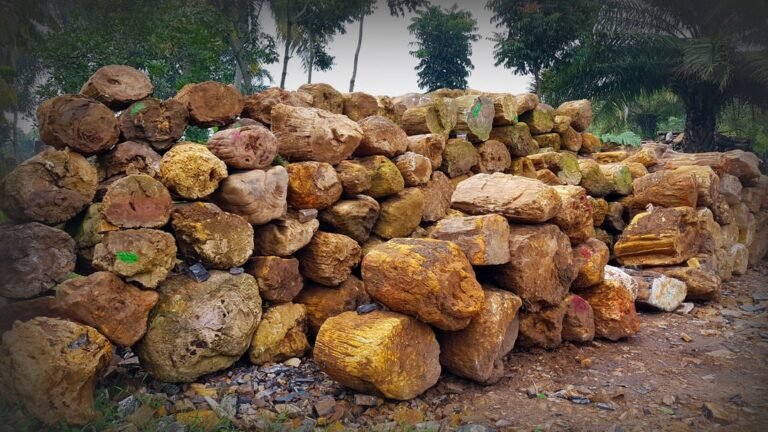
1. Selection and Sourcing of the Fossil
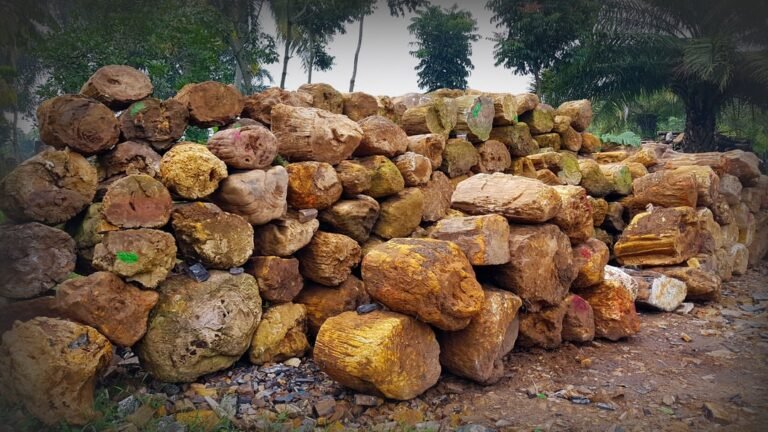
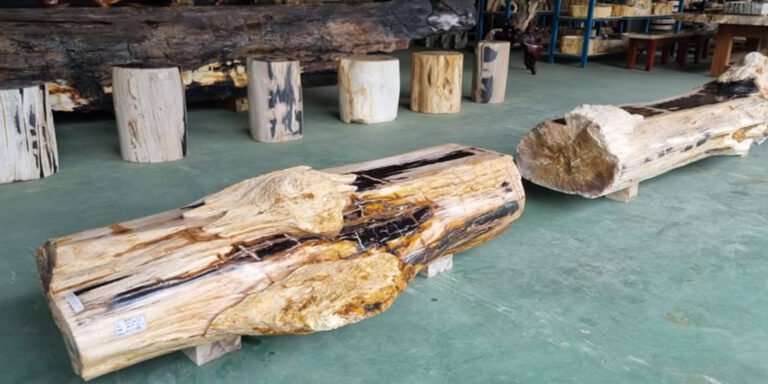
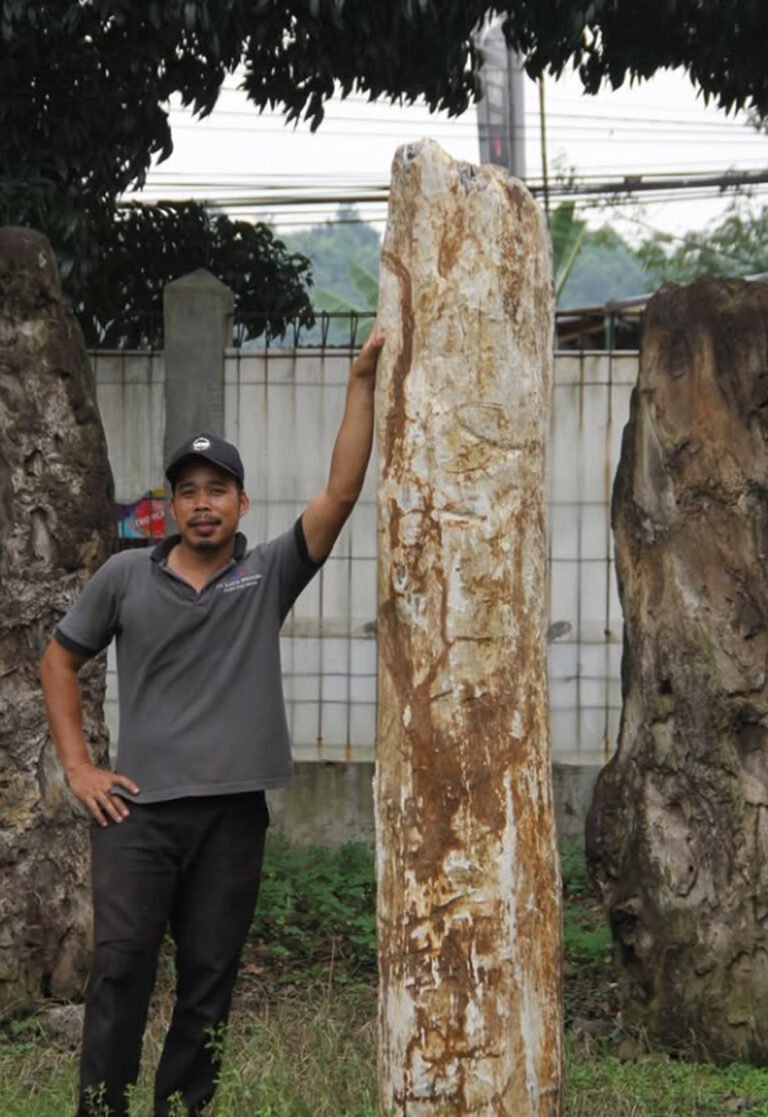
The process begins with the careful selection of a high-quality fossil log. Not every piece of petrified wood is suitable for a table. Craftsmen look for structural integrity, minimal natural fracturing, and aesthetic appeal, such as vibrant mineral colors and clear wood grain patterns. Once a suitable log is sourced, it is prepared for the primary cutting phase, where the thickness and diameter are calculated based on the intended use as a tabletop.
2. Precision Cutting and Shaping
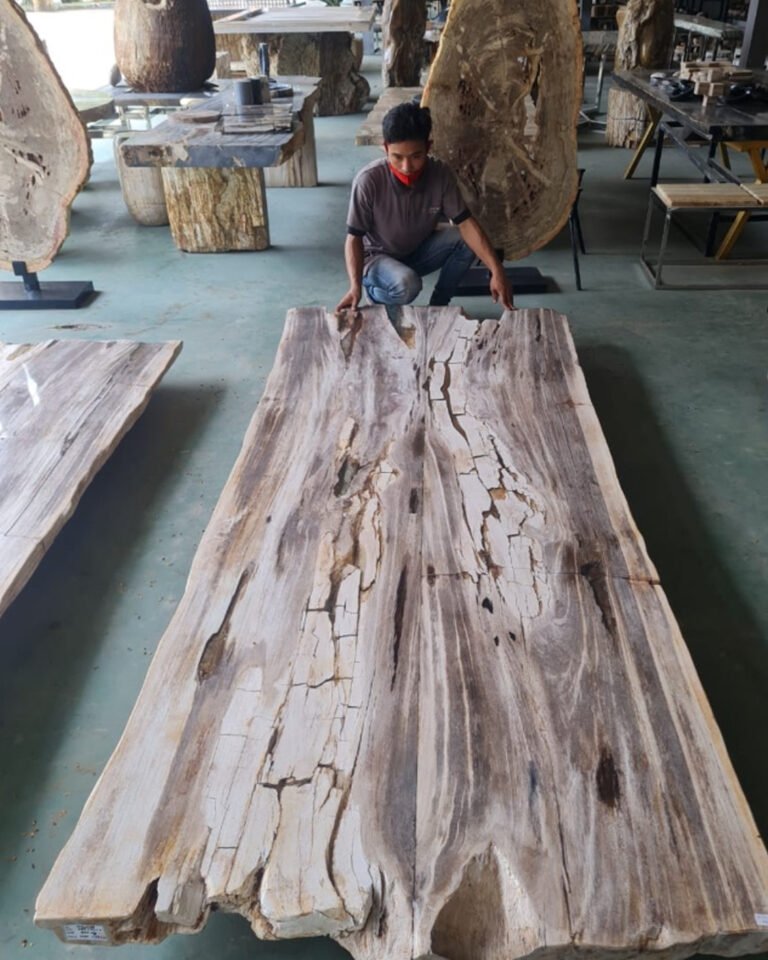
Cutting a massive, mineralized log requires specialized heavy-duty machinery. The slab must be sliced with extreme precision to ensure a flat, stable surface. For larger tables, how large petrified wood slabs are cut is a critical factor in the final quality of the furniture. The slab is cut into a cross-section, revealing the intricate internal patterns formed by silica replacement over millennia.
3. Structural Stabilization
Because petrified wood is essentially stone, it can have microscopic fissures or natural voids. Before any finishing work begins, the surface must be stabilized. This often involves filling small cracks or holes with high-grade, color-matched resin to ensure the surface is smooth and durable for daily use. Proper petrified wood stabilization is essential to prevent future structural issues and ensures the longevity of the dining table.
4. Grinding and Polishing
Once the resin has cured, the slab undergoes a rigorous grinding and polishing process. This is where the true beauty of the fossilized wood emerges. Craftsmen use progressively finer abrasives to remove tool marks and scratches until the surface achieves a mirror-like finish. This multi-stage process requires patience and an eye for detail to ensure the natural luster of the minerals is highlighted without obscuring the wood grain.
The Polishing Stages
| Stage | Action | Objective |
|---|---|---|
| Initial Grinding | Coarse abrasive pads | Leveling the surface |
| Refining | Medium grit pads | Removing deep scratches |
| Final Polishing | Fine/Buffing compounds | Achieving a high-gloss finish |
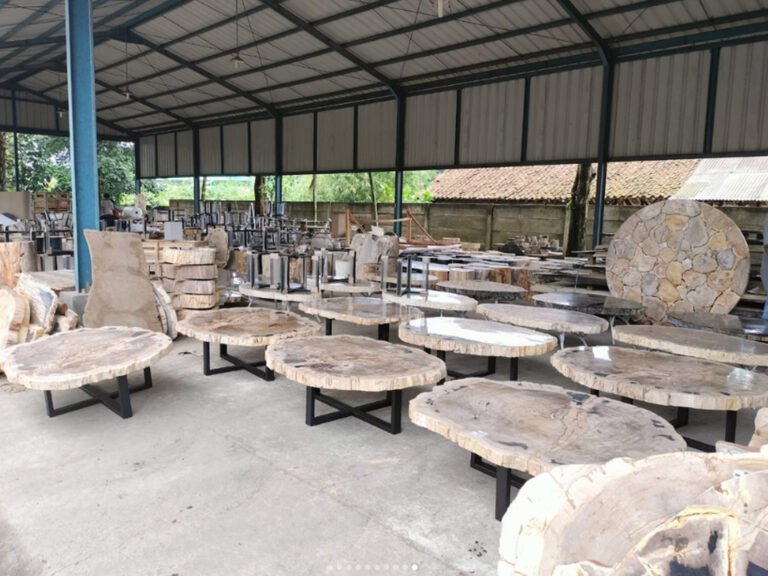
5. Final Inspection and Base Installation
After the top is polished, it is thoroughly inspected for any remaining imperfections. The final step is pairing the slab with a base. Depending on the design—whether it is a minimalist steel frame or a sturdy wooden pedestal—the base is engineered to support the significant weight of the petrified wood. Given that petrified wood is significantly denser than traditional timber, the structural integrity of the base is just as important as the tabletop itself.
Bring Ancient Beauty to Your Home
Creating a petrified wood dining table is a journey that connects the deep past with the present. At Java Petrifiedwood, we specialize in high-quality, authentic Indonesian fossilized furniture that stands the test of time. If you are looking for a unique centerpiece for your project, contact our team to discuss our current collection and custom manufacturing capabilities.