

How Petrified Wood Is Cut, Polished, and Finished
Introduction to Petrified Wood Craftsmanship
Transforming raw, ancient fossilized wood into a sleek, functional piece of furniture or a stunning decorative slab is a journey that requires patience, specialized tools, and a deep understanding of geological material. In Indonesia, the process of turning millions-of-years-old wood into modern luxury items is a refined art form that balances industrial precision with traditional craftsmanship.
Many international buyers are often curious about the labor-intensive stages involved in this transformation. By understanding how petrified wood is processed in Indonesian workshops, you can better appreciate the value and durability of the final product you receive.
The Initial Cutting Process
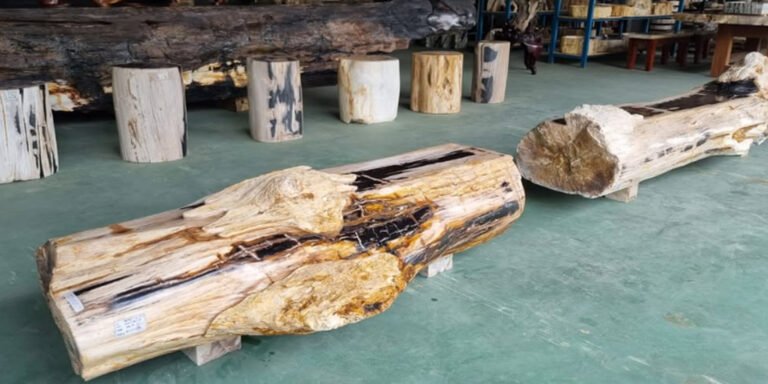
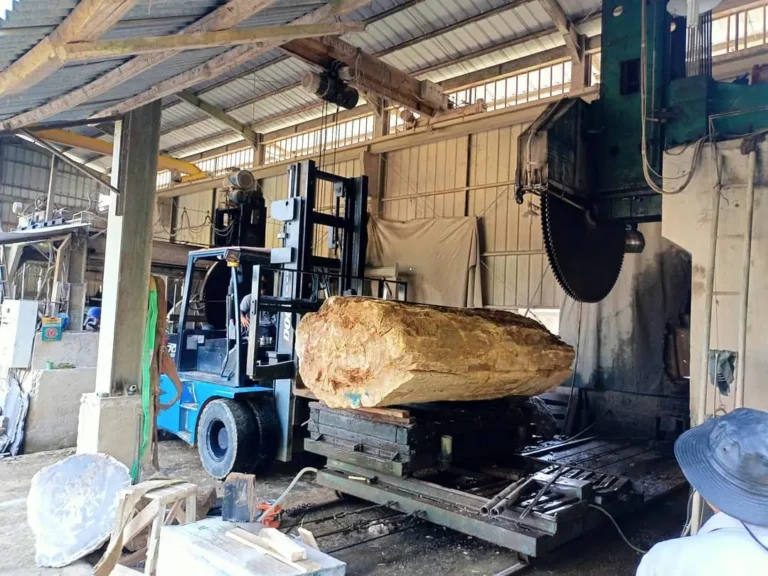
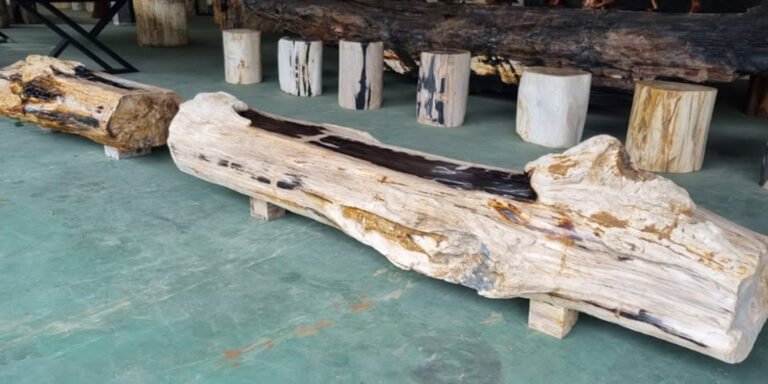
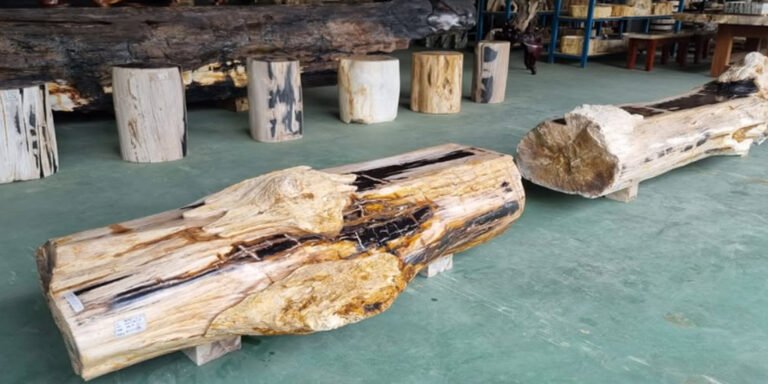
The journey begins with selecting raw fossilized logs, which are incredibly hard due to the silica replacement that occurred over millions of years. Because petrified wood has a high Mohs hardness rating, standard wood saws are ineffective. Instead, specialized stone-cutting equipment is required.
- Diamond-Tipped Saws: Large industrial saws equipped with diamond-segmented blades are used to slice through the dense fossilized material. This requires slow, steady movement to ensure a clean cut without cracking the fragile crystalline structures inside.
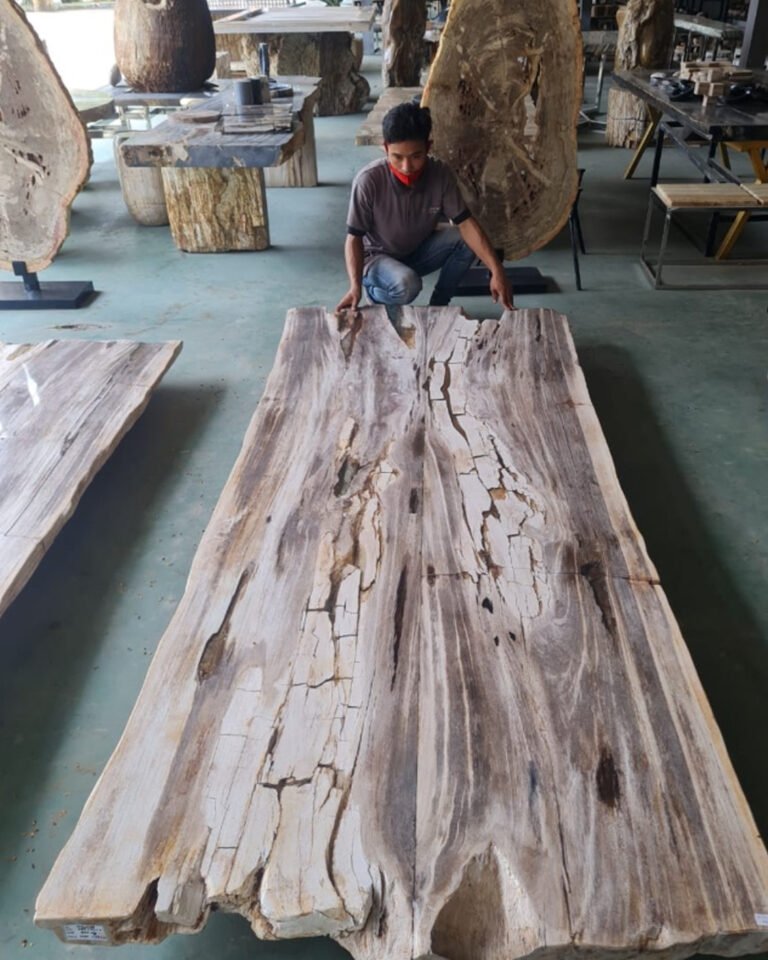
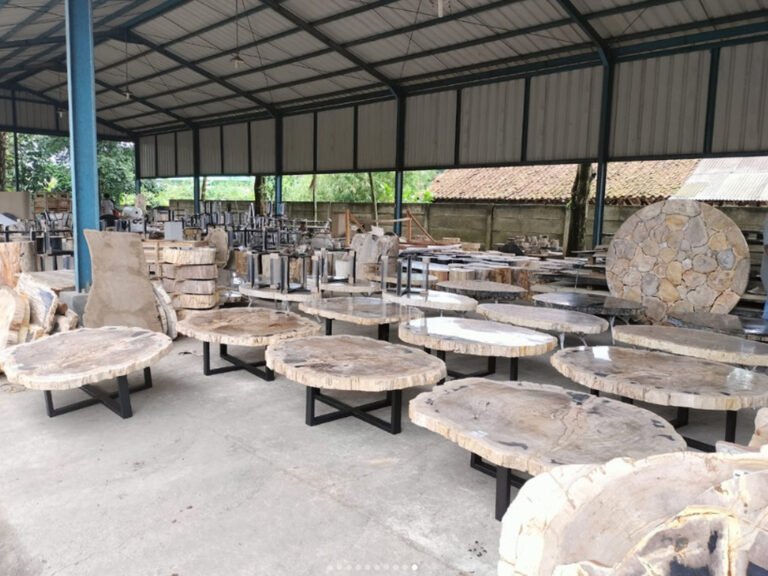
- Precision Slab Cutting: When preparing slabs for tables or architectural wall decor, the log must be positioned precisely to reveal the most beautiful interior cross-sections. This reveals the intricate tree ring patterns and mineral colors that make every piece unique.
Grinding and Shaping
Once the initial cuts are made, the material is often irregular and rough. The shaping stage involves grinding away the exterior bark or uneven edges. This is a critical step for those interested in most popular petrified wood shapes for interior decor, as it defines the silhouette of the final furniture or decor object. Artisans use heavy-duty grinding discs and water-cooling systems to prevent overheating the stone and to minimize dust.
Polishing for a Luster Finish
Polishing is where the “magic” happens. This stage brings out the vibrant colors, from deep earthy tones to brilliant quartz-like crystals embedded within the wood. The polishing process is iterative, involving several stages of sanding:
- Coarse Grinding: Removes deep scratches and levels the surface.
- Fine Sanding: Smooths the texture using progressively finer grit pads.
- Final Buffing: Uses specialized polishing compounds to achieve a glass-like shine that highlights the natural beauty of the fossilized tree.
Finishing and Protective Sealing
While the stone itself is incredibly durable, the final finish is vital for long-term maintenance and aesthetic appeal. Choosing the right finish depends on the desired look—whether natural and matte or high-gloss and reflective. Artisans often apply high-quality sealants to enhance the depth of the grain and provide a barrier against stains. You can learn more about the best practices in best finishes for petrified wood furniture to ensure your piece remains as stunning as the day it was finished.
Why Expert Finishing Matters
The difference between a mass-produced item and a piece of high-end Indonesian art lies in the attention to detail during the final finishing phase. A well-finished piece of petrified wood should feel smooth to the touch, with no sharp edges or rough patches. Proper finishing not only enhances the visual appeal but also improves the longevity of the product, making it a sound investment for any luxury space.
CTA
Are you looking for premium, expertly finished petrified wood furniture for your next design project? At Java Petrifiedwood, we pride ourselves on our meticulous processing standards. Contact our team today to explore our collection of high-quality slabs, tables, and custom sculptures.
FAQ
- How long does it take to polish a large petrified wood slab?
Polishing time depends on the size and the hardness of the mineral composition, but a large, high-quality slab can take several days of continuous, careful labor to achieve a perfect finish. - Does polishing remove the natural detail of the wood?
No, professional polishing actually enhances the visibility of the internal wood grain and crystalline patterns by making the surface reflective and smooth. - Is there a specific way to maintain the polished surface?
Yes, keeping the surface clean with a soft, damp cloth is generally sufficient. Avoid using acidic cleaners that can damage the stone or the sealant. - Can I choose the type of finish for a custom order?
Yes, many suppliers offer options ranging from a honed (matte) finish to a high-gloss, reflective polish depending on your aesthetic preferences.
4 Comments