

How Petrified Wood Is Processed in Indonesian Workshops
Introduction to Petrified Wood Processing in Indonesia
Petrified wood, a natural wonder formed over millions of years, is more than just fossilized timber—it’s a prized material used for luxury décor, furniture, and collectibles worldwide. Indonesia is renowned for its high-quality petrified wood and the skilled artisans who transform raw specimens into stunning masterpieces. This article provides a comprehensive look at how petrified wood is processed in Indonesian workshops, focusing on the techniques, tools, and craftsmanship that set Indonesia apart in the global market.
Understanding Indonesian Petrified Wood
What Is Petrified Wood?
Petrified wood originates from ancient trees buried under sediment, where minerals gradually replace organic material, creating a timber-like stone with intricate color and grain. Indonesian petrified wood, especially from Java, is prized for its vibrant hues and exceptional preservation.
Why Indonesia?
The volcanic and sedimentary landscapes of Indonesia, especially Java and Sumatra, create prime conditions for forming world-class petrified wood. The abundance and variety of petrified wood deposits, paired with Indonesia’s legacy of woodworking, have positioned the country as a leading global exporter.
The Journey: From Raw Petrified Wood to Finished Art
Sourcing Raw Material
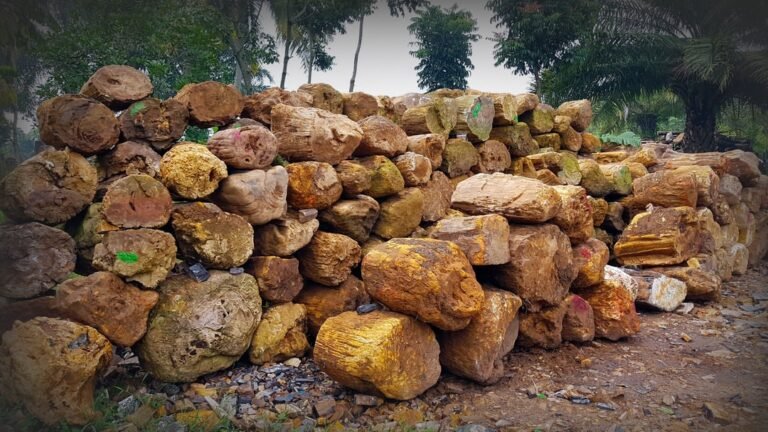
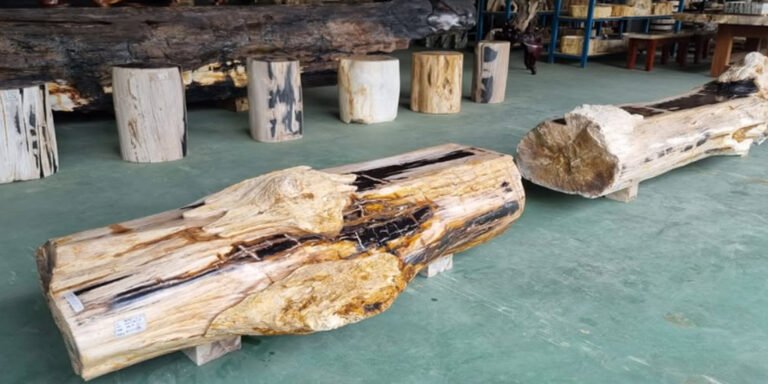
The first step in the process is sourcing. Petrified wood is excavated from licensed quarries or collected from riverbeds and open lands, always in compliance with environmental regulations set by Indonesian authorities. Each specimen is unique, varying in size, color, and pattern.
Initial Sorting and Inspection
After collection, the raw petrified wood undergoes initial sorting. Skilled workers assess each piece for quality, color, and structure. Pieces with cracks, excessive porosity, or unwanted inclusions are set aside or reserved for smaller crafts or mosaic work.
Cutting and Shaping
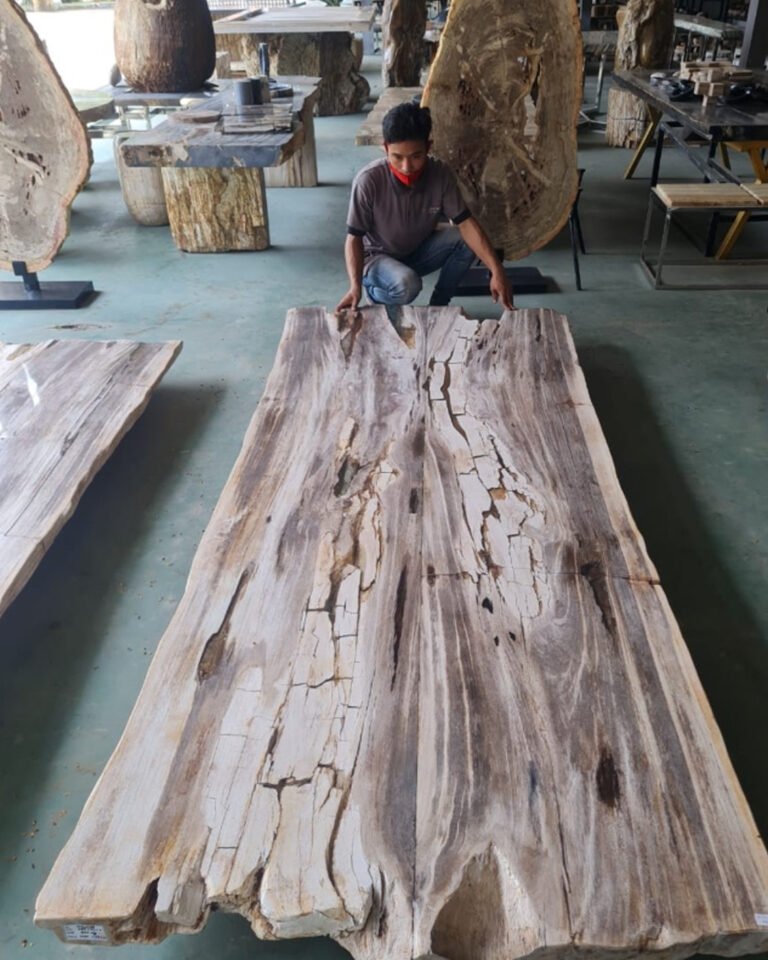
The next phase involves transforming raw logs and chunks into usable shapes. Using industrial-grade diamond saws, artisans slice and cut the petrified wood into slabs, blocks, or custom forms, depending on its intended end use. Precision is essential, as the material is both dense and brittle.
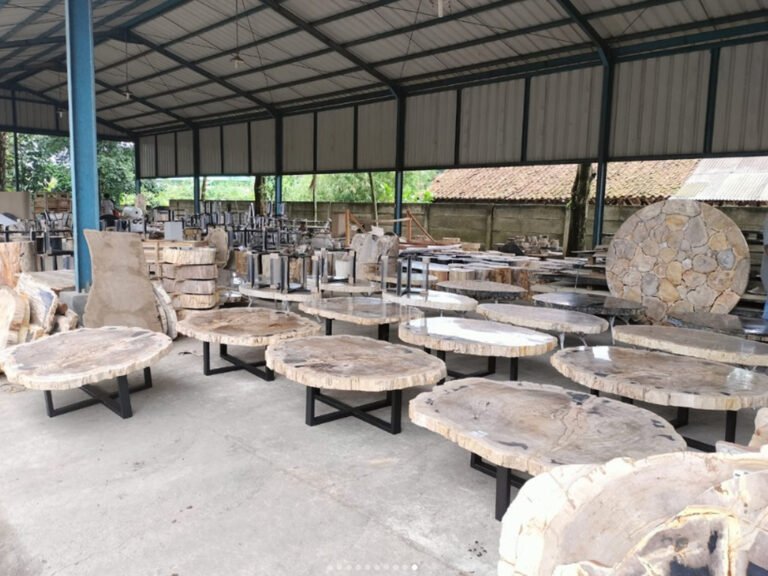
- Slabbing: Large logs are cut into thick slices for tabletops or slabs.
- Block Cutting: Smaller pieces may be cut into cubes or geometric forms for decorative items.
Smoothing and Surface Preparation
Once cut, the surfaces are rough and often jagged. Artisans progress through a series of sanding and grinding stages, starting with coarse abrasives and moving to finer grits. This process not only smooths the stone but begins to reveal the vibrant colors and grain unique to each piece.
Polishing for a High-Gloss Finish
Polishing is a hallmark of Indonesian petrified wood craftsmanship. Using specialized polishing wheels and pastes, artisans achieve a mirror-like shine that enhances natural patterns. Polishing can be done by hand for small objects or with machines for large slabs and furniture pieces.
Carving, Inlay, and Artistic Detailing
In addition to polishing, many workshops employ skilled carvers to add ornamental details or create functional objects like bowls, sinks, and sculptures. Some pieces incorporate inlays of metal, stone, or resin to further highlight the natural beauty of the wood.
Assembly and Construction
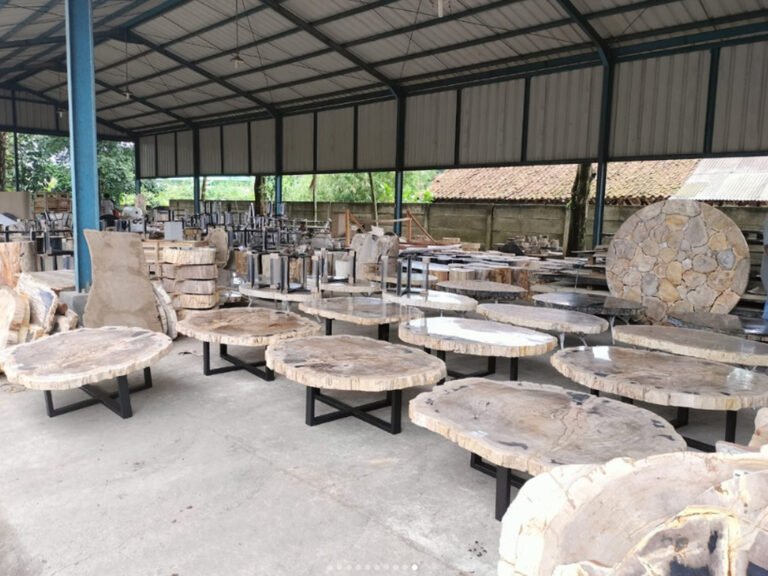
For furniture and larger decorative objects, processed petrified wood components are assembled using adhesives or mechanical fasteners. Metal bases or supports may be custom-fabricated to ensure stability, especially for tables, countertops, or benches.
Finishing Touches and Quality Control
Each item undergoes rigorous quality checks to detect defects—such as fractures or missed polishing spots. Edges are deburred, and surfaces are sometimes sealed with clear, non-yellowing resin to protect the stone and enhance its luster. Finally, finished pieces are labeled and prepared for packaging.
Tools and Techniques in Indonesian Workshops
Tools Required
- Diamond saws and blades for cutting
- Grinding and sanding machines
- Polishing wheels and pads
- Water-cooled tools to minimize heat and cracking
- Power drills for mounting and assembly
- Hand tools for detail carving and finishing
Traditional Skills and Modern Innovation
While many processes rely on state-of-the-art machinery, traditional hand-finishing skills remain central. Indonesian artisans blend generations-old woodworking techniques with modern stone processing to achieve exceptional results, emphasizing attention to detail at every stage.
Packaging and Exporting Indonesian Petrified Wood
Packaging Standards
Due to the weight and fragility of petrified wood, professional packaging is critical. Items are wrapped in protective materials and padded within wooden crates to prevent damage during transit.
Documentation and Export
Legitimate Indonesian exporters provide full documentation for each shipment, including export permits and compliance certificates, ensuring a transparent and reliable process for international buyers.
Why Choose Indonesian Petrified Wood?
Quality and Variety
Indonesia’s deposits yield petrified wood of various colors, patterns, and sizes, making it suitable for everything from jewelry and collectibles to luxury furniture and architectural elements.
Expertise and Craftsmanship
Indonesian workshops are globally renowned for their attention to detail, artistic flair, and dedication to customer satisfaction, helping buyers secure unique, high-value pieces for any market.
Conclusion
Indonesian petrified wood workshops offer a blend of tradition, innovation, and artistry. From the heart of Java and beyond, these skilled artisans continue to set the standard for petrified wood processing worldwide. Whether for home décor, bespoke furniture, or art collections, choosing Indonesian petrified wood ensures you receive timeless beauty, expertly crafted for generations.
7 Comments