

The Geological Story of Indonesian Petrified Wood
The Ancient Origins of Indonesian Fossilized Wood
Indonesian petrified wood is not merely a decorative element; it is a profound testament to Earth’s dynamic history. Often referred to as ‘stone wood,’ these remnants of prehistoric forests provide a window into ecosystems that existed millions of years ago. Understanding the geological story of Indonesian petrified wood requires looking back at the volcanic activity and sediment deposition that characterize the Indonesian archipelago.
The process of petrifaction—or permineralization—is a slow, precise natural alchemy. It begins when a tree is buried rapidly under volcanic ash, mud, or sediment, shielding it from decay by bacteria and oxygen. In the unique volcanic landscape of Indonesia, the high silica content in the groundwater acted as the primary agent of transformation, slowly replacing the organic material with minerals cell by cell.
The Mineralization Process: Nature’s Masterpiece
As groundwater rich in dissolved minerals, such as silica, iron, and manganese, percolated through the buried wood, it filled the empty cellular spaces. Over millennia, these minerals crystallized, perfectly preserving the original structure of the wood, from the bark texture to the intricate annual rings.
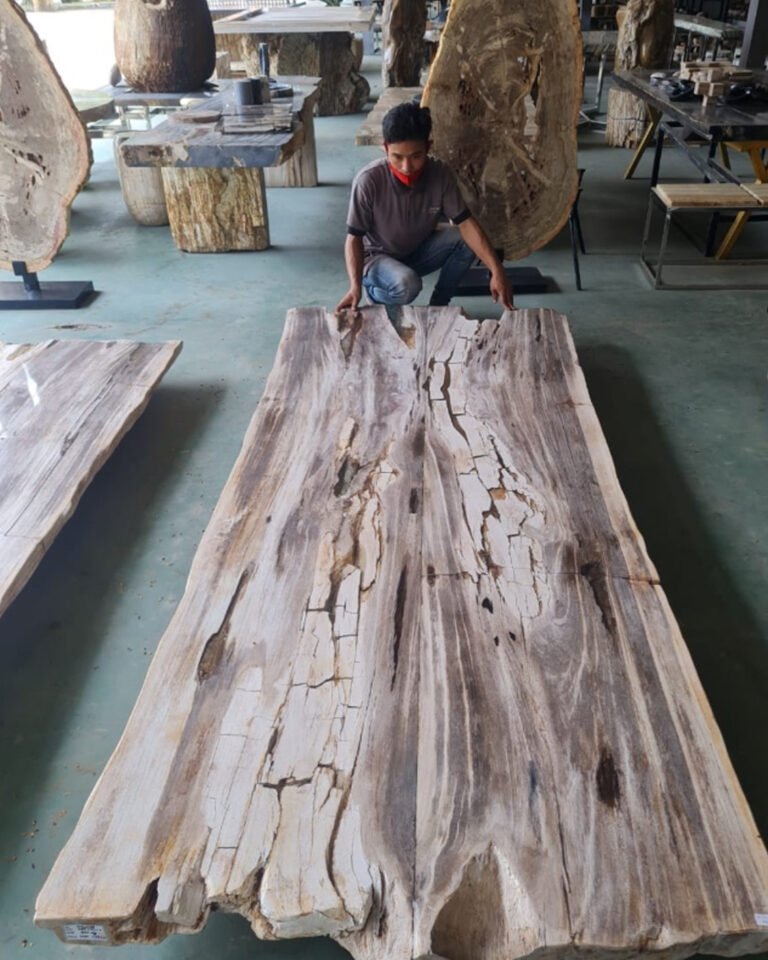
This long-term geological interaction is what gives Indonesian stone wood its remarkable color palette. The presence of specific trace elements during the crystallization phase results in the vivid patterns that designers adore today. To understand how these ancient biological structures are transformed into high-end interior elements, it is helpful to look at how petrified wood is processed in Indonesian workshops, where skilled artisans reveal the inner beauty hidden for millions of years.
Why Indonesia is Geologically Unique
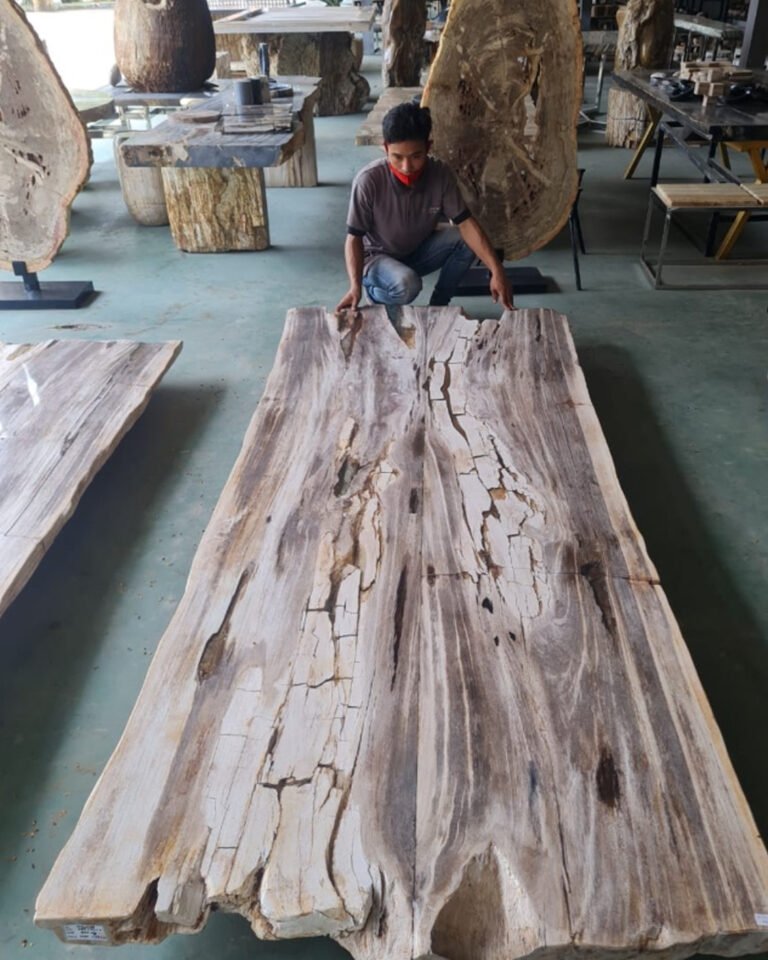
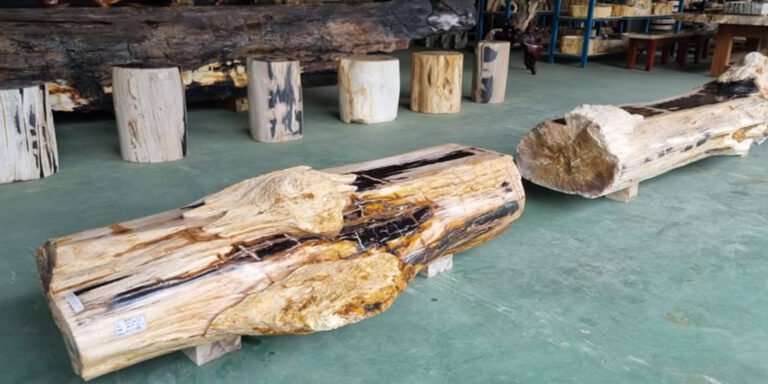
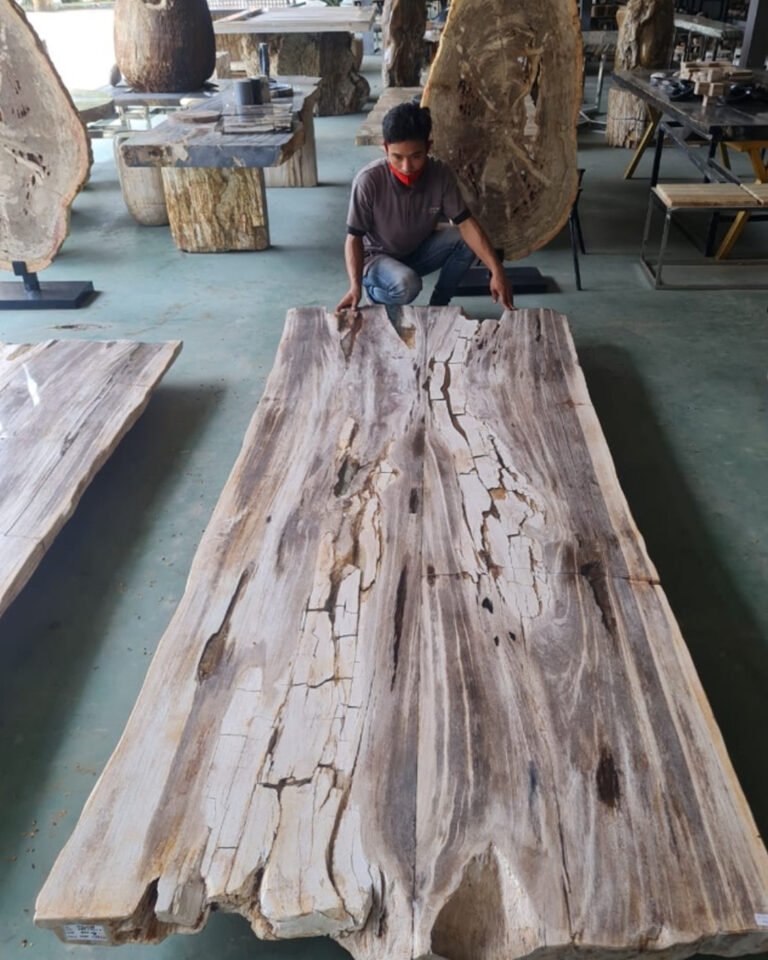
Indonesia sits atop the ‘Ring of Fire,’ a region defined by intense tectonic and volcanic activity. This geological setting provided the perfect conditions for widespread fossilization. Unlike many other regions where fossilized wood might be brittle or fragmented, the volcanic soil and sedimentation rates in Indonesia have contributed to the preservation of large, intact trunks that are highly prized for luxury decor.
The geological history is further reflected in the density and hardness of the material. Because of the heavy silicification, these pieces are incredibly durable, making them ideal for long-lasting applications. Collectors and designers often explore these properties when selecting pieces for their projects, as seen in the growing demand for petrified wood in global markets.
Geological Features to Observe
When you examine a piece of authentic Indonesian petrified wood, you are observing the intersection of botany and geology. Key features include:
- Annual Rings: Visible evidence of the tree’s growth cycles.
- Bark Preservation: The outer surface often retains the texture of the original species.
- Mineral Inclusions: Crystal clusters or agate-like bands formed by localized mineral deposits.
- Coloration: Varies from earthy browns and blacks to rare reds, yellows, and white mineral veins.
Preserving the Story Through Sustainable Sourcing
Recognizing the geological rarity of these ancient trees, the industry places a high premium on ethical sourcing. Each piece of stone wood tells a story that has been millions of years in the making. By working with professional suppliers, collectors ensure that the extraction of these natural treasures is handled with respect for the environment and local regulations. Choosing high-quality pieces ensures that this geological legacy continues to inspire for generations to come in modern living spaces.
Frequently Asked Questions (FAQ)
How old is Indonesian petrified wood?
Indonesian petrified wood generally dates back millions of years, often originating from the Miocene or Pliocene epochs. The exact age can vary based on the specific location and the layer of volcanic sediment in which it was buried.
Why does Indonesian petrified wood have so many different colors?
The vibrant colors are due to mineral impurities present in the groundwater during the fossilization process. For example, iron oxides create reds and oranges, while manganese can produce blacks, and silica often results in translucent or white crystalline structures.
Is every piece of petrified wood the same?
No. Every piece is unique, as each one represents a specific tree species and a unique set of geological conditions during the permineralization process. No two pieces share identical growth patterns or mineral compositions.
Are you looking to add a piece of geological history to your collection? Java Petrifiedwood offers a curated selection of ethically sourced, high-quality fossilized wood products. Contact us today to learn more about our collection and find the perfect centerpiece for your space.
21 Comments