How Indonesian Craftsmen Process Petrified Wood
The Art of Transforming Ancient Stone
The transformation of raw fossilized material into high-end furniture is a meticulous journey that requires a unique blend of geological knowledge and traditional artistic skill. When we look at the process of how Indonesian craftsmen process petrified wood, we are observing a practice that honors the millions of years it took for the earth to create these natural masterpieces.
Indonesian artisans have developed specialized techniques to handle this extremely hard, mineralized material. Unlike standard timber, petrified wood is essentially stone, requiring heavy machinery, precision tools, and a deep understanding of its structural vulnerabilities.
From Raw Specimen to Refined Art
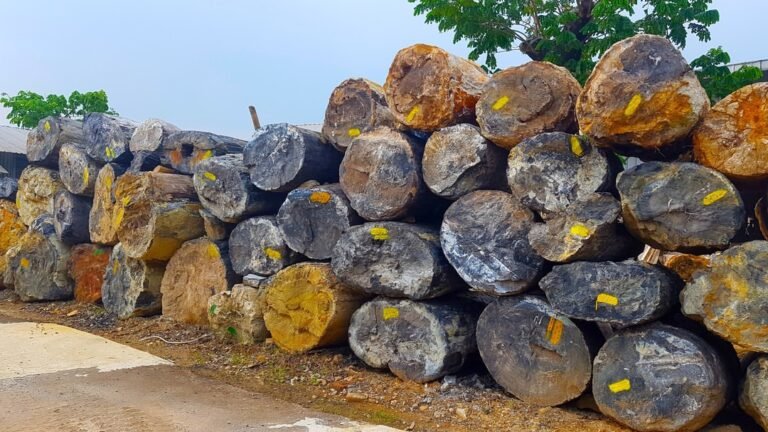
The journey begins long before the shaping starts. Craftsmen must first assess the raw material—evaluating the density, color, and structural integrity of each piece. Because every specimen is unique, there is no one-size-fits-all approach to the manufacturing process.
Cutting and Slicing
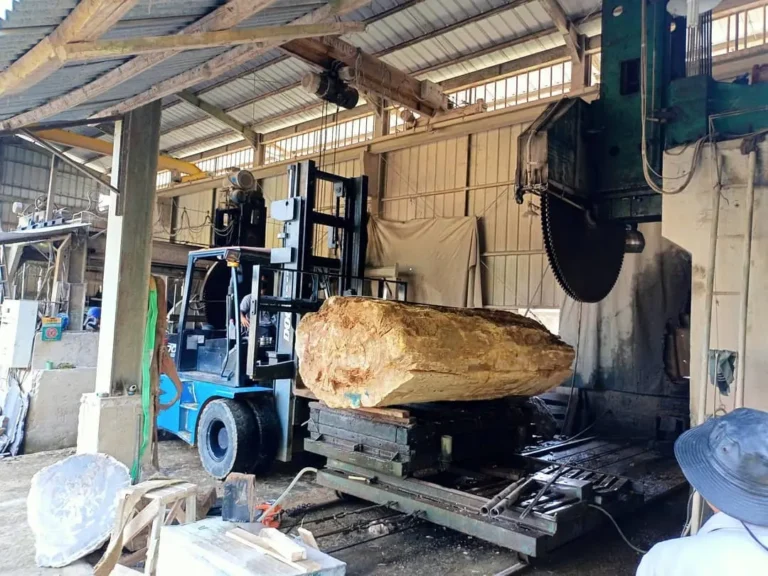
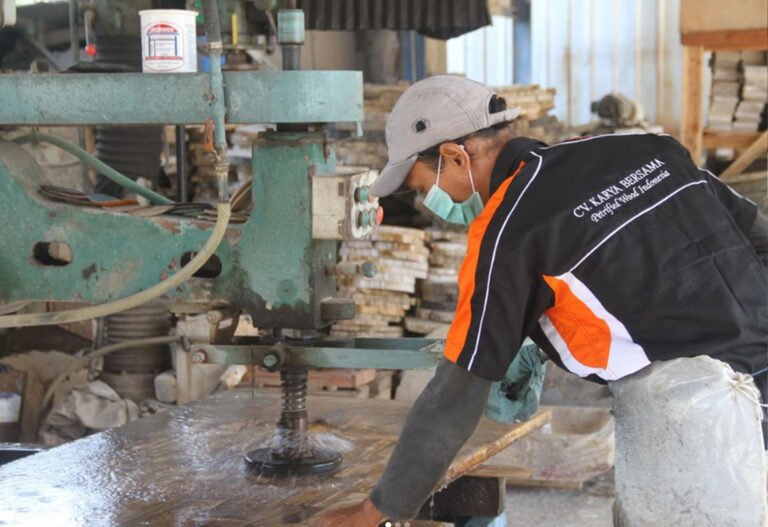
The initial stage involves large-scale industrial saws equipped with diamond-tipped blades. Because fossilized wood is significantly harder than typical rock, specialized water-cooling systems are essential to prevent the blade from overheating and to keep the cutting path precise. The goal is to slice the log into slabs that highlight its most beautiful internal patterns—the rings, bark textures, and mineral inclusions.
Shaping and Structural Reinforcement
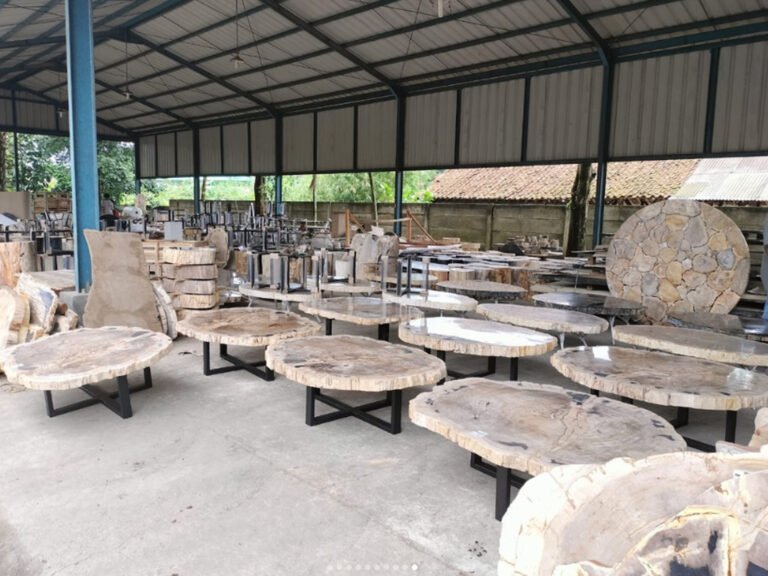
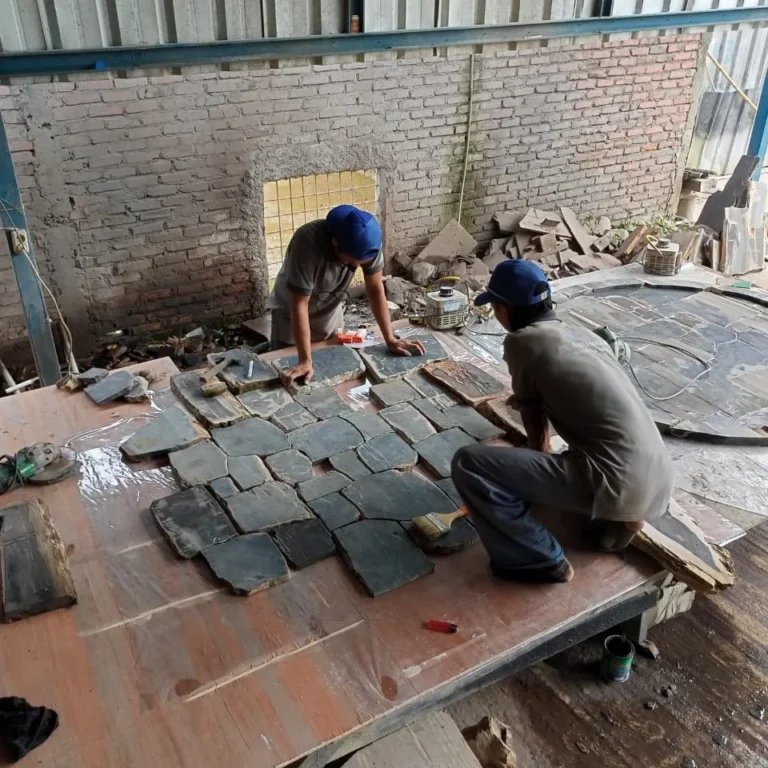
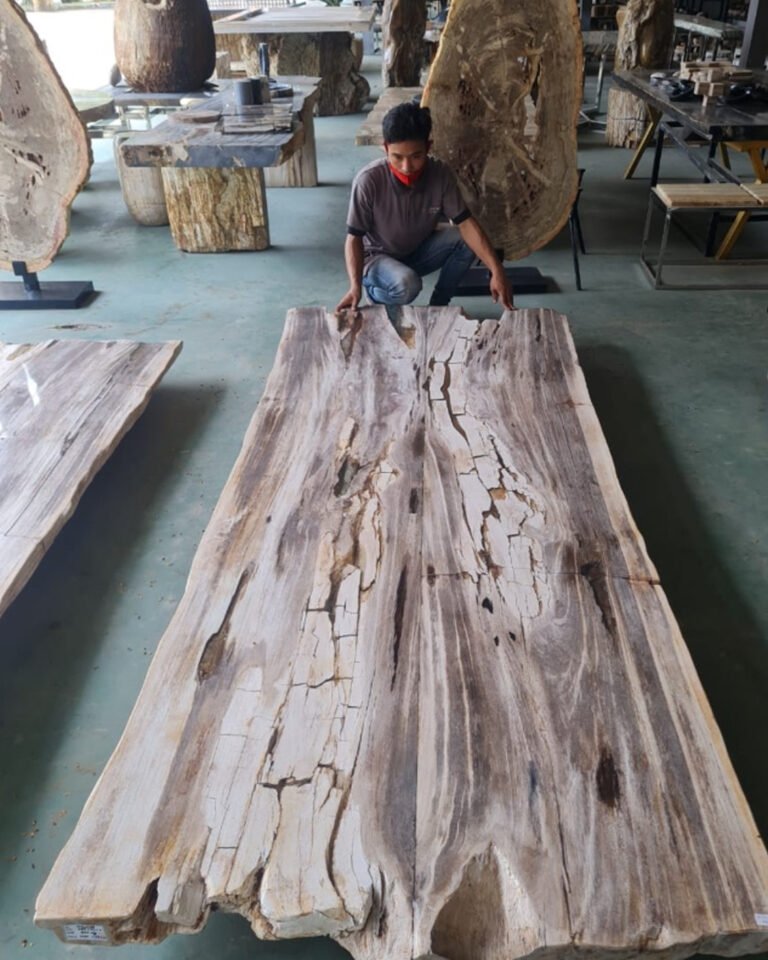
Once the slabs are cut, they are shaped according to the intended product, whether it be a coffee table, a console, or a decorative sculpture. Given the weight and the risk of natural fractures, craftsmen often use resin-filling techniques to stabilize minor voids or natural cracks in petrified wood. This practice ensures that the final piece is not only aesthetically pleasing but also durable enough for daily use in a modern home.
The Precision of Polishing
Polishing is perhaps the most critical step in revealing the hidden beauty of the stone. Craftsmen move through several stages of grit, starting with coarse grinding to level the surface and moving toward ultra-fine diamond abrasives. This laborious process is what brings out the glass-like finish that collectors admire. For those interested in the quality of the finish, understanding the what makes a premium petrified wood slab is essential, as the final polish is what separates a standard piece from a luxury investment.
Why Skill Matters in Petrified Wood Manufacturing
The expertise of the craftsmen determines the longevity of the finished product. An inexperienced worker might apply too much pressure during grinding, causing irreparable stress fractures. In contrast, skilled artisans in Indonesia treat each piece with patience, allowing the natural color gradients—the deep blacks, vibrant yellows, and subtle blues—to shine through without compromising the integrity of the material.
Beyond the technical side, the manufacturing process in Indonesia is a testament to the country’s cultural heritage in stone carving and woodworking. By blending traditional manual finishing with modern mechanical precision, these craftsmen are able to meet the exacting standards of the international luxury furniture market.
Quality Control and Final Inspection
Before any product is cleared for export, it undergoes a rigorous inspection. Craftsmen check for surface inconsistencies, stability of the edges, and the overall clarity of the stone. This final hurdle ensures that only pieces meeting the highest quality standards reach the international buyer. Investing in high-quality petrified wood sourced directly from professional facilities guarantees that you are receiving a product that has been treated with the utmost care throughout its entire manufacturing cycle.
Looking for Authentic Indonesian Petrified Wood?
At Java Petrifiedwood, we work closely with master craftsmen to ensure that every table, slab, and sculpture is processed to meet global standards of luxury and durability. Whether you are an interior designer, architect, or collector, we invite you to browse our curated collection. Contact us today to discuss your specific requirements or to learn more about our sourcing and production processes.
Frequently Asked Questions
- Is it difficult to process petrified wood compared to natural wood?
Yes, significantly more difficult. Petrified wood is fossilized into quartz and silica, meaning it behaves like stone. It requires specialized diamond-tipped tools and extensive water cooling rather than traditional woodworking saws. - How long does it take to polish a large slab?
The polishing process can take several days depending on the size and the desired finish. Achieving a high-gloss, mirror-like polish requires multiple steps of grit refinement performed by skilled artisans. - Do craftsmen use chemicals to enhance the colors?
No, professional and reputable craftsmen in Indonesia do not use artificial coloring. They use specialized polishing techniques that reveal the natural, deep, and varied colors created by minerals during the fossilization process. - Why is resin sometimes used during the process?
Resin is used to fill natural cavities or stabilize micro-cracks that are inherent to the material. This reinforces the slab, ensuring it is smooth to the touch and structurally sound for furniture applications.